What Is Rudrabhishekam Puja? Vidhi, Benefits & Significance
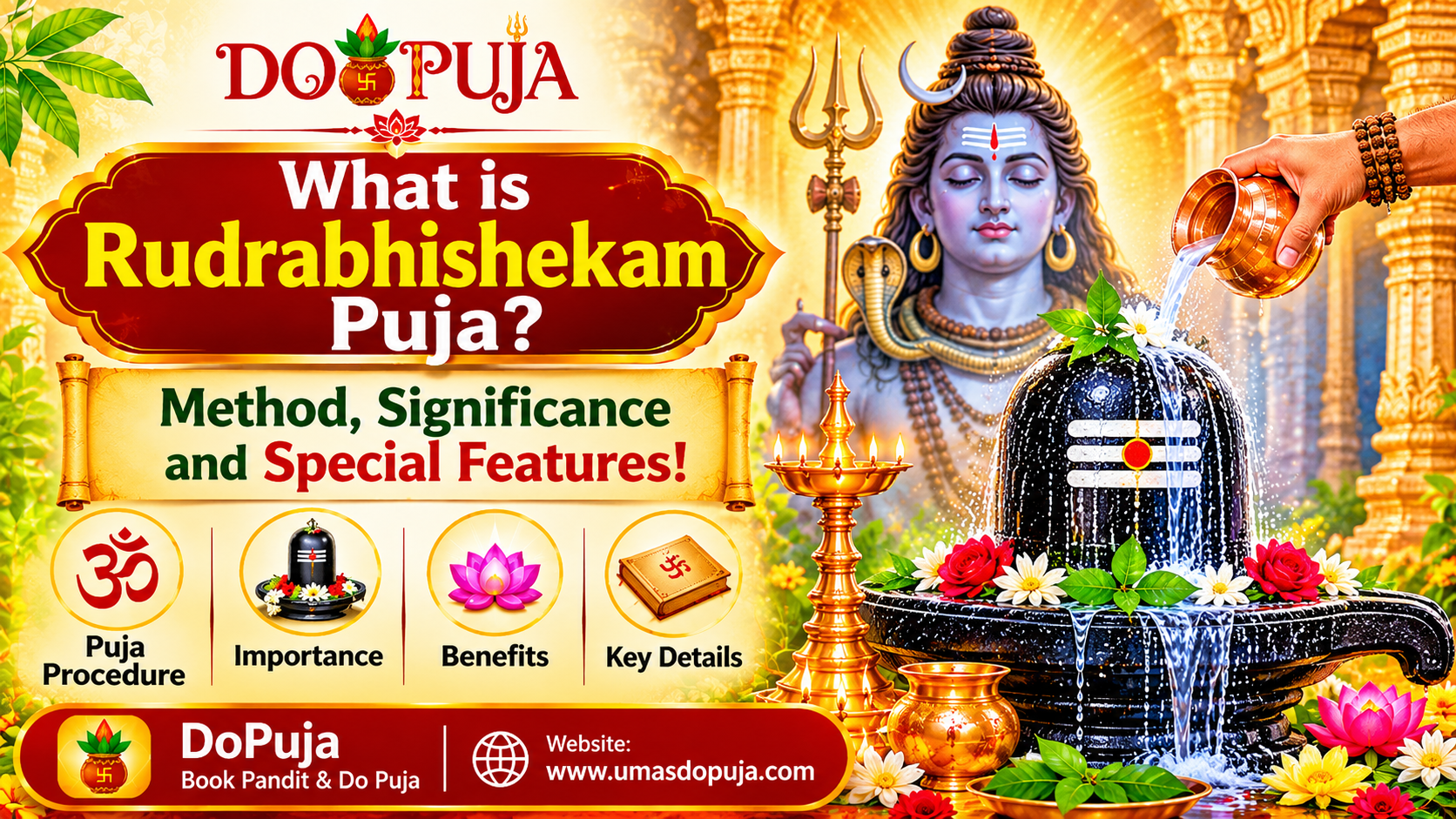
Table of contents
What Is Rudrabhishekam Puja? Vidhi, Significance, Benefits and Rituals
In Hindu tradition, Rudrabhishekam Puja is one of the most sacred forms of worship dedicated to Lord Shiva. Devotees perform this special Shiva Abhishekam to express their devotion, seek spiritual peace, and pray for the well-being and prosperity of their families.
Rudrabhishekam holds special significance during Maha Shivaratri, Karthika Masam, Mondays, and Pradosham. During this ritual, the Shiva Lingam is offered sacred substances such as milk, water, honey, curd, and ghee while Vedic mantras are chanted.
But what exactly is Rudrabhishekam? Why is it performed? What materials are required, and how is the puja conducted?
In this blog, let's explore the meaning, procedure, spiritual significance, and special features of Rudrabhishekam Puja.
1. What Is Rudrabhishekam Puja?
Rudrabhishekam is a sacred Hindu ritual performed to worship Lord Shiva in His Rudra form. It involves performing Abhishekam (ritual bathing) to the Shiva Lingam using sacred substances while chanting Vedic mantras.
The word 'Rudra' refers to a powerful form of Lord Shiva, while 'Abhishekam' means offering a ritual bath to the deity.
One of the most important aspects of this puja is the chanting of Sri Rudram, which includes Namakam and Chamakam from the Yajurveda.
Devotees perform Rudrabhishekam with devotion and prayers for peace, spiritual growth, family well-being, and divine blessings.
2. Spiritual Significance of Rudrabhishekam Puja
Lord Shiva is worshipped as the supreme deity associated with transformation, compassion, and liberation. Rudrabhishekam is considered a meaningful way to express devotion and surrender to Lord Shiva.
According to Hindu beliefs, performing this puja with sincerity is associated with several spiritual benefits.
Some important aspects include:
Encourages devotion and surrender to Lord Shiva.
Helps devotees experience mental peace and spiritual satisfaction.
Performed with prayers for family happiness, health, and well-being.
Symbolically represents purification and the removal of negative thoughts.
Provides an opportunity to connect with Vedic traditions and Shiva worship.
The spiritual benefits are understood through religious beliefs and traditions rather than guaranteed material outcomes.
3. Rudrabhishekam Puja Samagri (Required Materials)
To perform Rudrabhishekam according to traditional Hindu rituals, certain puja materials are required.
Here is a list of commonly used Rudrabhishekam Puja Samagri:
Shiva Lingam or Shiva idol
Pure water
Cow's milk
Curd
Ghee
Honey
Sugar
Bilva leaves (Bael leaves)
Fresh flowers
Sandalwood paste
Vibhuti (Sacred ash)
Akshata (Sacred rice)
Coconut
Fruits
Incense sticks and oil lamps
Camphor
Puja vessels
The required materials may vary depending on regional customs, family traditions, and the specific type of Rudrabhishekam being performed.
4. How to Perform Rudrabhishekam Puja? Step-by-Step Procedure
Rudrabhishekam is generally performed by an experienced Vedic priest who follows the traditional rituals and mantra chanting.
Step 1: Ganapati Puja
The puja usually begins with the worship of Lord Ganesha. Devotees pray to Lord Ganesha for the removal of obstacles and the successful completion of the ritual.
Step 2: Sankalpam
The priest performs Sankalpam, which involves stating the devotee's name, Gotra, and the purpose of performing the puja.
Step 3: Shiva Lingam Abhishekam
The Shiva Lingam is first offered a sacred water bath. This is followed by Abhishekam using milk, curd, honey, ghee, and other traditional substances.
Step 4: Sri Rudram Chanting
During this stage, the priest chants Sri Rudram, including Namakam and Chamakam, while performing the Abhishekam.
Vedic mantra chanting is one of the most important parts of Rudrabhishekam Puja.
Step 5: Bilva Patra and Flower Offering
After the Abhishekam, Bilva leaves and fresh flowers are offered to Lord Shiva. Devotees also chant Shiva mantras and prayers.
Step 6: Decoration and Naivedyam
The Shiva Lingam is cleaned and decorated with sandalwood paste, Vibhuti, and flowers. Fruits, coconut, and other traditional offerings are presented as Naivedyam.
Step 7: Aarti and Prasadam
The puja concludes with Camphor Aarti and prayers to Lord Shiva. Theertham and Prasadam are then distributed to devotees.
5. Significance of Different Abhishekam Materials
Each substance used during Rudrabhishekam has its own traditional and symbolic significance.
Milk Abhishekam: Milk is traditionally associated with purity, peace, and sacredness.
Curd Abhishekam: Curd is symbolically associated with prosperity, abundance, and auspiciousness.
Honey Abhishekam: Honey represents sweetness, harmony, and pleasantness in life.
Ghee Abhishekam: Ghee is traditionally considered a sacred offering associated with purity and auspiciousness.
Water Abhishekam: Water represents purification, freshness, and peace.
The significance and order of these offerings may differ according to regional practices and religious traditions.
6. Best Days to Perform Rudrabhishekam Puja
Certain days and occasions are considered especially auspicious for performing Rudrabhishekam.
Monday (Somavaram): Monday is traditionally considered a special day for worshipping Lord Shiva.
Maha Shivaratri: One of the most important festivals dedicated to Lord Shiva. Devotees perform special Abhishekam and Shiva prayers throughout the festival.
Karthika Masam: This sacred month is associated with Shiva worship, lighting lamps, and performing special pujas.
Pradosham: The Trayodashi Tithi, particularly during the evening Pradosha period, is considered auspicious for Shiva worship.
Masa Shivaratri: The Chaturdashi Tithi during Krishna Paksha every month is observed by devotees through Shiva prayers and worship.
Devotees can select an appropriate date and time based on their family traditions, Panchangam, and priest's guidance.
7. Can Rudrabhishekam Be Performed at Home?
Yes! Devotees can perform simple Shiva worship at home by offering water to a Shiva Lingam, chanting Shiva mantras, and offering Bilva leaves and flowers.
However, if you wish to perform a complete Vedic Rudrabhishekam with Sri Rudram chanting, it is advisable to seek guidance from an experienced Vedic priest.
A qualified priest can guide you through the Sankalpam, mantra chanting, Abhishekam sequence, and other traditional rituals.
8. Who Can Perform Rudrabhishekam Puja?
Anyone who wishes to worship Lord Shiva with devotion can perform Rudrabhishekam.
This puja is commonly performed by:
Devotees seeking family happiness and well-being.
People wishing to experience spiritual peace.
Shiva devotees who regularly follow Shiva worship traditions.
Families celebrating Maha Shivaratri and Karthika Masam.
Individuals who wish to include Shiva Abhishekam in their family traditions.
There are no caste or community restrictions on devotion to Lord Shiva. Sincere devotion and respect for the traditional rituals are considered important.
9. Why Is a Priest Important for Rudrabhishekam?
Rudrabhishekam is not just a simple ritual of pouring sacred substances over a Shiva Lingam. It involves Vedic mantra chanting, Sankalpam, Abhishekam procedures, and traditional offerings.
An experienced priest helps conduct the puja according to the prescribed rituals and traditions.
A knowledgeable Vedic priest can assist with:
Performing Sankalpam correctly.
Chanting Sri Rudram, Namakam, and Chamakam.
Following the traditional Abhishekam procedure.
Offering Bilva leaves and performing Shiva Archana.
Completing the puja with traditional Aarti and prayers.
Having a priest's guidance can help devotees perform the ritual in a more organized and traditional manner.
10. Book Rudrabhishekam Puja Through DoPuja
Planning to perform Rudrabhishekam at your home or temple? Finding an experienced priest should not be a difficult task.
DoPuja – Book Pandit & Do Puja helps you explore convenient puja booking services for your religious ceremonies.
Through DoPuja, you can:
Explore priest booking services for Rudrabhishekam Puja.
Find pandits for performing pujas at home.
Learn about puja requirements and service details.
Explore traditional Hindu puja services based on your requirements.
Whether you are planning Rudrabhishekam for Maha Shivaratri, Karthika Masam, or a special family occasion, explore Do Puja to find suitable priest services.
DoPuja – Your Trusted Companion for Traditional Puja Services!
Frequently Asked Questions (FAQs)
1. What is Rudrabhishekam Puja?
Rudrabhishekam is a sacred Shiva worship ritual in which the Shiva Lingam is bathed with holy substances while chanting Vedic mantras such as Sri Rudram, Namakam, and Chamakam.
2. Which day is best for Rudrabhishekam?
Monday, Maha Shivaratri, Karthika Masam, Pradosham, and Masa Shivaratri are considered especially auspicious for performing Rudrabhishekam.
3. What materials are required for Rudrabhishekam?
Common materials include water, milk, curd, honey, ghee, sugar, Bilva leaves, flowers, sandalwood paste, fruits, and other traditional puja items.
4. Can Rudrabhishekam be performed at home?
Yes. Devotees can perform simple Shiva Abhishekam at home. For a complete Vedic Rudrabhishekam with mantra chanting, consulting an experienced priest is recommended.
5. How long does Rudrabhishekam Puja take?
The duration depends on the type of puja, Abhishekam procedure, and the time required for Vedic mantra chanting. It is advisable to confirm the expected duration with the priest in advance.
Conclusion
Rudrabhishekam is a sacred form of Shiva worship that represents devotion, surrender, and spiritual connection with Lord Shiva. Vedic mantra chanting, sacred Abhishekam, Bilva Archana, and Shiva prayers are the important elements of this traditional ritual.
If you are planning to perform Rudrabhishekam at your home or temple, consider seeking guidance from an experienced Vedic priest to conduct the puja according to traditional practices.
Om Namah Shivaya!
Recommended articles
 DoPuja services
How to Perform Lakshmi Devi Puja at Home? Important Rituals for Wealth and Prosperity
Learn how to perform Lakshmi Devi Puja at home with this simple step-by-step guide. Discover the essential puja samagri, Friday Lakshmi Puja rituals, powerful mantras and traditional practices followed to seek blessings for wealth, prosperity and happiness. Also, explore pandit booking options through Do Puja for special Lakshmi Puja ceremonies.
 DoPuja services
How to Perform Ganapathi Puja at Home? Items & Procedure | DoPuja
Want to perform Ganapathi Puja at home? Discover the essential puja items, step-by-step procedure, powerful mantra, and traditional offerings to Lord Ganesha. Explore DoPuja for pandit booking and special puja services.
 DoPuja services
Why Perform Puja on Your Birthday? Discover the Significance of These Hindu Rituals!
A birthday is more than just cakes and celebrations! Hindu traditions give special importance to birthday pujas such as Janma Nakshatra Puja, Ayushya Homam, and Ganapati Puja. Discover why these rituals are performed, how to perform a simple birthday puja at home, and how to explore pandit booking services through DoPuja.
Comments
Be the first to comment.