A SIMPLE GUIDE FROM DO PUJA
How to Do Puja at Home
You do not need to be a priest to do puja at home. With a clean space, a lamp, a few flowers and a sincere heart, anyone can offer daily worship. This guide walks you through what to keep ready, a simple 5-step puja for beginners, the full 16-step method, easy mantras and how to close with aarti.
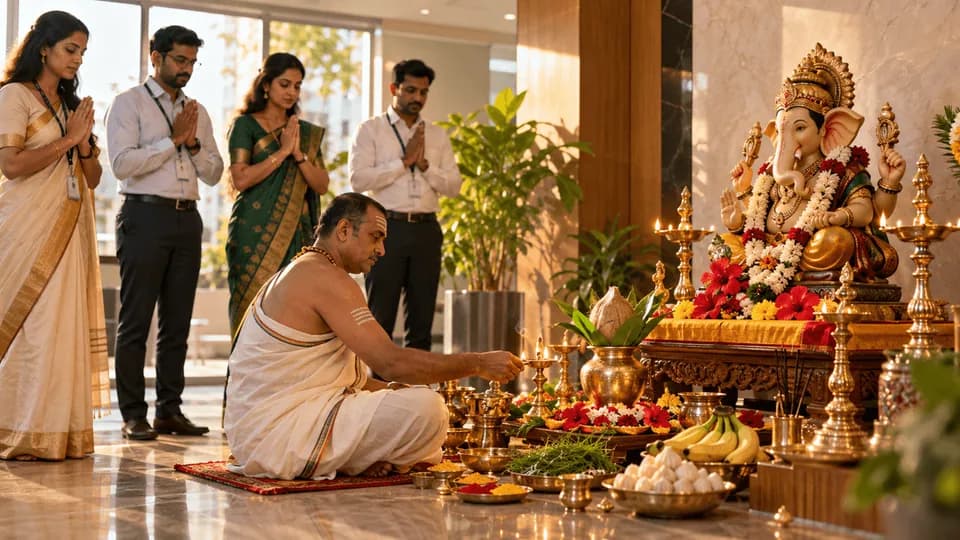
01 / What is puja
What is puja?
Puja is an act of loving worship. In a puja you welcome God as an honoured guest and offer simple things such as water, fragrance, flowers, light and food, along with prayer. The word comes from Sanskrit and is often explained as worship done with respect and devotion.
A puja can be as short as lighting a lamp and saying a prayer, or as elaborate as a temple ritual with many steps. What matters most is bhakti (devotion), cleanliness and attention. Families follow different regional and lineage traditions, so treat this guide as a simple, common method and follow your elders where your family practice differs.
02 / Before you start
Before you start
A few minutes of preparation makes the puja calm and focused.
Clean the puja space
Sweep and wipe the altar or puja corner. Remove old flowers and yesterday's offerings. The north-east corner of the home is traditionally preferred, but any clean, quiet spot works.
Bathe and wear clean clothes
Take a bath before puja and wear washed, simple clothes. Wash your hands and feet again if you step away in between.
Arrange the altar
Place the idol or picture on a raised plank or shelf, not on the bare floor. Sit on a mat facing east or north if you can.
Make a sankalpa
Sit quietly, hold a little water or akshata in your right hand and say in your own words why you are doing this puja, for example for the well-being of your family. Then let the water fall on the plate.
When is the best time to do puja?
Early morning after bath is ideal. Brahma muhurta, roughly the 1.5 hours before sunrise, is considered the most peaceful time. The evening sandhya, around sunset, is the other traditional time, when many homes light the lamp. If those times do not suit you, choose a fixed time you can keep every day. Regularity matters more than the exact minute.
Check today's sunrise, Rahu Kalam and tithi on the Panchangam
03 / Puja items
Puja items checklist (samagri)
You do not need everything on this list for a daily puja. A lamp, water, flowers and a small offering are enough to begin. Add the rest as you go.
- Lamp (diya / deepam)Brass, silver or clay lamp
- Ghee or oilCow ghee, sesame oil or any clean lamp oil
- Cotton wicksRound (poo vatti) or long wicks
- Incense (agarbatti / dhoop)With a stand to catch the ash
- Camphor (karpuram)For aarti; keep it in a closed box
- Fresh flowersClean, unsmelled flowers and leaves
- Kumkum, haldi and akshataAkshata is unbroken rice mixed with a little turmeric
- Sandal paste (chandan)For gandha, the first offering
- Fruits and naivedyamFruit, jaggery, milk, sugar candy or freshly cooked food
- Water kalashA small pot with clean water and a spoon (uddharini)
- Bell (ghanta)Rung while offering light and during aarti
- Puja plate (thali)To hold the lamp, kumkum and flowers
04 / Simple 5-step puja
Simple 5-step puja for beginners (Panchopachara)
Panchopachara means five offerings. It is the easiest complete puja and fits into a busy morning. Begin by lighting the lamp, remembering Lord Ganesha and saying "Om Ganeshaya Namah". Then offer these five, one by one, with a short prayer for each:
- 01
1. Gandha: sandal paste
Apply a little sandal paste, kumkum or haldi to the idol or picture. Gandha stands for the earth element and for respect.
- 02
2. Pushpa: flowers
Offer fresh flowers with both hands. You can chant the deity's name, for example "Om Namah Shivaya", with each flower.
- 03
3. Dhoopa: incense
Light an incense stick and wave it gently in front of the deity in a clockwise circle, three or more times.
- 04
4. Deepa: light
Show the ghee or oil lamp to the deity in a clockwise circle while ringing the bell. Light stands for removing darkness and ignorance.
- 05
5. Naivedya: food offering
Place fruit, jaggery or freshly made food in front of the deity, sprinkle a little water around it and pray that it is accepted. This food then becomes prasad.
That is a complete puja. Finish with a short aarti, a namaskara and a moment of silent prayer.
05 / 16-step puja
Full 16-step puja (Shodashopachara)
On festivals, Fridays or special days many families do the full Shodashopachara puja, which treats the deity as a royal guest with sixteen services. The order and names vary a little between traditions; this is a commonly followed sequence.
Dhyana & Avahana
Meditate on the deity and invite them into the idol or picture.
Asana
Offer a seat, usually with flowers or akshata.
Padya
Offer water to wash the feet.
Arghya
Offer water to wash the hands.
Achamana
Offer water to sip.
Snana
Bathe the deity with water, or milk, curd, ghee, honey and sugar (panchamrita) for abhishekam.
Vastra
Offer a new cloth or a piece of cotton thread.
Yajnopavita / Abharana
Offer the sacred thread or ornaments.
Gandha
Apply sandal paste, kumkum and haldi.
Pushpa
Offer flowers and akshata, often while chanting 108 names (ashtottaram).
Dhoopa
Offer incense.
Deepa
Offer the lamp.
Naivedya
Offer food and water.
Tambula
Offer betel leaves, areca nut and a fruit.
Neerajana
Perform aarti with camphor or a ghee lamp.
Pradakshina & Namaskara
Circle the deity (or turn around in place), bow down and offer mantra pushpam.
If you are short of time, the 5-step puja above is complete on its own. You can do Shodashopachara on special days.
06 / Simple mantras
Simple mantras for daily puja
Chant slowly and clearly. It is better to say one mantra with attention than many in a hurry. If you are unsure of a mantra, simply repeat the name of God with devotion.
To begin every puja
ॐ गणेशाय नमः
Om Ganeshaya Namah
Salutations to Lord Ganesha, who removes obstacles.
Ganesha prayer
वक्रतुण्ड महाकाय सूर्यकोटि समप्रभ। निर्विघ्नं कुरु मे देव सर्वकार्येषु सर्वदा॥
Vakratunda Mahakaya Suryakoti Samaprabha, Nirvighnam Kuru Me Deva Sarva Karyeshu Sarvada
O Lord with the curved trunk and mighty body, shining like a million suns, please remove the obstacles from all my work, always.
Popular in Telugu homes
शुक्लाम्बरधरं विष्णुं शशिवर्णं चतुर्भुजम्। प्रसन्नवदनं ध्यायेत् सर्वविघ्नोपशान्तये॥
Shuklambaradharam Vishnum Shashivarnam Chaturbhujam, Prasanna Vadanam Dhyayet Sarva Vighnopashantaye
Meditate on the one dressed in white, moon-coloured, four-armed, with a smiling face, so that all obstacles are removed.
For Lord Shiva
ॐ नमः शिवाय
Om Namah Shivaya
Salutations to Lord Shiva.
For Lord Vishnu
ॐ नमो नारायणाय
Om Namo Narayanaya
Salutations to Lord Narayana.
Gayatri mantra
ॐ भूर्भुवः स्वः तत्सवितुर्वरेण्यं भर्गो देवस्य धीमहि धियो यो नः प्रचोदयात्॥
Om Bhur Bhuvah Svah, Tat Savitur Varenyam, Bhargo Devasya Dhimahi, Dhiyo Yo Nah Prachodayat
We meditate on the divine light of the Sun; may it inspire and guide our minds.
Some families have their own rules about who chants the Gayatri mantra and when. Follow your family tradition or ask your purohit.
07 / Aarti & closing
Aarti and closing the puja
Closing the puja properly gives it a peaceful finish.
- 01
Aarti
Light camphor or a ghee lamp on a plate and wave it in clockwise circles in front of the deity while ringing the bell and singing an aarti such as "Om Jai Jagdish Hare" or a mangala harati song. Then take the warmth of the flame with both palms to your eyes.
- 02
Pradakshina and namaskara
Walk around the altar clockwise, or turn around in place three times if there is no space. Then bow down or touch your forehead to the floor.
- 03
Kshama prarthana
Ask forgiveness for any mistakes made during the puja, knowingly or unknowingly, using the prayer below or your own words.
- 04
Prasad
Share the offered fruit or food with family members as prasad. Do not throw it away; anything left over can be given to others or to animals.
Prayer for forgiveness
आवाहनं न जानामि न जानामि विसर्जनम्। पूजां चैव न जानामि क्षमस्व परमेश्वर॥
Avahanam Na Janami, Na Janami Visarjanam, Pujam Chaiva Na Janami, Kshamasva Parameshwara
I do not know how to invite You, nor how to bid You farewell, nor even how to worship You properly. Please forgive me, O Supreme Lord.
08 / 10-minute routine
A 5–10 minute daily puja routine
On a normal working day this short routine is enough. Do it at the same time every day.
- Minute 1
After bath, clean the altar, remove old flowers and fill the kalash with fresh water.
- Minutes 2–3
Light the lamp and incense. Sit down, take a few slow breaths and say "Om Ganeshaya Namah".
- Minutes 4–6
Offer gandha, flowers, incense, light and naivedya (the five steps above).
- Minutes 7–8
Chant your chosen mantra 11 or 108 times, or read a short stotram.
- Minutes 9–10
Do aarti, a namaskara and a quiet prayer for your family. Take prasad.
09 / Common mistakes
Common mistakes to avoid
Rushing through the steps
A short puja done calmly is better than a long one done in a hurry.
Using old or smelled flowers
Offer fresh flowers. Many traditions say flowers should not be smelled before offering.
Leaving yesterday's offerings
Remove old flowers, naivedyam and water every day before you start.
Blowing out the lamp
Traditionally the lamp is not blown out with the mouth. Let it burn out, or put it out gently with a flower or by waving your hand.
Ignoring fire safety
Keep lamps and camphor away from curtains and children, and never leave a lit lamp unattended near cloth or paper.
Worrying about perfection
Mistakes in pronunciation or order are forgiven. Sincerity matters more than perfection.
10 / DoPuja
When should you book a pandit?
Daily worship is something you can do yourself. Some occasions, however, traditionally need a trained purohit who knows the Vedic mantras, the right sequence and the samagri for that ritual.
Book a pandit for a Gruhapravesam (house warming), Satyanarayana Vratam, homams such as Ganapathi or Rudra Homam, Rudrabhishekam, naming and first-feeding ceremonies, weddings and shraddha rites. A purohit can also guide you through the full Shodashopachara puja the first time, so you can continue on your own later.
11 / Puja guides
Step-by-step guides for specific pujas
Each puja has its own meaning and preparation. Read our detailed guides:
Ganesha Daily Puja
A daily moment of worship to Ganesha, traditionally invoked at the beginning of an undertaking. A purohit-led visit helps your household follow a regular devotional routine.
Read guideNitya Lakshmi · Dhanalakshmi Puja
Daily worship of Lakshmi in her Dhanalakshmi aspect, offered at home or at a place of work. The focus is devotional gratitude and prayers for the wellbeing of the household.
Read guideLakshmi Daily Puja · Sandhya
An evening Lakshmi worship service arranged around the household’s sandhya, or twilight, routine. It centres on welcoming the goddess through light, archana and prayer.
Read guideFriday Shuddhi & Lakshmi Puja
DoPuja’s Friday-focused household offering combines ritual shuddhi, lamp worship and Lakshmi prayer. Shuddhi here means ceremonial preparation for worship.
Read guideNitya Dhoopa Puja
A daily offering of fragrant dhoopa as part of household worship. Incense is one of the customary offerings made to a deity, alongside flowers, light and food.
Read guideSatyanarayana Vratam
A vrata dedicated to Lord Satyanarayana, a form of Vishnu. Worship, listening to the vrata katha and sharing prasadam bring the household together in devotion and gratitude.
Read guideGruhapravesam / House Warming Puja
The ceremonial entry into a new home. Gruhapravesam brings the family together to dedicate the space through worship and begin household life with a shared prayer.
Read guideRudrabhishekam
Worship of Shiva through the ceremonial bathing of the lingam with Sri Rudram recitation. Water and other agreed offerings are poured while the purohit leads the prayers.
Read guide
12 / DoPuja
Frequently asked questions
How do I do puja at home daily?
After bath, clean the altar, light a lamp and incense, say "Om Ganeshaya Namah", and offer sandal paste, flowers, incense, light and a little food (the 5-step Panchopachara puja). Finish with aarti, a namaskara and a short prayer. The whole routine takes about 5 to 10 minutes.
What items are needed to do puja?
For a simple puja you need a lamp with ghee or oil and a wick, incense, fresh flowers, kumkum, haldi, akshata, sandal paste, water in a small kalash, a bell, camphor for aarti, a plate and some fruit or food as naivedyam. Even a lamp, water and flowers are enough to begin.
What is the right time to do puja?
Early morning after bath is best, especially during Brahma muhurta, roughly 1.5 hours before sunrise. The evening sandhya around sunset is also traditional. If these times are difficult, choose any fixed time you can keep daily.
Can I do puja without a pandit?
Yes. Daily puja at home is meant to be done by the family itself. A pandit is traditionally needed for larger rituals such as Gruhapravesam, Satyanarayana Vratam, homams and life-event ceremonies.
How long should a daily puja take?
A daily puja can take 5 to 10 minutes. On festivals or special days you may spend 30 minutes to an hour on a full Shodashopachara puja. Regularity and attention matter more than length.
Which mantra should I chant first?
Most pujas begin by remembering Lord Ganesha with "Om Ganeshaya Namah" or the "Vakratunda Mahakaya" prayer, so that the worship goes ahead without obstacles.
Can I do puja without an idol?
Yes. You can worship a picture, a lamp or simply pray with folded hands. Many people also do manasika puja, offering every step in the mind with devotion.
Is Do Puja the same as DoPuja?
Yes. DoPuja is the official name of our platform, also written as Do Puja, do_puja or DoPooja. Here you can explore daily pujas, pandit booking, temple and digital pujas, Kundali reports and Darshini. Use the official app link on this website to get the DoPuja app.
DO PUJA APP
Keep your puja going with DoPuja
Get daily puja reminders, book Nithya Puja at your home, book a pandit for ceremonies and join temple and digital pujas in the DoPuja app, in English, Telugu and Hindi.