Kendra and Trikona Lords: The Real Formula Behind Raj Yoga
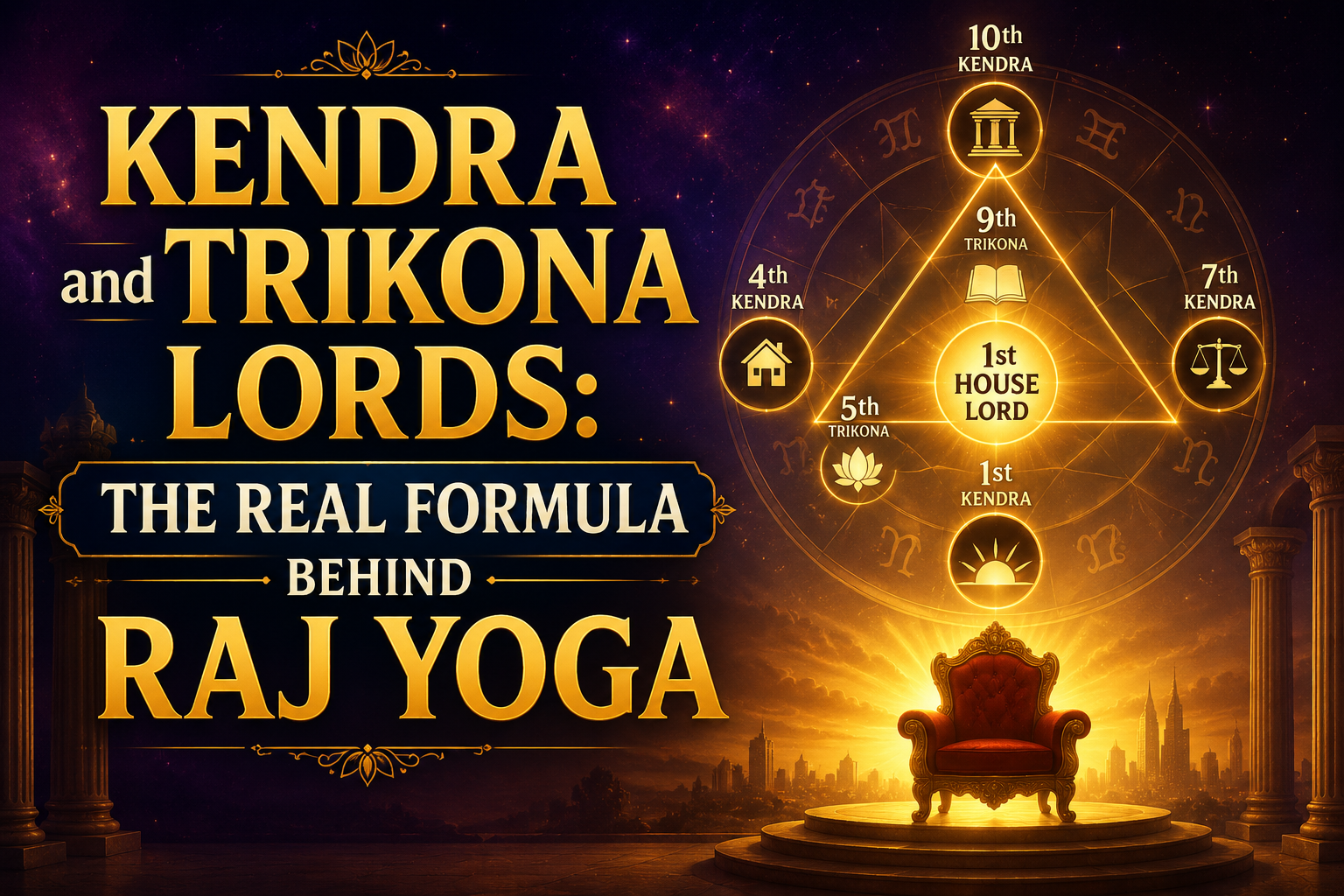
Table of contents
We've covered the basic Kendra-Trikona framework and why Raj Yoga is far more common than its reputation suggests elsewhere on this site. This piece goes deeper into two specific technical points: why the 1st house carries unique weight, and what actually happens when a chart has several Raj Yogas at once.
Which Houses Count as Kendra and Trikona?
Kendra houses are the 1st, 4th, 7th, and 10th, classically called Vishnu Sthanas, representing action, sustenance, and the structural framework of daily life. Trikona houses are the 1st, 5th, and 9th, classically called Lakshmi Sthanas, representing fortune, merit, and dharma.
Why Is the 1st House Lord So Central to This Analysis?
This is worth understanding as more than a technical footnote. The 1st house is the only house appearing in both the Kendra and Trikona groups simultaneously, the meeting point of action and dharma at once. This makes the Lagna lord, the ruler of the 1st house, arguably the single most important planet in the entire Raj Yoga analysis, and its condition is generally the first thing an experienced astrologer checks.
Here's the specific technical consequence worth knowing: a genuinely strong Lagna lord can form what's called an independent Raj Yoga entirely on its own, without needing to connect to a second Kendra or Trikona lord at all. Since the Lagna lord already inherently carries both Kendra and Trikona lordship by virtue of ruling the 1st house, its own strength alone, sitting in its own sign or exalted, can produce results that rival more complex multi-planet combinations.
How Much Does Sign-Lord Strength Actually Amplify the Effect?
Considerably. A Raj Yoga formed by exalted planets is generally considered to increase potency dramatically compared to the same technical connection involving weaker placements. Planets in their own sign are considered to produce more reliable, consistent results over time, and a Vargottama placement, the same sign occupied in both the main chart and Navamsha, is considered to add exceptional additional strength. The underlying connection, conjunction, aspect, or exchange is only the starting point, the strength of the specific planets involved shapes how visibly that connection actually delivers.
Do Multiple Raj Yogas in One Chart Actually Add Up?
Yes, genuinely, but not in a simple, linear way. Multiple Raj Yogas are considered to compound each other, and individuals with three or more distinct formations, particularly involving the 1st, 9th, and 10th lords together, show up repeatedly in the charts of people who achieved significant public stature.
It's worth being precise about what "compound" actually means here, though. This isn't straightforward addition, each additional Raj Yoga adds real value, but with diminishing returns rather than a proportional increase. A chart with three strong Raj Yogas isn't simply three times as fortunate as a chart with one, the marginal benefit of each additional formation tends to taper.
Some specific combinations carry particular weight when they compound. The 9th lord (dharma) connecting with the 10th lord (karma) is classically considered the supreme combination, called Dharma-Karmadhipati Yoga. Two Trikona lords, the 5th and 9th, combining is also considered one of the strongest fortune-conferring pairings in the entire system, tending toward intellectual and spiritual elevation alongside material success.
When to Get a Professional Reading Instead of Counting Yogas Yourself
Given how much this depends on the Lagna lord's specific condition and how multiple formations genuinely interact, a full reading is worth it if:
You want to know whether your Lagna lord alone forms an independent Raj Yoga, or whether it needs a second planet's connection to activate fully
You've identified several potential Raj Yogas and want to understand how they genuinely compound, not just count them individually
You want to know whether your chart contains the specific 9th-10th or 5th-9th combinations considered particularly powerful
Myth vs. Reality
Myth: A Raj Yoga always requires two planets connecting.
Reality: A sufficiently strong Lagna lord can form an independent Raj Yoga on its own, since it already inherently carries both Kendra and Trikona lordship.
Myth: Having three Raj Yogas makes a chart three times as fortunate as having one.
Reality: Multiple Raj Yogas genuinely compound, but with diminishing returns, not proportional addition.
Myth: Every Kendra-Trikona connection carries equal weight.
Reality: Some specific combinations, particularly the 9th-10th lord connection and the 5th-9th Trikona pairing, are classically considered notably stronger than others.
Why Check This on DoPuja
Because this analysis depends on the Lagna lord's specific strength and how multiple Raj Yogas genuinely interact, not a simple count, accurate calculation matters considerably here.
UmasDoPuja's Kundali tool uses the Swiss Ephemeris engine with NASA/JPL DE431 planetary data and correctly applied Lahiri Ayanamsa, calculating your house lords, their dignity, and Navamsha placement precisely rather than an approximation. For a full, personalised reading on how your specific Raj Yogas actually interact, Talk to Astrologer connects you with a real astrologer for that context.
Why Trust This
The 1st house's dual Kendra-Trikona status, the independent Lagna-lord Raj Yoga, and the diminishing-returns nature of compounding multiple yogas are consistently documented across multiple classical and current Vedic astrology sources, tracing to the Brihat Parashara Hora Shastra's treatment of Kendra and Trikona lords as the foundational pillars of auspicious combinations.
Frequently Asked Questions
Why is the 1st house lord considered so important for Raj Yoga specifically?
Because it's the only house belonging to both the Kendra and Trikona groups simultaneously, making its lord inherently significant regardless of which other planets it connects to.
Can a Raj Yoga form without two planets connecting?
Yes. A sufficiently strong Lagna lord can form an independent Raj Yoga on its own, since it already carries both Kendra and Trikona lordship by virtue of ruling the 1st house.
Does having multiple Raj Yogas make someone proportionally more successful?
Not proportionally. Multiple Raj Yogas genuinely compound each other, but with diminishing returns rather than simple addition.
Which specific Raj Yoga combination is considered the strongest?
The 9th lord connecting with the 10th lord, called Dharma-Karmadhipati Yoga, is classically considered the supreme combination.
Does the sign a planet sits in matter as much as the house connection itself?
Yes, considerably. Exalted or own-sign placements dramatically increase a Raj Yoga's potency compared to the same technical connection with weaker planets.
Recommended articles

Why Some People Seem Naturally Lucky, and Whether You're One of Them
Discover why some people seem naturally lucky through Raj Yoga in Vedic astrology. Learn how the 1st house, Lagna lord, planetary strength, and multiple Raj Yogas shape success.
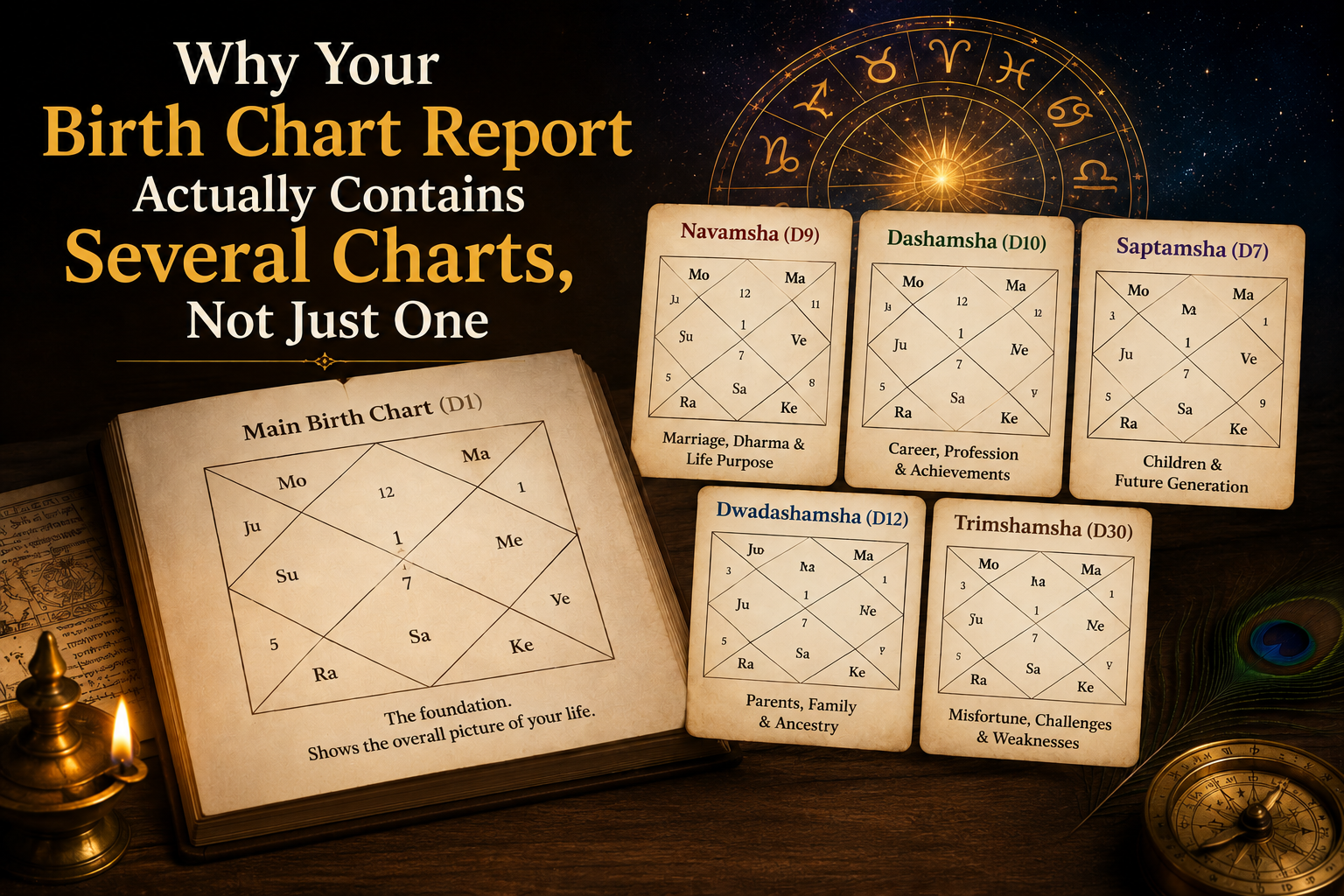
Why Your Birth Chart Report Actually Contains Several Charts, Not Just One
Discover why a detailed Kundali report includes divisional charts like Navamsha, Dashamsha, and Saptamsha, how they refine your birth chart, and why Dasha timing matters.

Why Does Nothing Seem to Work Out? Understanding Kaal Sarp Dosha
Wondering why repeated setbacks keep happening? Understand Kaal Sarp Dosha, its effects, Rahu-Ketu periods, traditional remedies, and what your Kundali reveals.
Comments
Be the first to comment.