The Nadi Dosha Exception Most Matching Tools Miss
Table of contents
The three Nadi types map onto Ayurveda's Vata, Pitta, and Kapha, which is why different Nadis between partners are traditionally considered better balanced. One specific, genuinely useful cancellation rule is skipped by most quick-matching tools: if both partners share the exact same Nakshatra but land in different Padas (quarters) of it, several classical sources treat the dosha as cancelled. This rule isn't universally accepted, and a further classical caveat, Pada Vedha, can override it even when Padas genuinely differ. Modern practice generally weighs this alongside the full 36-point score rather than treating it in isolation.
We've covered the reasoning behind Nadi Dosha's health and progeny concern elsewhere on this site, the Ayurvedic logic connecting the three Nadis to Vata, Pitta, and Kapha, and why complementary constitutions were traditionally considered better matched than identical ones. This piece goes somewhere more specific: the Pada-level cancellation rule that most quick matching tools miss entirely.
A Quick Recap: Why Different Nadis Are Considered Better Balanced
Each of the three Nadi groups, Adi, Madhya, and Antya, maps onto one of Ayurveda's three constitutional types, Vata, Pitta, and Kapha respectively. Ayurveda treats a balanced mix of all three as healthy, so two partners sharing the same dominant Nadi were traditionally seen as sharing the same constitutional leaning rather than balancing each other out. This is the reasoning behind Nadi carrying the highest weight, 8 of the 36 total points, in the standard Ashtakoot matching system.
What Is the Pada Cancellation Rule?
Here's the specific nuance worth knowing. If both partners share the exact same Nakshatra, not just the same Nadi group, but the identical one of 27 stars, and each Nakshatra divides into four Padas, or quarters, several classical and current sources treat the dosha as cancelled specifically when the two partners' Padas differ.
This is a genuinely documented rule, traceable to classical texts including the Jyotish Tattva Prakash, and it addresses a scenario that many basic matching tools flag identically to a full, undifferentiated Nadi match, even though classical astrologers treated it as meaningfully different.
Is This Rule Universally Accepted?
No, and it's worth being upfront about that. Several sources describe this specifically as a contested or more lenient cancellation, applied by many contemporary astrologers but not treated as settled by all of them. If you've had two different astrologers give you different verdicts on an identical same-Nakshatra, different-Pada case, this genuine disagreement is very likely why.
The Catch Within the Exception: What Is Pada Vedha?
This is the detail that makes this rule genuinely more complicated than a simple checkbox, and it's the part most matching tools skip entirely. Classical texts describe a specific condition called Pada Vedha, or Nakshatra Vedha, a clash between certain specific Pada combinations that overrides the general different-Pada cancellation, even when the Padas genuinely differ.
In practical terms, this means the different-Pada rule isn't a blanket "always cancelled" answer. Certain specific Pada pairings are classically flagged as still problematic despite technically satisfying the general cancellation condition. This is precisely the kind of detail that requires checking the actual Pada combination involved, not just confirming that the Padas are different in a general sense.
A small number of sources also cite specific Nakshatra exceptions, certain stars where Nadi Dosha is considered not to apply at all even with identical Nakshatra and Pada. This particular list varies across sources and isn't consistently cross-verified, so we'd treat it as a secondary consideration worth raising with an astrologer directly rather than a settled, universal rule.
Why This Matters More Than It Might Seem
This specific configuration, same Nakshatra, different Pada, is worth flagging because it's exactly the kind of case that looks identical to a full, uncancelled Nadi match on a basic automated tool, when classical analysis treats it quite differently. Several detailed sources specifically call out skipping this cancellation as one of the most common analytical errors in casual Nadi Dosha readings, alongside the closely related same-Rashi-different-Nakshatra rule.
It's also worth holding onto some perspective here. More careful readings of classical sources note that the alarmist framing surrounding Nadi Dosha in popular content generally exceeds what the original texts actually claim, and the sheer number of cancellation routes built into the classical system itself suggests that traditional astrologers never intended this to function as a rigid, exception-free rule.
How Should This Be Weighed Against the Full 36-Point Score?
As covered in our piece on Ashtakoot Guna Milan, Nadi is the highest-weighted of the eight Kootas, but it's meant to be read alongside the other seven, not in total isolation. Several sources describe a practical approach: if the overall Guna Milan score is comfortably strong, generally cited around 24 or more out of 36, the specific impact of an uncancelled Nadi concern is considered to weigh somewhat less heavily against an otherwise well-matched chart. This isn't a replacement for checking the Pada-level detail directly, but it's a useful piece of context alongside it.
Myth vs. Reality
Myth: Same Nakshatra always means the same, fully uncancelled Nadi Dosha.
Reality: If the Padas differ, several sources treat this as cancelled, though this specific rule isn't universally accepted across all traditions.
Myth: A different Pada always fully cancels the concern.
Reality: A further classical condition, Pada Vedha, can override the cancellation for certain specific Pada combinations even when the Padas genuinely differ.
Myth: Any Nadi concern should be read on its own, separate from the rest of the match.
Reality: Modern practice generally weighs it alongside the full 36-point score, since a strong overall match can meaningfully offset a narrower, uncancelled concern.
When to Get a Professional Reading Instead of a Generic Tool
Given how specific and contested this exact cancellation route is, a full reading is worth it if:
Both partners share the same Nakshatra and you want to know whether your specific Pada combination actually cancels the dosha or falls into a Pada Vedha exception
You want the full 36-point score weighed alongside this specific concern, not read in isolation
Different sources or astrologers have given you conflicting verdicts on this exact scenario
Why Check This on DoPuja
Because this specific cancellation depends on confirming exact Nakshatra and Pada for both partners, and checking whether a Pada Vedha exception applies, precise calculation matters considerably here.
UmasDoPuja's Kundali Matching uses the Swiss Ephemeris engine with NASA/JPL DE431 planetary data and correctly applied Lahiri Ayanamsa, calculating exact Nakshatra and Pada for both partners rather than an approximation. For a full, personalised walkthrough of this specific scenario, including whether a Pada Vedha exception applies to your case, Talk to Astrologer connects you with a real astrologer for that context.
Why Trust This
The same-Nakshatra-different-Pada cancellation rule, and the Pada Vedha exception that can override it, are documented across multiple independent classical and current sources, tracing back to texts including the Jyotish Tattva Prakash. We've been transparent that this specific cancellation route isn't universally accepted across all traditions, and that the further Pada Vedha exception adds real complexity that a simple checkbox comparison can't capture.
Frequently Asked Questions
If we share the same Nakshatra but different Padas, is our Nadi Dosha automatically cancelled?
Often, according to several sources, but not universally, and a further condition called Pada Vedha can override this cancellation for certain specific Pada combinations. Worth confirming your exact case with an astrologer.
Why do different sources give conflicting answers on this exact scenario?
Because this cancellation rule is genuinely contested rather than settled, different astrologers apply it differently, which is why the same case can get different verdicts.
Does a strong overall Guna Milan score make Nadi Dosha less important?
Several sources suggest a strong overall score, generally cited around 24 or more out of 36, reduces how heavily an uncancelled Nadi concern weighs against an otherwise well-matched chart, though it's not a full substitute for checking the specific condition.
What is Pada Vedha?
A classical condition describing specific Pada combinations that remain problematic even when general cancellation rules, like differing Padas, would otherwise apply.
Where can I read about the general Nadi Dosha mechanics and remedies?
Our dedicated Nadi Dosha article and our piece on the Ayurvedic reasoning behind it both cover that ground in full detail.
Recommended articles
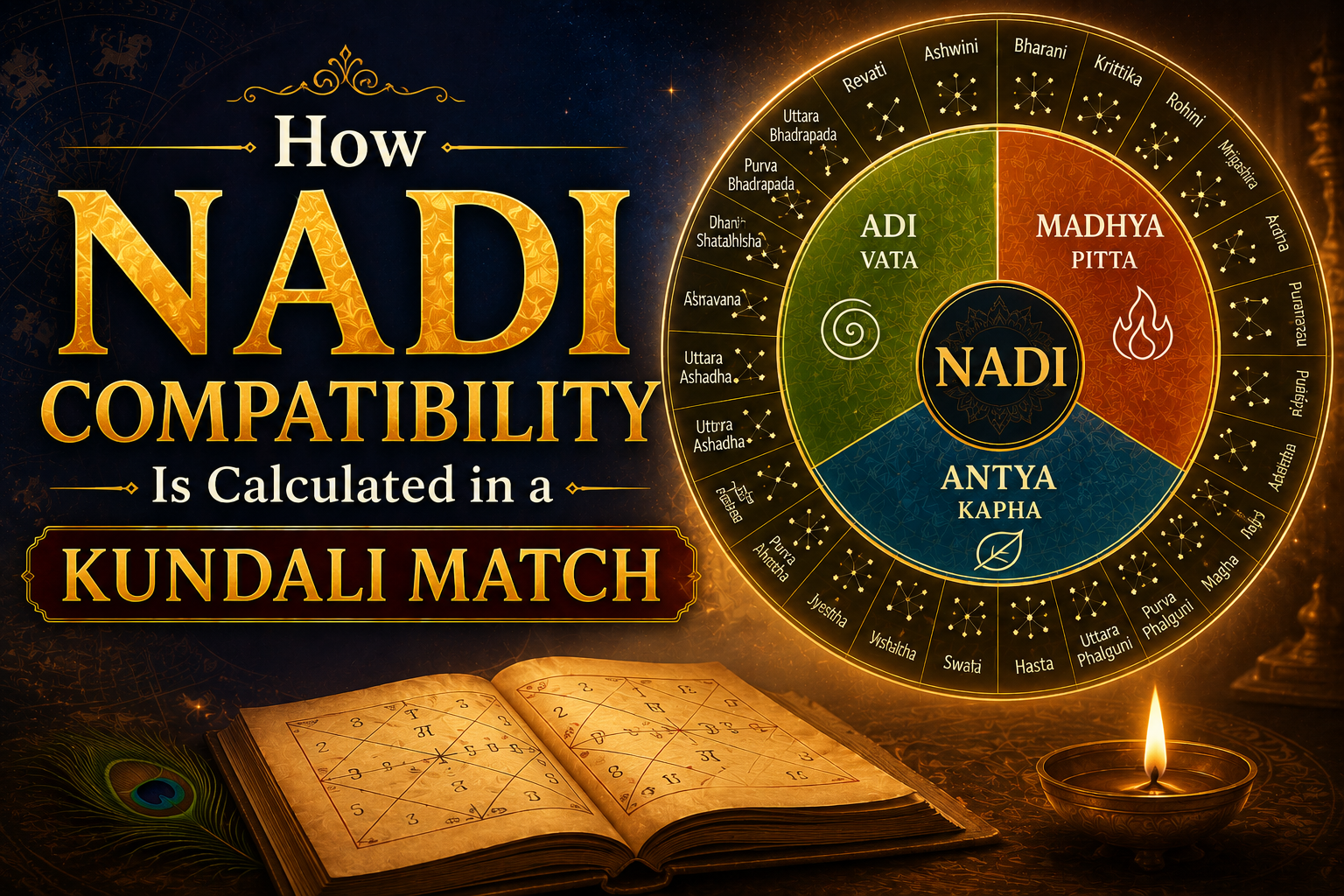
How Nadi Compatibility Is Calculated in a Kundali Match
Learn how Nadi compatibility is calculated in Kundali matching, from birth Nakshatra and Nadi groups to Nadi Dosha, Pada exceptions, and compatibility rules.
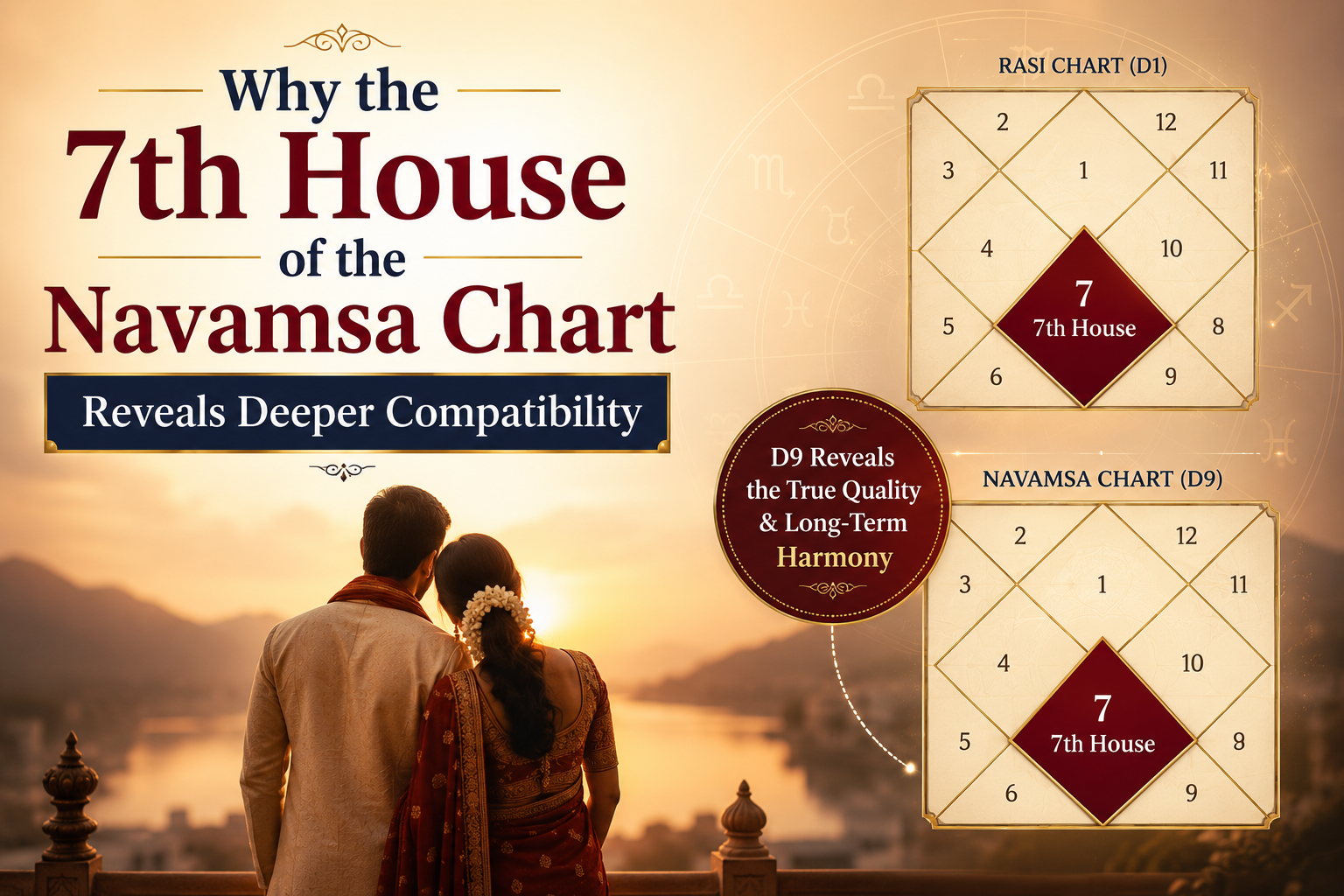
Why the 7th House of the Navamsa Chart Reveals Deeper Compatibility
Discover how the Navamsa 7th house, Venus placement, Vargottama, and D9 chart comparison reveal deeper marriage compatibility beyond Guna Milan.

Struggling With Delayed Marriage? What Mangal Dosha Really Means
Struggling with delayed marriage because of Mangal Dosha? Learn what being Manglik really means, cancellation factors, traditional remedies, and when to seek a full Kundali reading.
Comments
Be the first to comment.