Understanding Daily Rashifal: How Vedic Astrology Guides Your Day
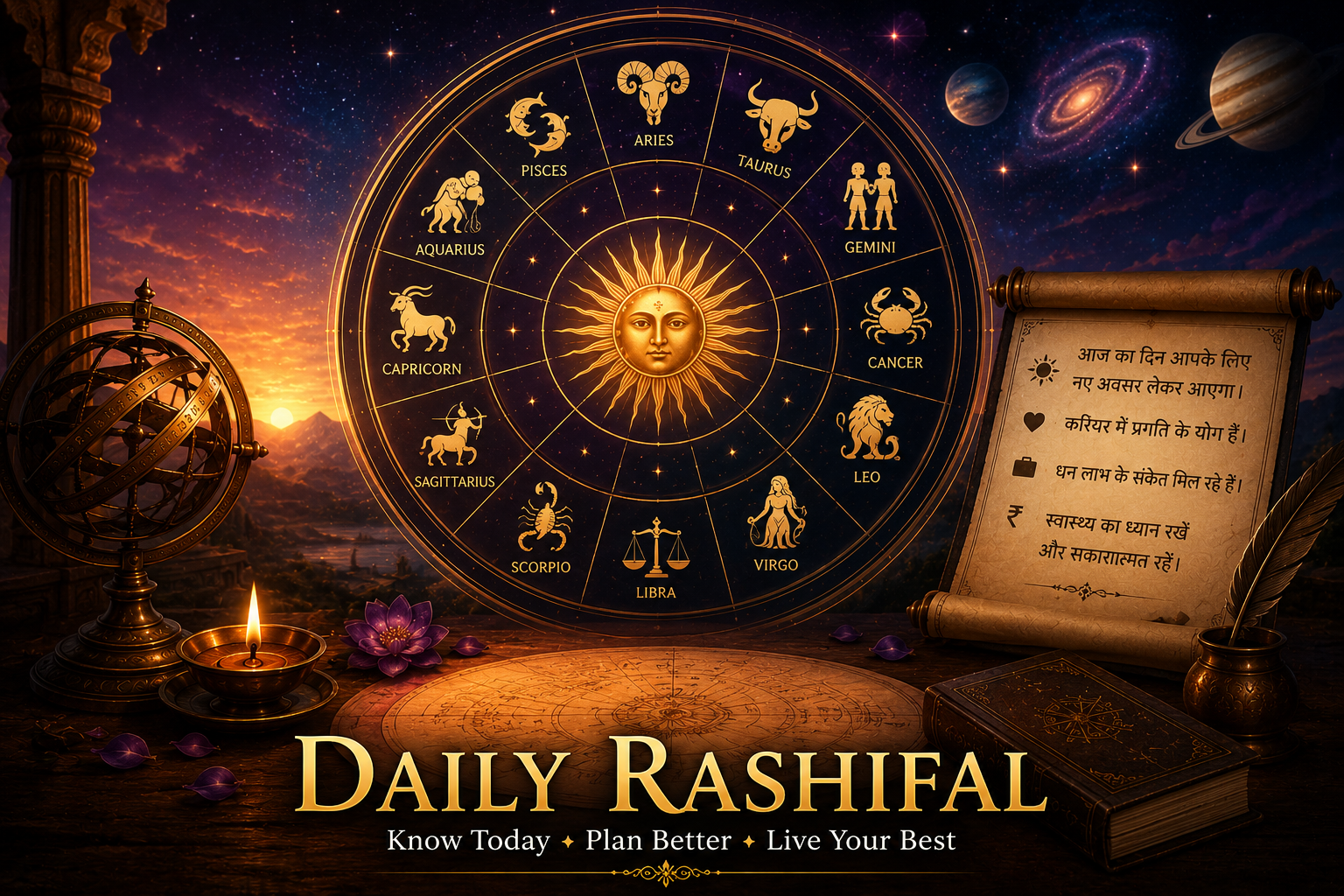
Table of contents
Daily Rashifal is calculated from your Moon sign (Janma Rashi), not your Sun sign, since the Moon moves through the zodiac roughly every 2.5 days versus the Sun's month-long stay in each sign. This is why Vedic daily forecasts feel more responsive than Western ones. Treat it as a general weather forecast for your mood and circumstances, not a fixed prediction, and remember your Dasha period carries far more overall weight than any single day's transit.
Every morning, millions of people check their daily Rashifal, much like checking the weather. It offers a general read on mood, opportunities, and things worth being mindful of that day. People raised on Western media are often confused when Sun-sign predictions don't line up with a traditional Indian Rashifal.
Here's how Vedic astrology actually constructs these daily forecasts, why they differ from Western horoscopes, and how to read them realistically.
Why Does It Use Your Moon Sign, Not Your Sun Sign?
The most important distinction is that daily Rashifal is calculated using your Moon sign, or Janma Rashi, not your Sun sign. Western horoscopes centre on the Sun, representing core identity. Vedic astrology centres on the Moon, representing the mind, emotions, and daily psychological state.
The reasoning follows a specific logic: external circumstances are experienced through the lens of the mind, so tracking the Moon, which governs that mind, gives a clearer picture of how a given day is likely to be perceived and reacted to, rather than tracking identity itself.
The Sun takes roughly 30 days to pass through a single zodiac sign. The Moon completes its full cycle in about 27.3 days, spending only around two to two and a half days in each sign. This faster movement is why a daily Rashifal can meaningfully track day-to-day shifts, where a Sun-based forecast stays essentially unchanged for weeks at a time.
Why Do Vedic and Western Daily Horoscopes Differ So Much?
Two separate factors are involved here, worth keeping distinct rather than blending.
A Different Object in the Sky
Western daily horoscopes use the Sun sign, determined just from month and day of birth. A Vedic Rashifal uses the Moon sign, which requires exact birth time and location to calculate properly.
A Different Way of Measuring the Zodiac
Western astrology uses the Tropical zodiac, fixed to the Earth's seasons. Vedic astrology uses the Sidereal zodiac, measured against the actual, observable positions of the constellations. Due to the gradual precession of the Earth's axis, these two systems have drifted apart over centuries and now sit roughly 24 degrees out of alignment. This offset means even the same planet, say the Sun, can land in a different sign depending on which zodiac system is being used, separate from the fact that Rashifal uses the Moon rather than the Sun in the first place. Both factors combine to make a Vedic Moon sign and a Western Sun sign genuinely different pieces of information, not just the same thing calculated slightly differently.
What Does a Daily Rashifal Actually Track?
An astrologer preparing a daily Rashifal looks at Gochar, planetary transits, specifically where the transiting Moon and other fast-moving planets currently sit relative to your natal Moon sign. This typically translates into guidance across four areas.
Career
Tracking focus, interactions with superiors, and general productivity. A transit through the 10th house (career) or 6th house (obstacles and daily work) tends to correlate with either high productivity or intense demands.
Finance
The transiting Moon is associated with spending impulses and potential gains. Transits through the 2nd house (accumulated wealth) or 11th house (gains) are generally read as more favourable for financial decisions, while transits through the 12th house are more often associated with impulsive spending or unexpected costs.
Relationships
Transits touching the 7th house (partnership) or 5th house (romance) tend to support connection and charm. A transit through a more sensitive house relative to your Rashi can correlate with feeling more easily irritated or misunderstood.
Health
Since the Moon is classically linked to fluids and the mind, transits through the 6th or 8th houses are often read as a signal to prioritise rest rather than push hard physically.
What Else Changes Your Daily Reading?
Roughly speaking, transits through the 1st, 3rd, 6th, 10th, and 11th houses (from your natal Moon) are generally considered more favourable, while transits through the 2nd, 4th, 5th, 7th, 8th, 9th, and 12th houses call for varying degrees of caution or patience.
Beyond house position, the Moon also moves through one of the 27 Nakshatras roughly once a day, and that specific Nakshatra's character adds further texture to the day's general mood and tone.
How Much Weight Should a Daily Forecast Actually Carry?
This is worth being direct about, since it's easy to overweight a single day's reading. Classical astrology generally treats your Dasha period as carrying the most overall influence on your life's broader direction, followed by your natal chart as a whole, then significant transits, with daily Moon movement carrying comparatively less individual weight. In practice, this means a difficult daily transit occurring during a genuinely supportive Dasha period is likely to show up as a minor, manageable annoyance rather than something serious.
Myth vs. Reality
Myth: Daily Rashifal is an absolute prediction of fate.
Reality: It functions more like a general weather forecast, describing likely emotional and circumstantial terrain, not a fixed, guaranteed outcome.
Myth: A Western Sun sign and a Vedic Moon sign differ only because of the zodiac system used.
Reality: Two separate factors are involved, the tropical-sidereal offset and the fact that Rashifal specifically uses the Moon rather than the Sun, both contributing to the difference.
Myth: A difficult daily transit means a genuinely bad day is guaranteed.
Reality: Your overall Dasha period and natal chart carry considerably more weight than a single day's transit, which is why the same "difficult" transit can feel like a non-event during a generally supportive period.
Common Mistakes to Avoid
The most common mistake is checking a Vedic Rashifal using a Western Sun sign, since they're calculated from entirely different starting points. Always use your actual Moon sign, calculated from exact birth details, not an approximation. Another common mistake is treating a single negative prediction as fixed doom, rather than information to plan around with a bit more intention.
Why Check This on DoPuja
Because an accurate Rashifal depends on knowing your genuine Moon sign, calculated from exact birth time and location, not an approximation, precise calculation matters here.
UmasDoPuja's Kundali tool uses the Swiss Ephemeris engine with NASA/JPL DE431 planetary data and correctly applied Lahiri Ayanamsa to establish your genuine Moon sign precisely. For a fuller conversation about how a specific transit interacts with your current Dasha, Talk to Astrologer connects you with a real astrologer for that context.
Why Trust This
The Moon-based calculation method, the Tropical-Sidereal distinction, and the house-based transit framework described here are consistently documented across classical Jyotish sources. We've deliberately kept the Dasha-versus-transit weighting qualitative rather than attaching a specific numeric percentage, since we couldn't verify a precise figure for how these factors compare, and a made-up number would be less honest than describing the general hierarchy accurately.
Frequently Asked Questions
Is Daily Rashifal the same as my horoscope in the newspaper?
Generally no. Newspaper horoscopes usually follow Western Sun signs. Vedic Rashifal follows your Moon sign, which is more personal and changes more frequently.
Can I use my birthday alone to find my Rashi?
You can estimate roughly, but for real accuracy you need your exact birth time and location, since the Moon's position shifts throughout each day.
Do I need to be spiritually inclined to benefit from Rashifal?
Not at all. Many people use it simply as a practical tool for planning their mood and energy through the day.
How should I actually use my daily Rashifal?
Identify your correct Vedic Moon sign, then read your forecast for a week or two, noting how the themes mentioned line up with your experience, before deciding how much weight to give it going forward.
Is it bad luck if my Rashifal predicts a difficult day?
No, it's simply information. Being aware of a potentially difficult transit lets you prepare, stay calmer, and act with a bit more intention rather than being caught off guard.
Recommended articles
Why the Same Daily Horoscope Can Feel Completely Different Two Months Apart
Discover why the same daily Rashifal can feel different at different times. Learn how Moon transits, Jupiter, Saturn, Gochar Samyukti and Dasha shape daily predictions.

Why Your Horoscope Might Be Meant for a Million Other People Too
Discover why daily horoscopes are shared by millions, while a personalised Kundali reading uses your exact birth details, houses, Nakshatra, Dasha and unique chart combinations.
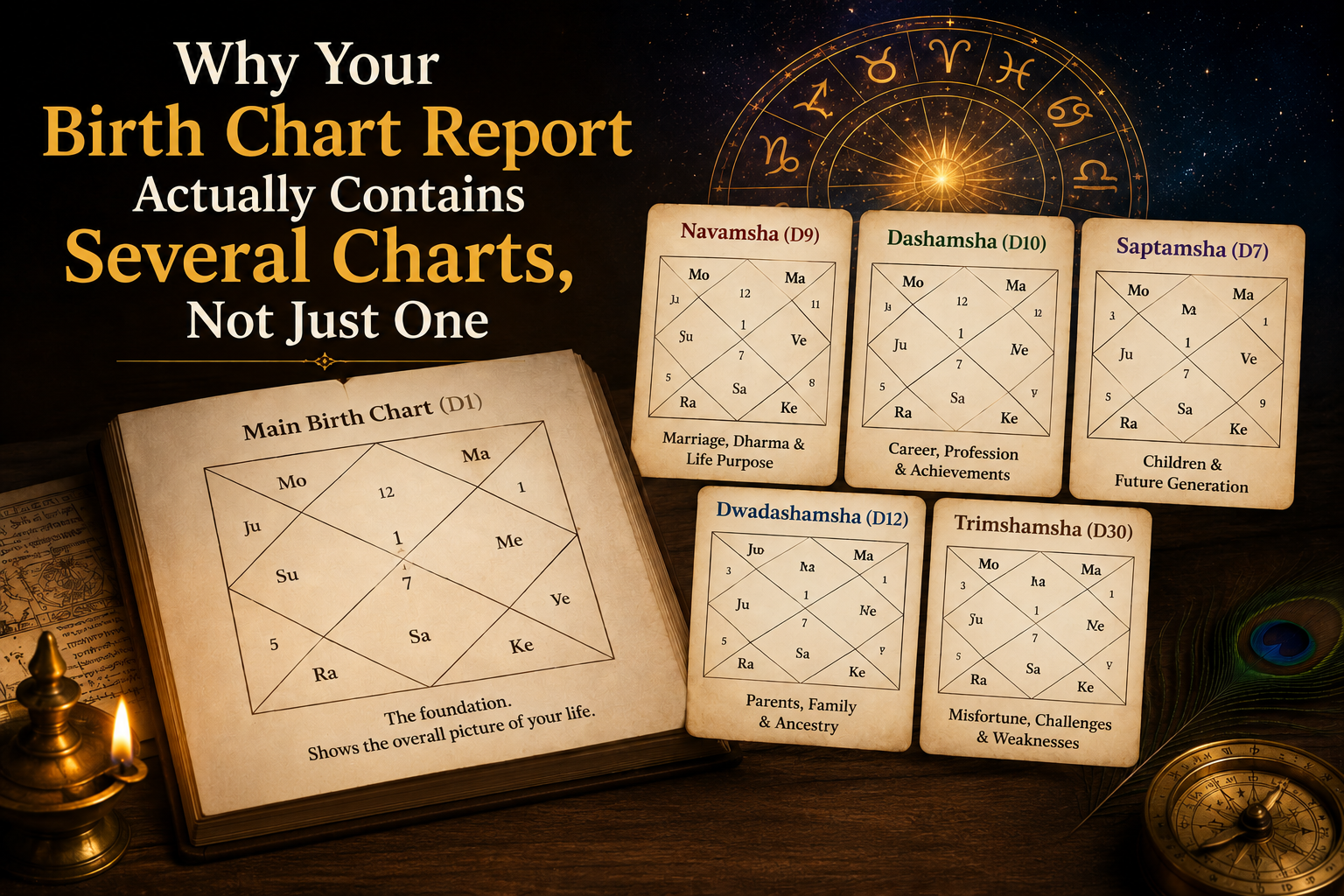
Why Your Birth Chart Report Actually Contains Several Charts, Not Just One
Discover why a detailed Kundali report includes divisional charts like Navamsha, Dashamsha, and Saptamsha, how they refine your birth chart, and why Dasha timing matters.
Comments
Be the first to comment.