Why Your Horoscope Might Be Meant for a Million Other People Too
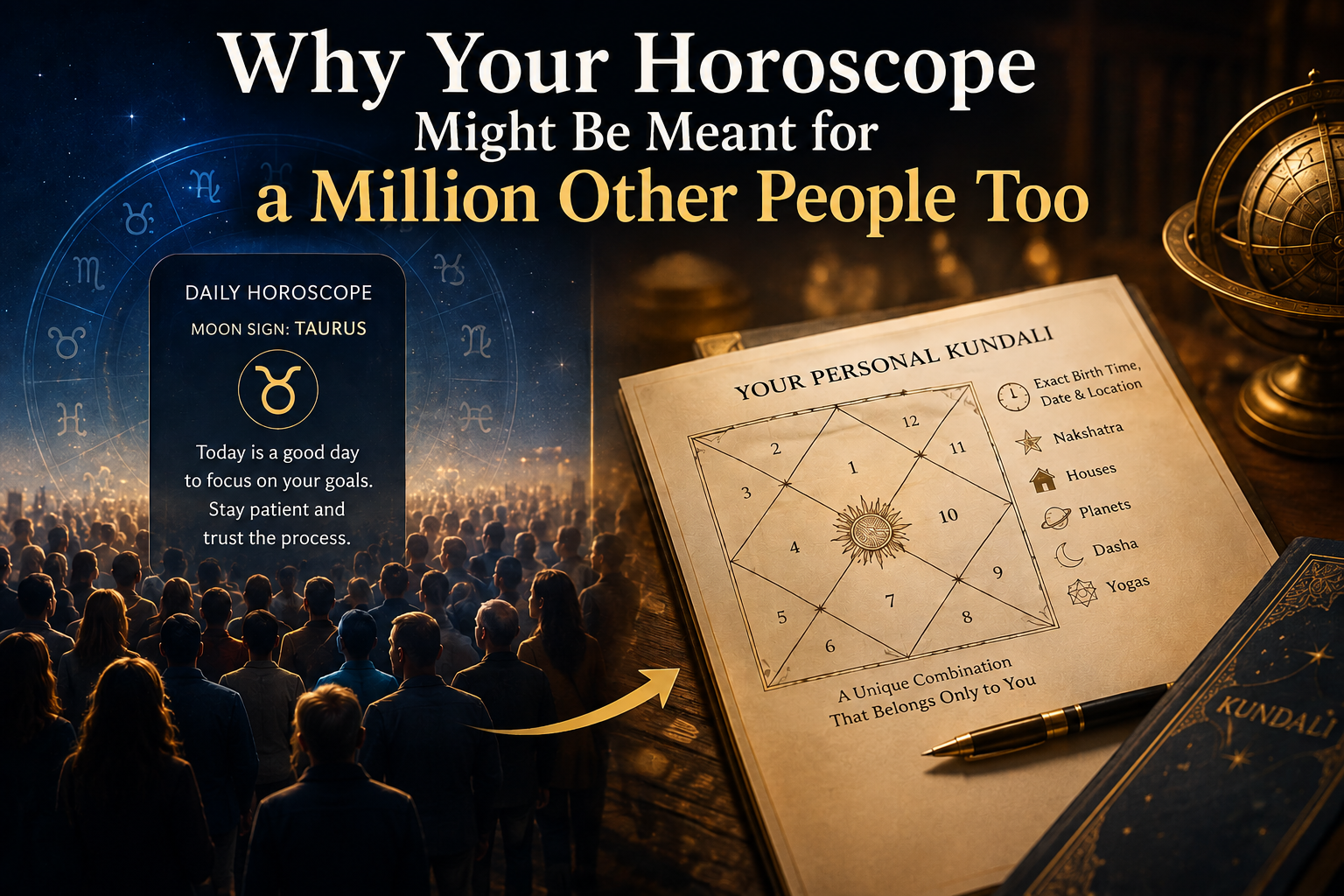
Table of contents
Most people read a daily horoscope and a personal astrology reading as if they're the same kind of thing, just at different lengths. They're actually answering fundamentally different questions.
How Many People Actually Share a Daily Horoscope With You?
A Moon-sign-based daily horoscope, the more accurate version used in Vedic astrology, is calculated from just one of twelve possible Moon signs. That means, roughly speaking, about one in twelve people alive share the same daily horoscope as you on any given day, regardless of their age, location, career, or life circumstances.
This isn't a flaw in the horoscope itself, it's simply what the format is built to do: describe a general mood or tendency shared by a large group, not a specific prediction for one individual life.
What Makes a Full Personal Reading Genuinely Different?
A full reading works from your exact birth time, date, and location, then builds outward from there: which of the 27 Nakshatras your Moon occupied, which of the twelve houses each planet fell into, which specific planetary period, or Dasha, you're currently running, and which yogas, favourable or challenging combinations, are actually present in your chart.
The number of meaningful combinations across all of these factors together is large enough that no two people, even born on the same day in the same city, typically share an identical reading once birth time is factored in precisely. This is the structural reason a personal reading can speak to specifics a daily horoscope was never built to address.
Does This Mean Daily Horoscopes Are Useless?
Not at all, they're just answering a different, narrower question. A daily horoscope can reasonably describe a shared general tendency, since it's genuinely calculated from a real astronomical position, the Moon's current sign. What it can't do is tell you how that shared tendency interacts with your own specific Dasha timing, your own house placements, or a yoga unique to your own chart. Both are legitimate tools, they're just built to answer different-sized questions.
Why Does a Human Astrologer Add Value Beyond Either Format?
This connects to something covered in more depth in our dedicated article on live consultations: a human astrologer can weigh your specific combination of factors against each other in a way neither a generic horoscope nor a static automated report fully does. If your daily transit suggests caution but your current Dasha is genuinely strong, a real conversation can contextualise that apparent contradiction, something a one-size-fits-many horoscope was never designed to do.
When to Get a Professional Reading Instead of Relying on Daily Horoscopes Alone
Given how much a daily horoscope leaves out by design, a full personal reading is worth it if:
You want to understand a specific life question, not just a general daily tendency shared with millions of others
You've noticed your daily horoscope rarely feels accurate and want to know how your own Dasha and house placements might explain why
You're making a significant decision and want your unique combination of factors weighed together, not a generic prediction
Myth vs. Reality
Myth: A daily horoscope and a personal reading are the same thing at different lengths.
Reality: A daily horoscope is shared by roughly one in twelve people by design. A personal reading works from a combination of factors specific enough that it's rarely shared by anyone else exactly.
Myth: If a daily horoscope doesn't feel accurate, astrology itself isn't working.
Reality: A daily horoscope was never built to reflect your specific house placements, Dasha, or personal yogas, only your shared Moon sign. That's a scope limitation, not a failure of accuracy.
Myth: Reading enough daily horoscopes eventually gives you the same insight as a full reading.
Reality: No amount of daily horoscopes can substitute for the specific combination of factors, unique to your exact birth details, that only a full reading actually examines.
Why Check This on DoPuja
Because a genuinely personal reading depends on your exact birth details, not a shared Moon sign alone, accurate calculation matters here.
UmasDoPuja's Kundali tool uses the Swiss Ephemeris engine with NASA/JPL DE431 planetary data and correctly applied Lahiri Ayanamsa to calculate your unique combination of houses, Nakshatra, and Dasha precisely from your exact birth details. For a full, personal reading that goes beyond what any daily horoscope can offer, Talk to Astrologer connects you with a real astrologer for that context.
Why Trust This
The Moon-sign basis of daily horoscopes, and the combinatorial specificity of a full birth chart using exact birth time, location, houses, Nakshatra, and Dasha together, reflect straightforward, verifiable mathematics rather than an interpretive claim. The distinction between these two formats answering different-scoped questions is a structural fact about how each is built, not a matter of one being more "real" than the other.
Frequently Asked Questions
How many people actually share the same daily horoscope as me?
Roughly one in twelve, since a Moon-sign-based daily horoscope is calculated from just one of twelve possible signs, shared by anyone with that same Moon sign regardless of other life details.
Why does a full reading feel so much more specific than a daily horoscope?
Because it works from your exact birth time, houses, Nakshatra, and current Dasha together, a combination specific enough that it's rarely shared by anyone else in exact detail.
Are daily horoscopes just inaccurate, then?
Not inaccurate, just narrower in scope. They describe a shared general tendency well, but were never built to reflect your individual house placements or Dasha timing.
Can reading my daily horoscope every day eventually tell me as much as a full reading?
No. It's a fundamentally different, narrower question than what a full reading examines, no amount of repetition changes that scope.
What does a human astrologer add beyond either format?
The ability to weigh your specific factors against each other directly, resolving apparent contradictions a generic horoscope or static report can't contextualise on its own.
Recommended articles
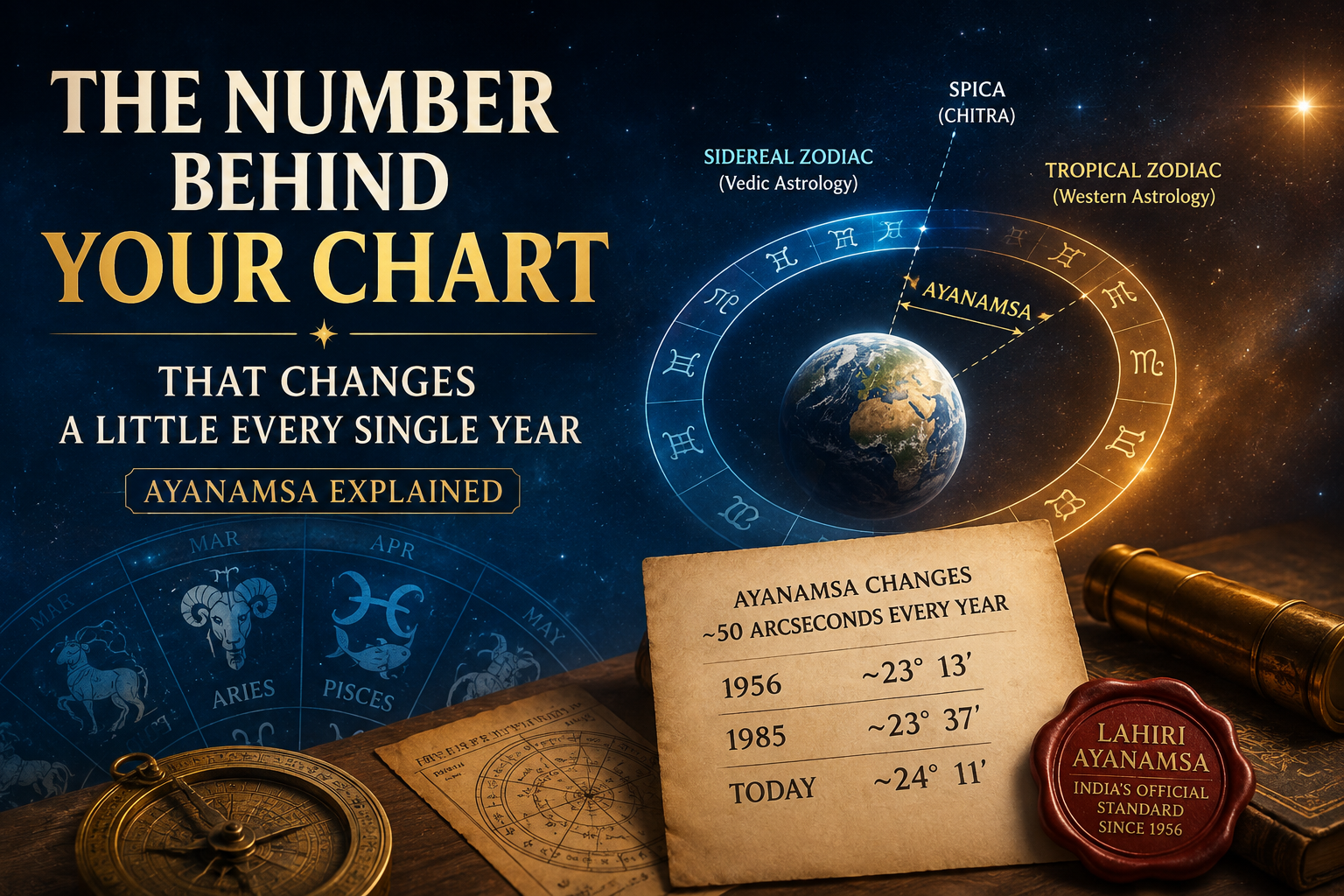
The Number Behind Your Chart That Changes a Little Every Single Year
Discover why Ayanamsa changes every year, how Lahiri Ayanamsa became the Vedic astrology standard, and why its precise value matters for accurate Kundali calculations.
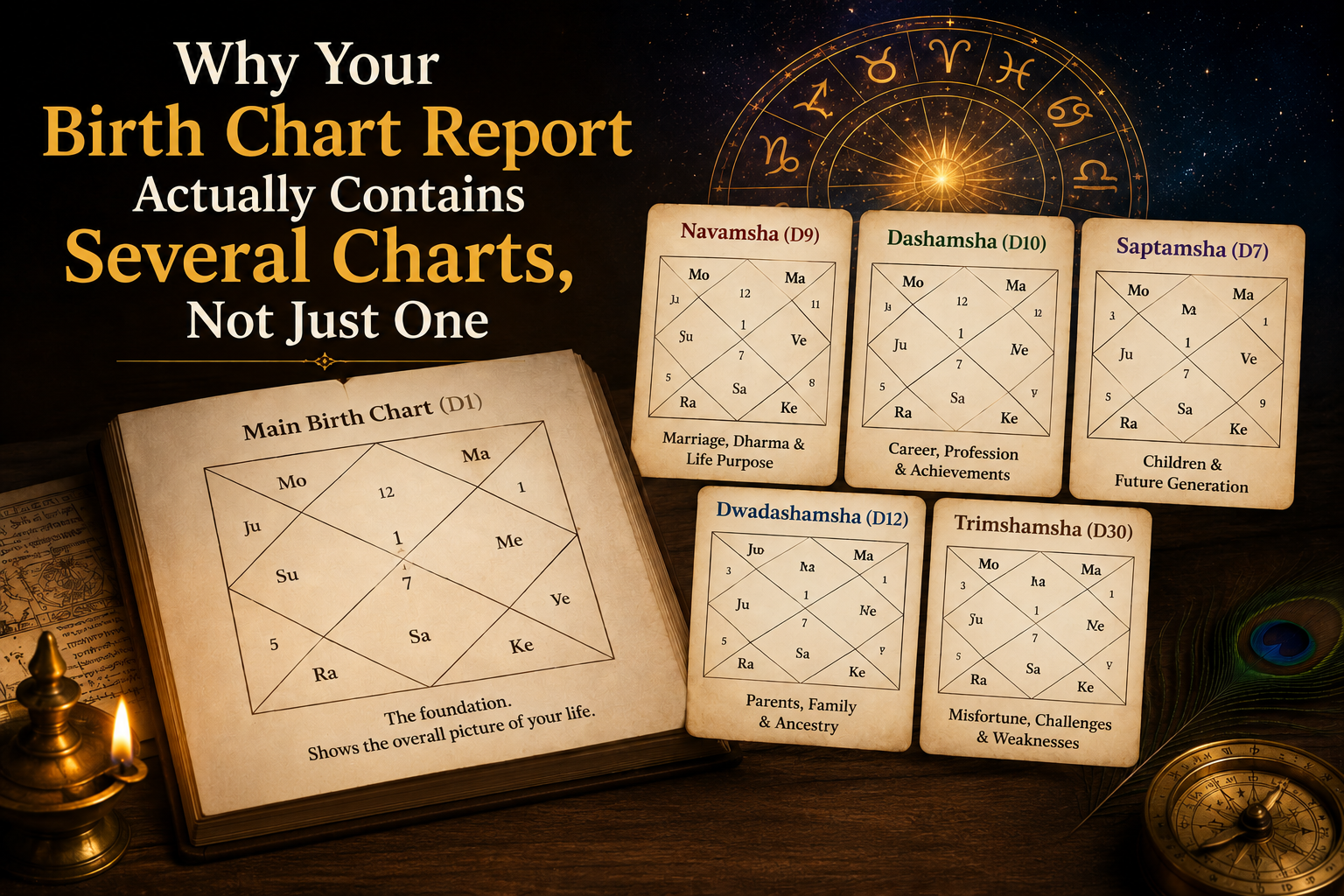
Why Your Birth Chart Report Actually Contains Several Charts, Not Just One
Discover why a detailed Kundali report includes divisional charts like Navamsha, Dashamsha, and Saptamsha, how they refine your birth chart, and why Dasha timing matters.
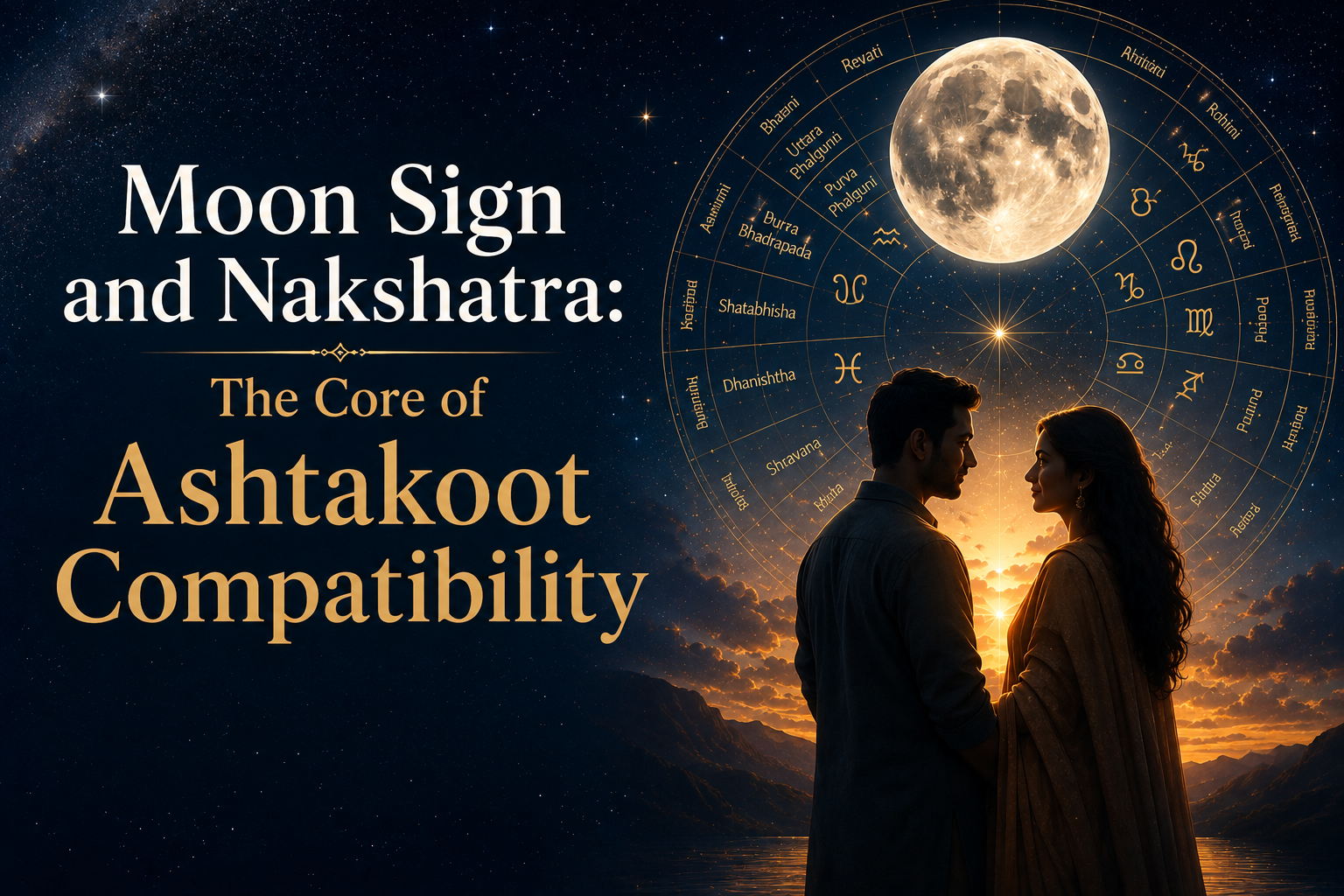
Moon Sign and Nakshatra: The Core of Ashtakoot Compatibility
Understand how Moon Sign and Nakshatra drive Ashtakoot compatibility, including Tara, Gana, Bhakoot, Nadi, scoring, doshas, and cancellation rules.
Comments
Be the first to comment.