Annaprashan Ceremony: When and How to Perform It? Know the Rituals
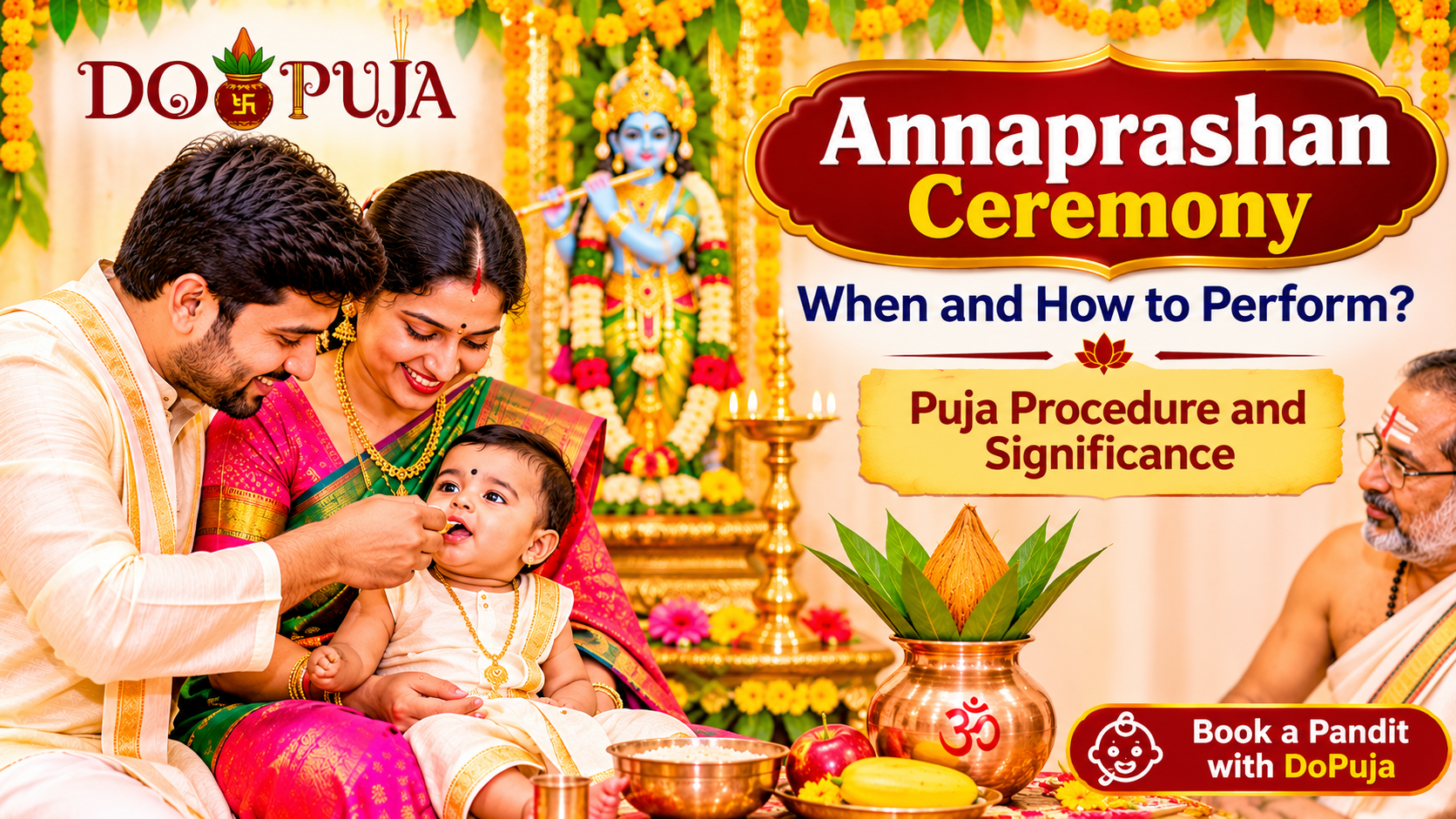
Table of contents
Annaprashan Ceremony: When and How to Perform It? Puja Procedure, Rituals and Significance
A baby's first meal of solid food is one of the most memorable milestones in every family's life. In Hindu tradition, this beautiful occasion is celebrated as Annaprashan, a sacred ceremony that marks the beginning of a baby's journey from mother's milk to solid food.
But do you know when Annaprashan should be performed? What rituals are followed during the ceremony? Which puja items are required, and how is the auspicious muhurat selected?
Let's explore the meaning, importance, traditional rituals, and complete Annaprashan Puja Vidhi to help you plan this special occasion for your little one.
What Is the Annaprashan Ceremony?
Annaprashan, also known as the First Rice Feeding Ceremony, is a traditional Hindu ritual in which a baby is given solid food, usually cooked rice, for the first time.
The word Annaprashan comes from two Sanskrit words: "Anna," meaning food or rice, and "Prashan," meaning feeding or consuming.
This ceremony is performed to seek divine blessings for the child's good health, nourishment, happiness, and prosperity.
In many Hindu families, Annaprashan is conducted as a puja in the presence of family members, elders, and a Vedic pandit.
When Should Annaprashan Be Performed?
One of the most common questions parents ask is, "When is the right time to perform Annaprashan?"
Traditionally, Annaprashan is performed when a baby is around six months old. However, the exact timing may vary depending on family customs, regional traditions, and the child's readiness for solid food.
Some families consider the following factors while selecting the ceremony date:
Baby's age and readiness for solid food
Birth star (Janma Nakshatra)
Baby's Rashi
Auspicious Tithi
Suitable day and Nakshatra
Family traditions and customs
Guidance from a knowledgeable priest
Parents can consult a pediatrician to understand when their baby is developmentally ready for solid foods. A pandit can help identify an auspicious muhurat according to the family's traditions.
Importance of the Annaprashan Ceremony
Annaprashan is more than just a traditional first-feeding event. It represents an important milestone in a child's life.
Here are some reasons why this ceremony is considered special:
1. Beginning of a New Food Journey
The ceremony marks the baby's introduction to solid food and celebrates an important stage of growth.
2. Seeking Divine Blessings
Families perform puja to seek blessings from the divine for the child's health, happiness, and well-being.
3. Celebrating Family Traditions
Annaprashan brings family members and relatives together to celebrate a meaningful cultural tradition.
4. Prayers for Health and Prosperity
The ceremony symbolizes the family's prayers for the child's nourishment, strength, and a happy future.
Annaprashan Puja Samagri: Items Required for the Ceremony
Before performing the Annaprashan Puja, families traditionally arrange the required puja materials.
Commonly used items include:
Rice or cooked rice
Milk and ghee
Fruits and flowers
Turmeric and kumkum
Sandalwood paste
Betel leaves and betel nuts
Coconut
Kalash
Mango leaves
Akshata (rice mixed with turmeric)
Diya and cotton wicks
Incense sticks
Camphor
Puja plate
Traditional naivedyam offerings
The exact Annaprashan puja samagri may vary depending on regional customs and the procedure followed by the priest. It is best to confirm the list with your pandit before the ceremony.
Annaprashan Puja Vidhi: How Is the Ceremony Performed?
The Annaprashan ceremony is generally conducted by a Hindu priest following traditional Vedic rituals. The procedure may differ according to family customs and regional practices.
Here is a general overview of the Annaprashan Puja Vidhi.
1. Preparation of the Puja Area
The ceremony area is cleaned and decorated with flowers, mango leaves, and traditional decorations. A puja setup is arranged with the required materials.
2. Ganapati Puja
The ceremony traditionally begins with Lord Ganesha's worship. Families pray for the removal of obstacles and the successful completion of the ceremony.
3. Sankalpam
The pandit performs Sankalpam, stating the family's intention to conduct the Annaprashan ceremony and seeking divine blessings for the child.
4. Punyahavachanam
In traditions where it is performed, Punyahavachanam is conducted as a purification ritual to seek auspiciousness and blessings for the occasion.
5. Worship of the Deities
The priest performs the prescribed prayers and offerings to the deities according to the family's tradition.
6. First Feeding of Rice
After the puja, the baby's first solid food is offered. Traditionally, a small quantity of soft, properly prepared food is given by a parent or elder according to the family's customs.
7. Blessings from Elders
Family members and elders bless the baby and pray for good health, happiness, and prosperity.
The ceremony concludes with prayers and the distribution of prasadam.
Note: Rituals and food preparation may vary. Follow your pediatrician's guidance regarding age-appropriate food, texture, ingredients, and possible allergies.
Who Performs the Annaprashan Puja?
An experienced Hindu pandit or purohit can guide the family through the traditional Annaprashan rituals.
A pandit can help with:
Selecting an auspicious Annaprashan muhurat
Explaining the required puja samagri
Performing Ganapati Puja and Sankalpam
Conducting the prescribed Vedic rituals
Guiding the family through the first-feeding ceremony
Completing the puja according to family traditions
Choosing a suitable pandit helps families conduct the ceremony with proper guidance and preparation.
How to Book a Pandit for Annaprashan Through DoPuja?
Planning your baby's Annaprashan ceremony involves several arrangements, including selecting a suitable date, preparing puja materials, and finding a knowledgeable pandit.
DoPuja makes it easier to explore pandit booking options for traditional Hindu ceremonies.
Through the Do Puja platform, you can:
Explore available puja and pandit booking services.
Check options for traditional Hindu ceremonies.
Find services based on your location and requirements.
Plan your home puja with greater convenience.
Visit DoPuja to explore available services and pandit booking options for your family's special occasion.
Frequently Asked Questions About Annaprashan
1. What is the right age for Annaprashan?
Annaprashan is traditionally performed when a baby is around six months old. The timing should also consider the baby's developmental readiness for solid foods and pediatrician guidance.
2. Which food is traditionally given during Annaprashan?
Cooked rice or a soft rice-based preparation is commonly used during the ceremony. The baby's food should be age-appropriate and prepared according to pediatrician recommendations.
3. How is the Annaprashan muhurat selected?
The muhurat is generally selected by considering the baby's birth star, Rashi, Tithi, suitable day, and family traditions. A knowledgeable pandit can help identify an auspicious date.
4. Is a pandit necessary for Annaprashan?
Families who wish to follow traditional Vedic rituals often invite a pandit to perform the puja, guide the ceremony, and help with the muhurat.
5. What items are required for Annaprashan Puja?
Common items include rice, fruits, flowers, coconut, turmeric, kumkum, betel leaves, a kalash, diya, incense sticks, and other traditional puja materials.
6. Can Annaprashan be performed at home?
Yes. Many families conduct Annaprashan at home with a pandit, following their family traditions and preferred puja procedure.
Conclusion
Annaprashan is a beautiful Hindu tradition that celebrates a baby's first step towards solid food. It is a meaningful occasion filled with family happiness, cultural values, and prayers for the child's bright future.
By selecting a suitable muhurat, arranging the required puja samagri, and following traditional rituals with proper guidance, families can make this milestone memorable.
Planning an Annaprashan ceremony for your little one? Explore DoPuja for available pandit booking services and make your family's special occasion easier to organize.
Recommended articles
 DoPuja services
How to Perform Satyanarayana Swamy Vratam at Home? | DoPuja
Learn how to perform Satyanarayana Swamy Vratam at home with this simple guide. Explore the puja vidhi, required puja materials, Satyanarayana Vrat Katha, prasadam preparation, and spiritual significance. Discover how to book an experienced pandit for Satyanarayana Swamy Puja through Do Puja.
 DoPuja services
Griha Pravesh Puja and Vastu Shanti Puja: Importance and Procedure
Learn why Griha Pravesh Puja and Vastu Shanti Puja are performed before entering a new home. Explore rituals, puja samagri, muhurat and pandit booking through DoPuja.
 DoPuja services
How to Perform a Baby Naming Ceremony? Namakaranam Rituals | DoPuja
Discover the significance of the Hindu Namakaranam ceremony and learn when to perform it, how to select a baby's name based on birth Nakshatra, the required puja items, and the traditional rituals. Explore how DoPuja can help you find pandit-booking options for your baby's special day.
Comments
Be the first to comment.