How to Perform a Baby Naming Ceremony? Namakaranam Rituals | DoPuja
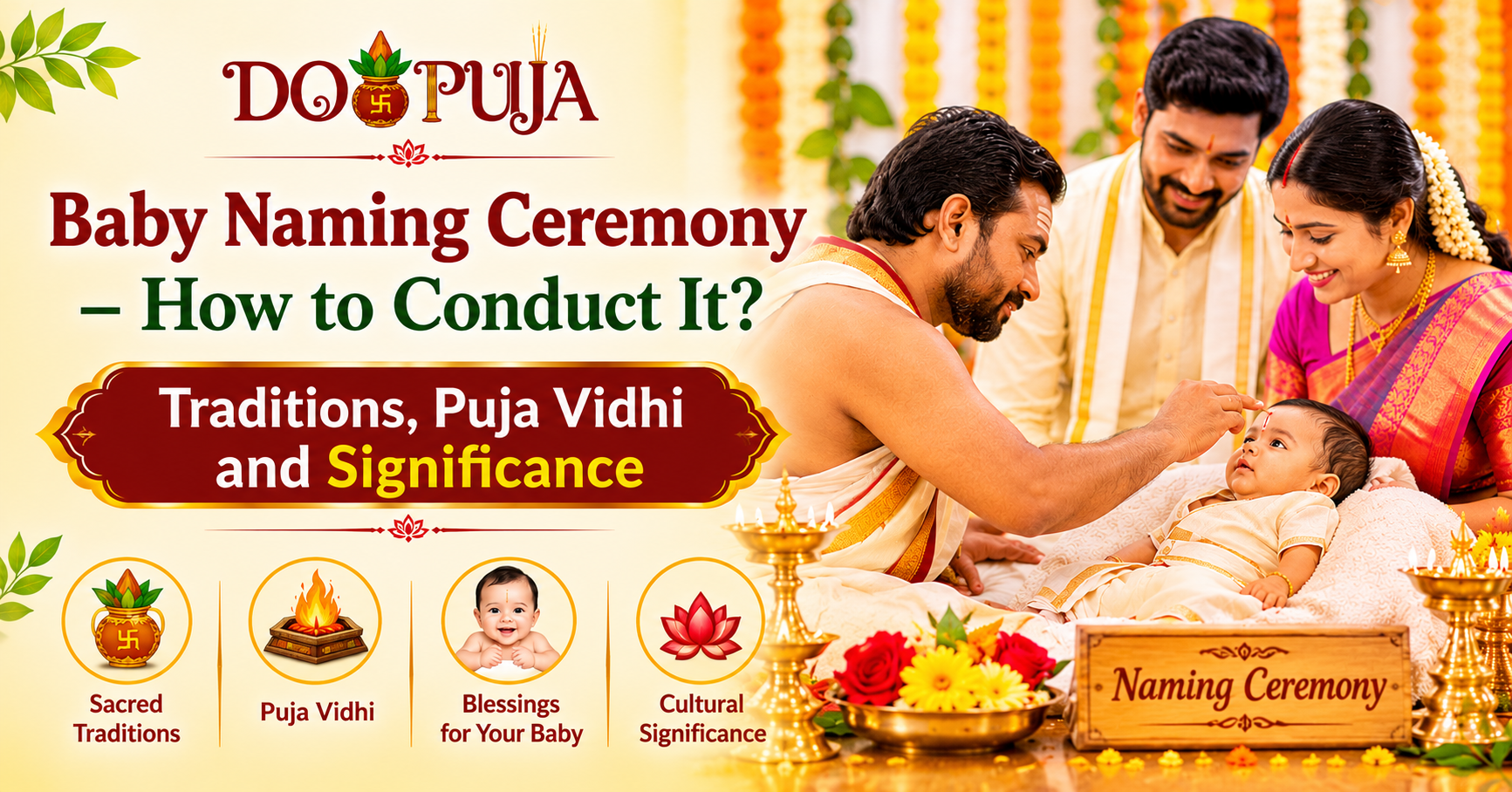
Table of contents
How to Perform a Baby Naming Ceremony (Namakaranam): Rituals, Traditions and Significance
A baby’s naming ceremony is one of the most special occasions in a Hindu family. Known as Namakaranam or Namakarana Sanskar, this traditional ceremony marks an important milestone in a newborn baby's life. It is the occasion when the baby receives a name and is formally welcomed into the family and community.
But do you know when the Namakaranam ceremony should be performed, how the rituals are conducted, and how a baby's name is traditionally selected based on their birth Nakshatra?
In this guide, discover the significance of the Hindu naming ceremony, its traditional practices, the required puja items, and the steps involved in performing the Namakaranam Puja at home.
What Is the Namakaranam Ceremony?
Namakaranam is one of the traditional Hindu Samskaras performed to give a newborn baby a name. The word Namakaranam comes from Sanskrit, where “Nama” means name and “Karanam” means giving or assigning.
This ceremony is traditionally performed with prayers and blessings from family members and a priest. It is considered an important occasion to seek divine blessings for the baby's health, happiness, prosperity, and well-being.
The ceremony may be performed at home or in a temple, depending on family traditions and preferences.
When Should the Namakaranam Ceremony Be Performed?
The timing of the Namakaranam ceremony may vary according to family customs, regional traditions, and astrological considerations.
Commonly followed timings include:
11th or 12th day after birth: Many families traditionally perform the naming ceremony around this time.
21st or 27th day: Some families follow these days according to their customs.
After consulting a priest: Families may choose an auspicious date and time based on the baby's birth details and family traditions.
Before finalising the date, families often consult a Hindu priest or astrologer to identify a suitable Muhurat.
How Is a Baby's Name Selected Based on Birth Nakshatra?
In Hindu tradition, a baby's name is sometimes selected based on their birth Nakshatra and Pada.
The Nakshatra is determined using the baby's birth date, time, and place. Each Nakshatra has traditionally associated starting syllables that families may consider while choosing a name.
Here are some factors families commonly consider:
Baby's birth Nakshatra
Birth Pada
Traditionally recommended starting syllable
Meaning and significance of the name
Family customs and preferences
Many families use these traditional guidelines while selecting a meaningful name for their newborn.
Puja Items Required for the Namakaranam Ceremony
Before performing the Namakaranam Puja, families usually arrange the required puja materials.
Commonly used items include:
Lord Ganesha photo or idol
Kalash and coconut
Turmeric and kumkum
Flowers and garlands
Betel leaves and betel nuts
Rice or Akshata
Fruits and sweets
Camphor and incense sticks
Oil or ghee lamp
Panchamrit
New clothes for the baby
A clean cloth or cradle for the baby
The exact list may vary depending on regional customs and the priest's instructions.
Step-by-Step Namakaranam Puja Vidhanam
The Namakaranam ceremony is performed through a series of traditional rituals. The exact procedure may differ from one family or region to another.
1. Preparing the Puja Area
The family cleans and decorates the puja area with flowers, mango leaves, and traditional decorations. The baby is dressed in new or clean clothes, and the required puja materials are arranged.
2. Ganapati Puja
The ceremony generally begins with Lord Ganesha Puja. Devotees offer prayers to Lord Ganesha and seek blessings for the successful completion of the ceremony without obstacles.
3. Punyahavachanam
Punyahavachanam is a traditional purification ritual performed with Vedic mantras. It is intended to sanctify the surroundings and create an auspicious atmosphere for the ceremony.
4. Sankalpam
The priest performs Sankalpam, stating the purpose of the ceremony and seeking divine blessings for the newborn baby and family.
5. Selecting the Baby's Name
The baby's name may be selected based on the birth Nakshatra, Pada, family traditions, or parental preferences. The priest may guide the family regarding traditionally recommended starting syllables.
6. Whispering the Name into the Baby's Ear
One of the most meaningful moments of the ceremony is when the baby's chosen name is gently whispered into their ear by a parent or family elder, according to family tradition.
This ritual symbolises formally introducing the baby to their name.
7. Blessings and Aarti
The family members bless the newborn and pray for a healthy, happy, and prosperous life. The ceremony may conclude with Aarti and the distribution of Prasadam.
Why Is a Pandit Important for the Namakaranam Puja?
The Namakaranam ceremony involves traditional prayers, mantras, and rituals. A knowledgeable Hindu priest can guide the family through the procedure and help conduct the ceremony according to their customs.
A pandit can assist with:
Explaining the traditional Namakaranam Puja Vidhanam
Identifying a suitable Muhurat
Performing Ganapati Puja and other required rituals
Conducting Sankalpam and Vedic prayers
Guiding the family through the naming ceremony
Explaining the required puja materials
Booking a pandit in advance can help families prepare for the ceremony more comfortably.
Book a Pandit for Your Baby's Naming Ceremony with DoPuja
Planning a baby's Namakaranam ceremony involves arranging the puja materials, selecting an auspicious time, and finding a suitable pandit. With Do Puja, families can explore Hindu puja services and pandit-booking options conveniently.
Through the DoPuja website and app, you can explore services such as:
Naming Ceremony Puja
Home Puja
Temple Puja
Digital or Online Puja
Other traditional Hindu ceremonies
Choose a suitable service based on your requirements and location.
Visit umasdopuja.com to explore Do Puja services and pandit-booking options.
Frequently Asked Questions About the Namakaranam Ceremony
1. What is the Hindu baby naming ceremony called?
The Hindu baby naming ceremony is traditionally known as Namakaranam or Namakarana Sanskar. It is performed to formally give a name to a newborn baby.
2. On which day is the Namakaranam ceremony performed?
Many families perform the ceremony on the 11th or 12th day after birth. However, the date may vary according to family customs, regional traditions, and the guidance of a priest.
3. Can Namakaranam be performed at home?
Yes. Many families perform the Namakaranam Puja at home with the guidance of a priest. Some families also choose to conduct it in a temple.
4. How is a baby's name selected in Hindu tradition?
Traditionally, some families select a baby's name based on their birth Nakshatra and Pada. The associated starting syllables may be considered while choosing a meaningful name.
5. What items are required for Namakaranam Puja?
Common puja items include flowers, fruits, coconut, kalash, turmeric, kumkum, Akshata, betel leaves, camphor, incense sticks, and a lamp. The exact requirements depend on the family's traditions and the priest's instructions.
6. Is a pandit required for the Namakaranam ceremony?
A pandit is not compulsory for every family, but many families prefer priestly guidance to perform the traditional rituals, prayers, and mantras correctly.
Conclusion
The Namakaranam ceremony is a beautiful Hindu tradition that celebrates a newborn baby's identity and welcomes them into the family. From selecting a meaningful name based on birth Nakshatra to performing traditional prayers and receiving blessings, every part of the ceremony holds special significance for the family.
Planning the ceremony with proper preparation and traditional guidance can make the occasion more meaningful.
Looking for a pandit for your baby's Namakaranam ceremony? Explore Do Puja for Naming Ceremony Puja and other Hindu puja services.
App: Do Puja
Recommended articles
 DoPuja services
How to Perform Satyanarayana Swamy Vratam at Home? | DoPuja
Learn how to perform Satyanarayana Swamy Vratam at home with this simple guide. Explore the puja vidhi, required puja materials, Satyanarayana Vrat Katha, prasadam preparation, and spiritual significance. Discover how to book an experienced pandit for Satyanarayana Swamy Puja through Do Puja.
 DoPuja services
Annaprashan Ceremony: When and How to Perform It? Know the Rituals
When is the right time to celebrate your baby's Annaprashan ceremony? Discover the traditional rituals, auspicious muhurat, puja samagri, and step-by-step procedure of this special Hindu first rice feeding ceremony. Learn how to plan the occasion and explore pandit booking options through DoPuja.
 DoPuja services
Why Do Hindus Perform Puja Before Engagement? Discover Its Significance!
Why do Hindu families perform puja before an engagement? Explore the spiritual significance of Engagement Puja, Ganapati Puja, traditional rituals, required puja items, and the importance of seeking a pandit's guidance. Discover how DoPuja can help you explore pandit booking options for your special occasion.
Comments
Be the first to comment.