Are the Planets in Your Horoscope Connected to Life's Challenges? Discover the Importance of Navagraha Puja!
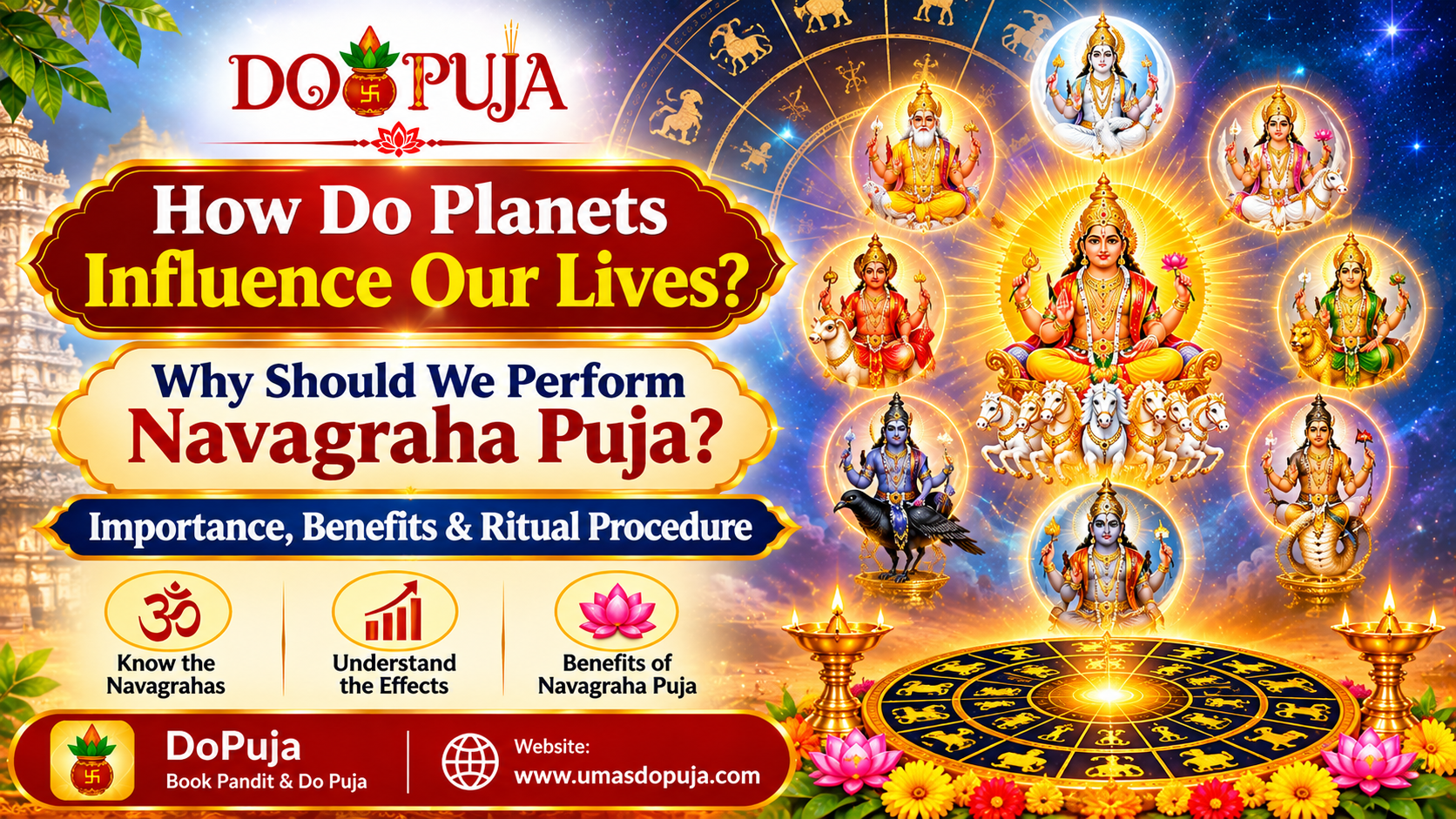
Table of contents
How Do Planets Influence Our Lives? Why Should You Perform Navagraha Puja? Importance, Benefits and Rituals
Have you ever wondered why certain tasks get delayed repeatedly? Why does success sometimes seem difficult despite putting in your best efforts? According to Vedic astrology, the positions of planets in a person's birth chart may be associated with different aspects of life. This is one of the reasons why Navagraha Puja holds an important place in Hindu tradition.
Navagraha Puja is a traditional Hindu ritual dedicated to the worship of the nine celestial planets. Devotees perform this puja to seek planetary peace, spiritual well-being, happiness and prosperity.
But who are the nine planets? How are they believed to influence our lives? Why is Navagraha Shanti Puja performed, and what is the traditional procedure?
Let's explore everything you need to know about Navagraha Puja, its importance, traditional benefits, required materials and step-by-step puja vidhi.
Who Are the Nine Planets in Navagraha?
In Hindu astrology, the nine planetary deities are collectively known as Navagraha. Each planet is traditionally associated with different aspects of human life.
The nine Navagrahas are:
Surya (Sun): Associated with confidence, leadership, authority, recognition and energy.
Chandra (Moon): Represents the mind, emotions, mental peace and relationship with the mother.
Mangal (Mars): Associated with courage, strength, determination and property.
Budha (Mercury): Represents intelligence, education, communication, business and analytical abilities.
Guru (Jupiter): Associated with wisdom, knowledge, spirituality, marriage, children and prosperity.
Shukra (Venus): Represents love, relationships, marital happiness, luxury and artistic abilities.
Shani (Saturn): Associated with karma, discipline, patience, hard work and justice.
Rahu: Traditionally connected with desires, ambitions, sudden changes and material pursuits.
Ketu: Represents spirituality, detachment, self-realisation and inner growth.
According to Vedic astrology, the placement and planetary periods of these nine grahas are interpreted in relation to different areas of a person's life.
How Do Planets Influence Our Lives According to Astrology?
In Vedic astrology, planetary positions in a birth chart are traditionally studied to understand different aspects of life.
1. Career and Business
Surya, Budha, Guru and Shani are traditionally associated with leadership, intelligence, knowledge, discipline and professional responsibilities. Their positions are considered during astrological career and business predictions.
2. Marriage and Family Life
Shukra, Guru and Chandra are traditionally associated with relationships, marriage, emotional bonding and family happiness. These planets are also considered in horoscope matching and marriage-related astrological analysis.
3. Wealth and Financial Stability
Guru, Shukra and Budha are traditionally connected with prosperity, financial activities, business and wealth.
4. Education and Intelligence
Budha and Guru are associated with learning, wisdom, communication and decision-making abilities.
5. Mental Peace and Confidence
Chandra represents the mind and emotions, while Surya is traditionally associated with confidence, vitality and self-esteem.
It is important to understand that not every difficulty in life is caused by planetary positions. These are traditional astrological beliefs and should not be considered scientifically established causes or guaranteed predictions.
What Are Navagraha Doshas?
In Vedic astrology, certain planetary placements, combinations or periods are sometimes described as Graha Doshas. Astrological terms such as Mangal Dosha, Shani Sade Sati and Rahu-Ketu-related influences are commonly discussed in this context.
People who believe they are experiencing unfavourable planetary influences may consult an astrologer and perform traditional remedies such as:
Navagraha Shanti Puja
Navagraha Mantra Jaap
Navagraha Homam
Individual planetary prayers and rituals
The recommended ritual may vary depending on the person's horoscope and family tradition.
These religious practices are followed as expressions of faith and devotion. They should not be viewed as guaranteed solutions to personal, financial, health or relationship problems.
Why Should You Perform Navagraha Puja?
Navagraha Puja is performed to worship the nine planetary deities and seek their blessings according to Hindu tradition.
Some traditional reasons for performing Navagraha Puja include:
Seeking peace and auspiciousness associated with the nine planets.
Praying for happiness, prosperity and harmony in life.
Performing religious rituals before important new beginnings.
Seeking guidance for planetary peace based on astrological advice.
Praying for family well-being and a positive environment.
Strengthening spiritual connection through prayers and mantra chanting.
For many devotees, Navagraha Puja is an important way to express faith and devotion.
Traditional Benefits of Navagraha Puja
According to Hindu religious beliefs, devotees perform Navagraha Puja with the intention of seeking several spiritual benefits.
1. Mental Peace
Prayer and mantra chanting can provide an opportunity for reflection, concentration and spiritual comfort.
2. Positive Thinking
Regular prayer may encourage a positive mindset, devotion and self-confidence.
3. Family Well-being
Devotees offer prayers for happiness, harmony and peace within their families.
4. Awareness of Karma
Shani worship is traditionally associated with discipline, patience, responsibility and the importance of good actions.
5. Spiritual Growth
Navagraha mantras and rituals provide devotees with an opportunity to deepen their faith and spiritual connection.
When Should You Perform Navagraha Puja?
Navagraha Puja can be performed on different occasions depending on personal beliefs, family traditions and astrological guidance.
Common occasions include:
When an astrologer recommends planetary peace rituals.
During Griha Pravesh or housewarming ceremonies.
Before marriage or other important family ceremonies.
Before starting a new business or professional activity.
For family happiness and peace.
During auspicious dates and special religious occasions.
As part of a specific Navagraha Shanti ritual.
Consulting an experienced priest or astrologer can help you understand the appropriate date, muhurat and ritual procedure.
Navagraha Puja Samagri: Essential Items Required
The following items are commonly used during Navagraha Puja:
Navagraha idols or pictures representing the nine planetary deities
Puja chowki and clean cloth
Kalash and clean water
Haldi (turmeric), kumkum and sandalwood paste
Akshata (uncooked rice)
Flowers and garlands
Incense sticks and diya
Ghee or oil
Fruits and sweets
Coconut and betel leaves
Betel nuts
Traditional grains and offerings associated with the planets
Naivedyam and prasad
The exact Navagraha Puja samagri list may vary according to regional customs, family traditions and the type of ritual being performed.
Navagraha Puja Vidhi: Step-by-Step Procedure
The Navagraha Puja procedure may differ depending on the priest, region and family tradition. A general puja sequence includes the following steps:
Step 1: Clean the Puja Area
Clean the puja space and arrange the required materials. Place the puja chowki and prepare the area for worship.
Step 2: Perform Sankalpam
The devotee takes a sankalpam by stating their name, gotra and the purpose of performing the puja.
Step 3: Perform Ganapati Puja
Lord Ganesha is worshipped before beginning the main ritual. This is a traditional practice followed in many Hindu ceremonies.
Step 4: Kalasha Sthapana
A kalash is established and worshipped according to the prescribed ritual procedure.
Step 5: Navagraha Avahanam
The nine planetary deities are respectfully invoked and worshipped.
Step 6: Navagraha Mantra Jaap
Mantras dedicated to Surya, Chandra, Mangal, Budha, Guru, Shukra, Shani, Rahu and Ketu are chanted. The number of repetitions may depend on the ritual tradition.
Step 7: Offer Flowers, Akshata and Naivedyam
Flowers, rice, sandalwood paste and food offerings are presented to the planetary deities.
Step 8: Navagraha Homam (If Included)
For certain elaborate rituals, a Navagraha Homam or havan may be performed under the guidance of an experienced priest.
Step 9: Aarti and Completion
The puja concludes with aarti, prayers and distribution of prasad.
This is a general outline of Navagraha Puja Vidhi. A complete Navagraha Shanti Puja or Navagraha Homam may involve additional rituals, mantras and offerings. Follow the guidance of a knowledgeable priest for the appropriate procedure.
Should You Perform Navagraha Puja at Home or Book a Pandit?
A simple daily prayer can be performed at home according to your family tradition. However, elaborate Navagraha Shanti Puja, special mantra chanting and Navagraha Homam may require the guidance of an experienced pandit.
A qualified priest can guide you through important ritual steps such as sankalpam, mantra chanting, avahanam and homam according to the relevant tradition.
If you are unsure about the procedure or required materials, consulting a pandit can help you prepare for the puja.
How to Book a Pandit for Navagraha Puja Through DoPuja?
Planning to perform Navagraha Puja or another Hindu religious ceremony? Finding an experienced pandit can sometimes be difficult, especially when you need a specific puja or ritual.
Do Puja helps users explore available puja services and pandit booking options according to their location and requirements.
Depending on service availability, you can explore:
Pandit booking for puja at home
Temple puja services
Online and digital puja services
Navagraha Puja and other Hindu religious ceremonies
Some digital puja services may also offer rituals performed on behalf of devotees using their name and gotra, where that option is available.
Explore Do Puja to learn more about available services:
Download the DoPuja App: https://play.google.com/store/apps/details?id=com.umasdopuja.user&hl=en_IN
Website: https://umasdopuja.com/
Frequently Asked Questions About Navagraha Puja
1. Why is Navagraha Puja performed?
According to Hindu religious beliefs, Navagraha Puja is performed to worship the nine planetary deities and seek peace, auspiciousness and well-being.
2. When should Navagraha Puja be performed?
It may be performed when recommended by an astrologer, during Griha Pravesh, before starting a new business or on special religious occasions.
3. Can Navagraha Puja be performed at home?
Yes. A simple form of worship can be performed at home according to family traditions. For elaborate Navagraha Shanti Puja and Homam, guidance from an experienced priest is advisable.
4. Which mantras are chanted during Navagraha Puja?
Mantras dedicated to Surya, Chandra, Mangal, Budha, Guru, Shukra, Shani, Rahu and Ketu are traditionally chanted. The specific mantras and repetition counts depend on the ritual.
5. What materials are required for Navagraha Puja?
Common items include flowers, fruits, akshata, sandalwood paste, turmeric, kumkum, diya, incense, kalash, coconut and naivedyam. The complete list may vary depending on the puja.
6. How can I book a pandit for Navagraha Puja through DoPuja?
Visit the Do Puja website or mobile app and explore the available puja services. You can check the pandit booking options according to your location and requirements.
Conclusion
Navagraha Puja is an important religious tradition in Hinduism. Devotees worship the nine planetary deities and pray for peace, happiness, prosperity and spiritual well-being.
If you are planning to perform Navagraha Puja, Navagraha Shanti Puja or Navagraha Homam, consult an experienced priest to understand the appropriate procedure and auspicious timing.
With Do Puja, explore available pandit services for your religious ceremonies and find convenient booking options for your puja requirements.
Recommended articles
 DoPuja services
What Is Rudrabhishekam Puja? Vidhi, Benefits & Significance
Discover what Rudrabhishekam Puja is, its spiritual significance, step-by-step procedure, required puja samagri, the importance of Abhishekam materials, and the best days to worship Lord Shiva. Learn how to perform Rudrabhishekam at home and explore priest booking services through DoPuja.
 DoPuja services
How to Perform Lakshmi Devi Puja at Home? Important Rituals for Wealth and Prosperity
Learn how to perform Lakshmi Devi Puja at home with this simple step-by-step guide. Discover the essential puja samagri, Friday Lakshmi Puja rituals, powerful mantras and traditional practices followed to seek blessings for wealth, prosperity and happiness. Also, explore pandit booking options through Do Puja for special Lakshmi Puja ceremonies.
 DoPuja services
Why Perform Puja on Your Birthday? Discover the Significance of These Hindu Rituals!
A birthday is more than just cakes and celebrations! Hindu traditions give special importance to birthday pujas such as Janma Nakshatra Puja, Ayushya Homam, and Ganapati Puja. Discover why these rituals are performed, how to perform a simple birthday puja at home, and how to explore pandit booking services through DoPuja.
Comments
Be the first to comment.