How Mars Placement Decides Manglik Compatibility Between Partners

Table of contents
Manglik matching is often reduced to a simple label check. Real assessment goes considerably deeper, comparing both partners' Mars placements against each other rather than reading either chart alone.
Why Is This a Side-by-Side Comparison, Not Two Separate Checks?
The real question in matching isn't only whether one person is Manglik, it's how the two charts sit together. This is exactly why the cleanest case in classical guidance is when both partners are Manglik, tradition holds their conditions mutually cancel, since two people carrying similar Mars intensity are considered to understand and match each other's pace naturally. When only one partner carries the condition, the assessment shifts to how well the non-Manglik chart, particularly its 7th house strength, can absorb that intensity.
What Specific Combinations Cancel the Condition, Per Partner?
Beyond the general cancellation principles covered in our main Manglik articles, exaltation, own sign, and Jupiter's aspect, more detailed classical guidance identifies specific house-and-sign combinations that cancel the condition outright.
Mars in the 2nd house specifically cancels when that house falls in Gemini or Virgo, Mercury's signs. Mars in the 12th house cancels when that house falls in Taurus or Libra, Venus's signs. Mars in the 4th house cancels when that house falls in Aries or Scorpio, Mars's own signs. Mars in the 8th house cancels when that house falls in Sagittarius or Pisces, Jupiter's signs. Mars in the 7th house specifically aspected by Saturn is considered counterbalanced rather than fully cancelled, Saturn's discipline offsetting Mars's impulsiveness without eliminating the underlying pattern.
Checking each partner's placement against this level of specific detail, rather than a general "is it cancelled or not" impression, is exactly what a careful comparison actually involves.
Why Does Comparing Strength Matter More Than Just Presence?
A technically present Manglik condition and a genuinely intense one aren't the same thing, and comparing overall strength between partners refines the assessment considerably beyond a flat label.
Several factors are generally weighed together: whether Mars triggers from only one reference point, Lagna, Moon, or Venus, rather than all three; whether Mars sits exalted or in its own sign; whether it occupies a comparatively gentler house; whether it receives a benefic aspect, particularly from Jupiter; and whether the Navamsha chart shows a genuinely strong 7th house or Venus. When three or more of these factors apply, the condition is generally read as low intensity, a meaningfully different picture from a raw, unmitigated placement.
Why Do Different Astrologers Weigh House Number Differently?
This is worth knowing directly, since it explains a genuine source of conflicting guidance you may encounter. Classical texts, including the Brihat Parashara Hora Shastra, specifically rank the 7th and 8th houses as the most consequential Manglik placements, more significant than the 1st or 12th.
Regional tradition adds a further layer of genuine variation. South Indian astrological practice commonly excludes the 2nd house from Manglik consideration entirely, a house North Indian practice typically includes. If you've received conflicting Manglik assessments from different sources, this regional difference in which houses even count is frequently the actual explanation, not an error on either side.
When to Get a Professional Reading Instead of a Basic App Comparison
Given how much this depends on comparing both partners' specific house-sign combinations and overall strength together, a full reading is worth it if:
You want your Mars checked against the specific cancellation combinations covered here, not just a general exaltation or own-sign check
Both partners are Manglik, and you want to confirm the severities are genuinely comparable before assuming automatic cancellation
You've received conflicting assessments and want to know whether regional house-weighting differences explain the discrepancy
Myth vs. Reality
Myth: Checking each partner's Manglik status separately is enough for a real assessment.
Reality: Genuine matching compares how both charts sit together, particularly whether both partners' conditions are of comparable strength.
Myth: Only broad exaltation or own-sign placements cancel the condition.
Reality: More detailed guidance identifies specific house-and-sign combinations, Mars in the 2nd house in Gemini or Virgo, for instance, that cancel the condition with real precision.
Myth: Every astrologer weighs all six trigger houses identically.
Reality: Classical texts specifically rank the 7th and 8th as most consequential, and regional traditions genuinely vary, South Indian practice commonly excludes the 2nd house entirely.
Why Check This on DoPuja
Because genuine Manglik matching depends on comparing both partners' specific house-sign combinations and overall Mars strength together, not a flat label check, accurate calculation matters considerably here.
UmasDoPuja's Kundali Matching uses the Swiss Ephemeris engine with NASA/JPL DE431 planetary data and correctly applied Lahiri Ayanamsa, checking Mars from all three reference points for both partners, along with house-sign cancellation combinations and strength comparison, rather than a flat yes-or-no label. For a full, personalised walkthrough of a specific match, Talk to Astrologer connects you with a real astrologer for that context.
Why Trust This
The 7th and 8th house severity ranking traces to the Brihat Parashara Hora Shastra directly. The specific house-sign cancellation combinations and the strength-comparison factors described here are consistently documented across multiple current Vedic astrology sources. The regional variation in house weighting, particularly the South Indian exclusion of the 2nd house, reflects genuine, acknowledged differences in tradition rather than an error in either approach.
Frequently Asked Questions
Why is comparing both partners' charts together more accurate than checking each separately?
Because the real question isn't only whether one person is Manglik, but how well the two charts sit together, particularly whether both conditions are of comparable strength when both partners carry it.
What are some specific combinations that cancel Manglik Dosha?
Mars in the 2nd house in Gemini or Virgo, the 12th house in Taurus or Libra, the 4th house in Aries or Scorpio, and the 8th house in Sagittarius or Pisces are among the specific documented cancellation combinations.
Why does comparing Mars's strength matter more than just checking if it's present?
Because a technically present but weak condition is genuinely different from a strong, unmitigated one, factors like reference-point count, dignity, house gentleness, and benefic aspects all refine the real picture.
Why do different sources rank the trigger houses differently?
Classical texts specifically identify the 7th and 8th houses as most consequential, while regional traditions vary further, South Indian practice commonly excludes the 2nd house from consideration entirely.
If we've gotten conflicting Manglik assessments, what's usually going on?
Often a genuine difference in which houses are being counted or how strength is being weighed, rather than either assessment being simply wrong.
Recommended articles

Struggling With Delayed Marriage? What Mangal Dosha Really Means
Struggling with delayed marriage because of Mangal Dosha? Learn what being Manglik really means, cancellation factors, traditional remedies, and when to seek a full Kundali reading.
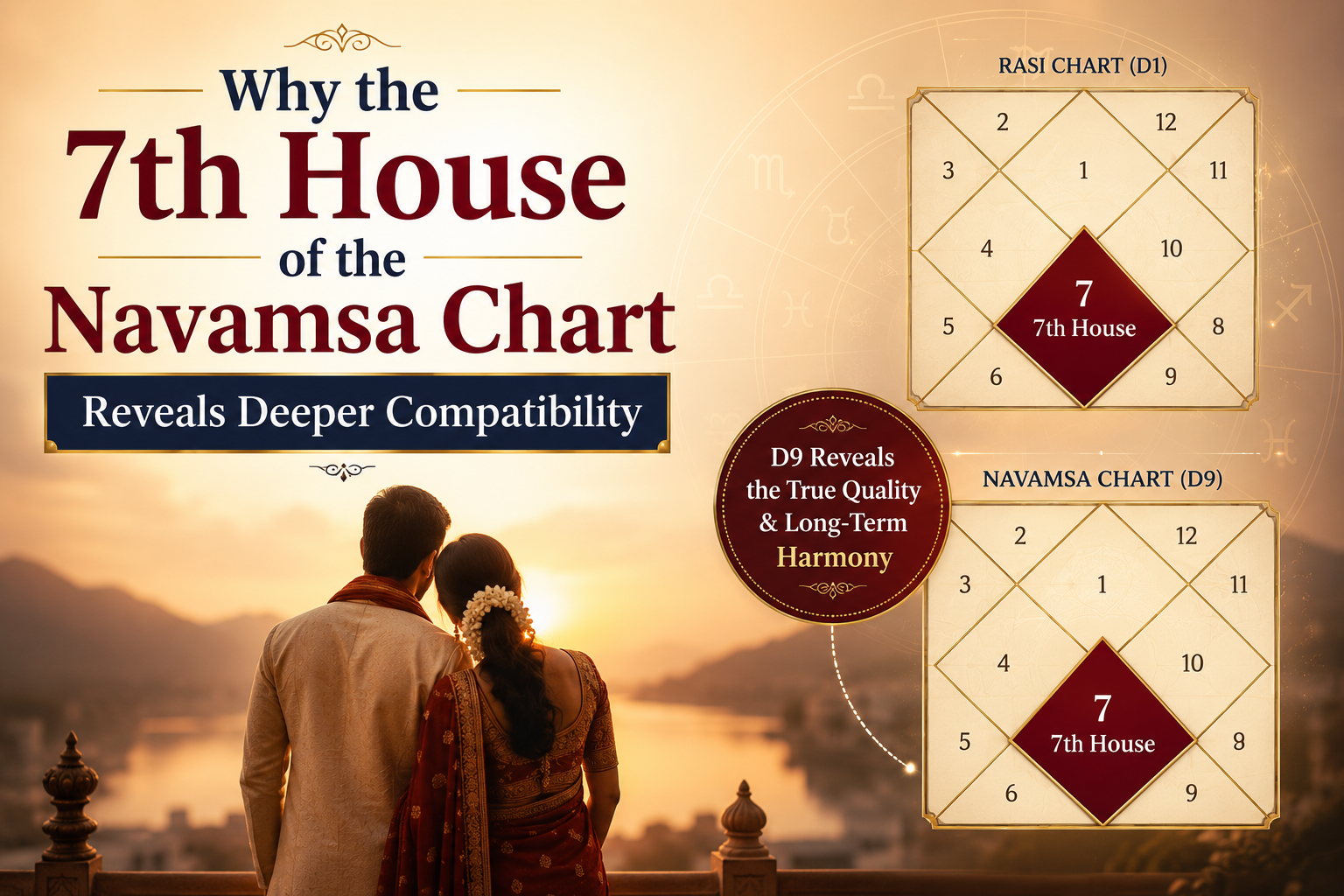
Why the 7th House of the Navamsa Chart Reveals Deeper Compatibility
Discover how the Navamsa 7th house, Venus placement, Vargottama, and D9 chart comparison reveal deeper marriage compatibility beyond Guna Milan.

Why Some "Perfect" Relationship Placements Come With a Hidden Catch
Venus in the 7th house can bring love, attraction, and harmony, but classical Vedic astrology reveals subtle complications. Discover Karako Bhava Nashaya, Mars, and Mangal Dosha.
Comments
Be the first to comment.