How to Perform Satyanarayana Swamy Vratam at Home? | DoPuja
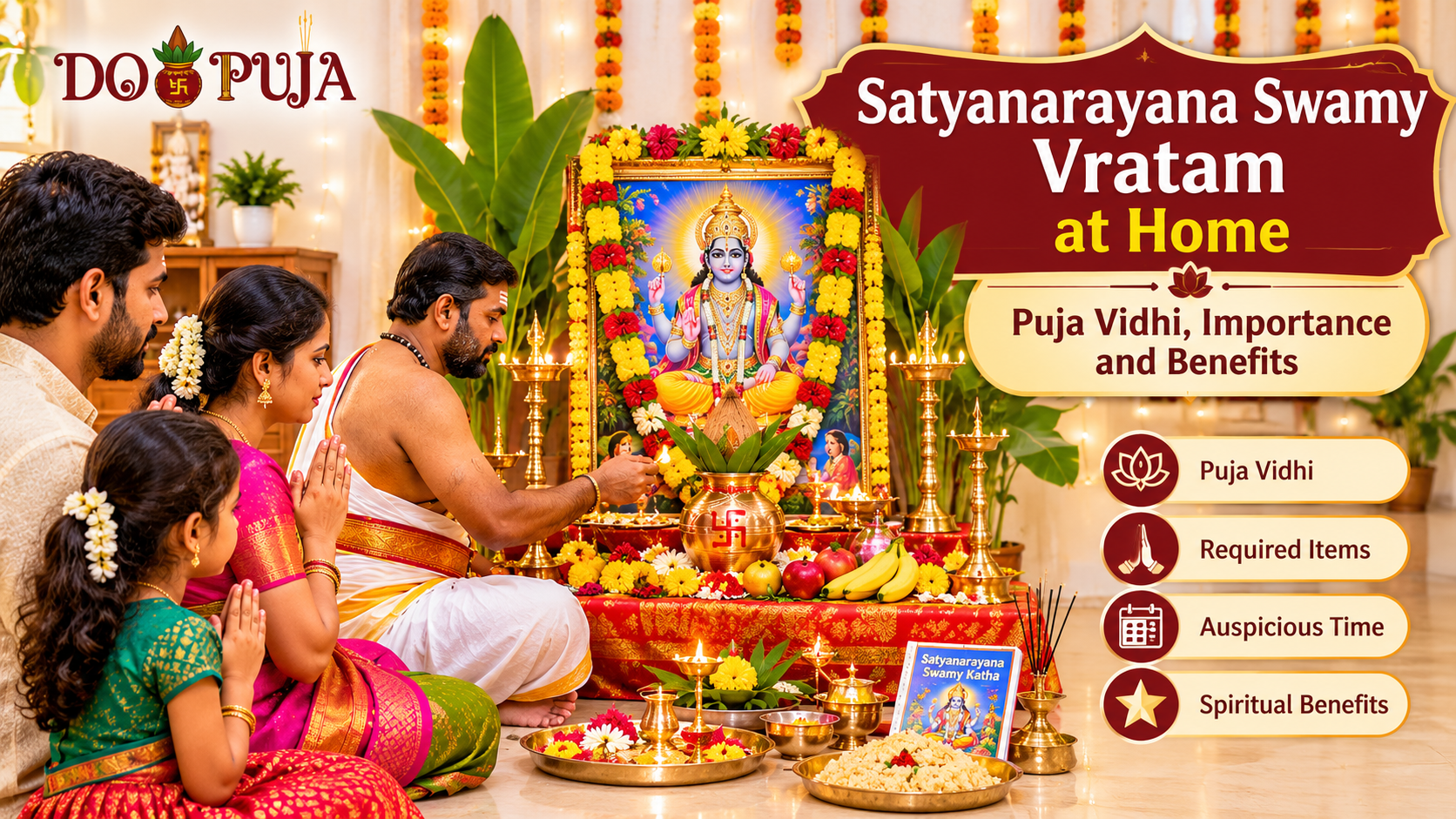
Table of contents
How to Perform Satyanarayana Swamy Vratam at Home: Puja Vidhi, Importance and Required Items
Satyanarayana Swamy Vratam is a sacred Hindu ritual dedicated to Lord Vishnu in his form as Lord Satyanarayana. Many families perform this vratam to express gratitude, seek divine blessings, and pray for peace, prosperity, and well-being.
The vratam is commonly performed on Purnima (Full Moon Day), special occasions, birthdays, anniversaries, housewarming ceremonies, and other auspicious days. It can be conducted at home with the required puja materials and traditional rituals.
If you are planning to perform Satyanarayana Swamy Vratam at home, this guide explains the puja procedure, required materials, prasadam preparation, and spiritual significance. You can also explore Do Puja to book a pandit for performing the vratam according to your family traditions.
What Is Satyanarayana Swamy Vratam?
Satyanarayana Swamy Vratam is a traditional Hindu worship ritual dedicated to Lord Satyanarayana, a form of Lord Vishnu. Devotees perform this vratam with faith and devotion, seeking blessings for happiness, prosperity, good health, and family well-being.
During the vratam, devotees worship Lord Satyanarayana, perform the puja rituals, listen to the Satyanarayana Vrat Katha, offer prasadam, and conclude with aarti.
The exact procedure may vary according to regional customs, family traditions, and the guidance of the priest.
Importance of Satyanarayana Swamy Vratam
Satyanarayana Swamy Vratam holds an important place in Hindu religious traditions. Devotees believe that performing this vratam with sincere devotion brings spiritual peace and encourages gratitude and positive values.
Some important reasons why families perform this vratam include:
Family Well-being: Devotees pray for happiness, harmony, and well-being within the family.
Peace and Prosperity: Families seek the blessings of Lord Satyanarayana for a peaceful and prosperous life.
Gratitude: The vratam is often performed to express gratitude for blessings and important milestones.
Auspicious Beginnings: Some families perform it during housewarming ceremonies, weddings, and other special occasions.
Spiritual Devotion: Listening to the vrat katha and participating in the puja encourage devotion and faith.
When Should You Perform Satyanarayana Swamy Vratam?
Satyanarayana Swamy Vratam is commonly performed on:
Purnima (Full Moon Day)
Auspicious festival days
Birthdays and wedding anniversaries
Housewarming ceremonies (Griha Pravesh)
After fulfilling a personal vow or wish
Other auspicious occasions chosen by the family
Many families prefer to perform the vratam in the morning or evening, depending on their customs and the guidance of their pandit.
It is advisable to consult a knowledgeable priest when selecting an auspicious date and time.
Required Items for Satyanarayana Swamy Vratam
Before starting the puja, arrange the necessary puja materials.
Commonly required puja items include:
Picture or idol of Lord Satyanarayana
Puja mandap or wooden platform
Kalash (sacred pot)
Coconut and mango leaves
Turmeric and kumkum
Sandalwood paste
Flowers and garlands
Incense sticks and camphor
Oil or ghee lamps
Betel leaves and betel nuts
Bananas and seasonal fruits
Rice and akshata
Panchamrita ingredients
Prasadam ingredients
Aarti plate and puja bell
Satyanarayana Vrat Katha book
The required materials may differ depending on family traditions and the priest's instructions.
How to Perform Satyanarayana Swamy Vratam at Home: Step-by-Step Puja Vidhi
The following is a general overview of the traditional puja procedure. The exact rituals and mantras should be followed according to your family customs and the guidance of a qualified pandit.
Step 1: Clean the Puja Area
Clean the house and select a suitable place for the puja. Arrange a wooden platform or puja mandap and decorate it with flowers and traditional decorations.
Place the picture or idol of Lord Satyanarayana in the designated area.
Step 2: Kalasha Sthapana
Place a clean kalash filled with water near the deity. Decorate it with mango leaves and a coconut, according to the traditional procedure.
The kalash represents auspiciousness and is an important part of many Hindu pujas.
Step 3: Ganapati Puja
Begin the ritual by worshipping Lord Ganesha. Devotees traditionally seek his blessings for the smooth completion of the puja without obstacles.
Offer flowers, turmeric, kumkum, and other customary offerings.
Step 4: Sankalpam
The person performing the vratam takes a sankalpam, expressing their intention to conduct the Satyanarayana Swamy Vratam.
The sankalpam may include the devotee's name, family details, gotram, and the purpose of performing the puja, according to the prescribed tradition.
Step 5: Satyanarayana Swamy Puja
Offer flowers, fruits, akshata, sandalwood paste, and other traditional offerings to Lord Satyanarayana.
The priest or devotee performs the puja using the prescribed mantras and rituals.
Step 6: Listen to the Satyanarayana Vrat Katha
Listening to the Satyanarayana Vrat Katha is an important part of the vratam.
The traditional katha is generally presented in five chapters. Family members and devotees listen to the stories with devotion and attention.
Step 7: Offer Naivedyam
Prepare the traditional prasadam and offer it to Lord Satyanarayana.
Bananas, fruits, and other customary food offerings may also be included as per family traditions.
Step 8: Perform Aarti and Distribute Prasadam
Conclude the puja with aarti and prayers.
After the ritual, distribute the prasadam among family members, relatives, and guests.
How to Prepare Satyanarayana Swamy Prasadam
A commonly prepared prasadam for Satyanarayana Swamy Vratam is made using rava (semolina), ghee, sugar, milk or water, banana, and dry fruits.
Common ingredients:
Rava (semolina)
Ghee
Sugar
Milk or water
Banana
Cardamom powder
Cashews and raisins
General preparation method:
Heat ghee in a pan and lightly roast the rava.
Add the required quantity of milk or water.
Add sugar and stir until it dissolves.
Mix in mashed banana and cardamom powder.
Add roasted cashews and raisins.
Cook until the mixture reaches the desired consistency.
Allow the prasadam to cool slightly before offering it to the deity. Follow your family's traditional recipe if it differs.
Why Is a Pandit Important for Satyanarayana Swamy Vratam?
Satyanarayana Swamy Vratam involves specific rituals, mantras, sankalpam, and the recitation of the vrat katha.
An experienced pandit can help with:
Performing the puja according to traditional procedures.
Conducting the sankalpam and required rituals.
Reciting the appropriate mantras.
Guiding the family through the vrat katha and aarti.
Advising on the required puja materials.
If you are unfamiliar with the puja procedure, booking a pandit can make the arrangements easier and help you perform the vratam according to your traditions.
Book a Pandit for Satyanarayana Swamy Vratam Through DoPuja
Planning Satyanarayana Swamy Vratam at home but unsure how to find a pandit?
Do Puja – Pandit Booking App helps you explore convenient puja booking services through its mobile app and website.
With Do Puja, you can explore pandit booking options for:
Satyanarayana Swamy Vratam
Griha Pravesh Puja
Ganesh Puja
Lakshmi Puja
Vastu Shanti Puja
Homams and other Hindu rituals
You can check the available service details and booking options based on your location.
Visit https://umasdopuja.com/ or download the Do Puja app to explore puja services and pandit booking options.
Checklist Before Performing Satyanarayana Swamy Vratam
Before starting the vratam, make sure you have completed these preparations:
Clean the puja area and arrange the mandap.
Arrange the picture or idol of Lord Satyanarayana.
Keep all required puja materials ready.
Prepare the prasadam ingredients.
Confirm the date and auspicious time.
Arrange for a pandit if required.
Keep the Satyanarayana Vrat Katha book ready.
Inform family members so they can participate.
Proper preparation helps make the puja arrangements more organized.
Frequently Asked Questions (FAQs)
1. Can we perform Satyanarayana Swamy Vratam at home?
Yes. Families commonly perform Satyanarayana Swamy Vratam at home by arranging the required puja materials and following the traditional procedure. A pandit can guide the family through the rituals.
2. Which day is best for Satyanarayana Swamy Vratam?
Purnima (Full Moon Day) is a commonly preferred day. However, families may also perform the vratam on other auspicious occasions based on their traditions and the guidance of a priest.
3. What are the main items required for Satyanarayana Swamy Vratam?
Common items include a picture or idol of Lord Satyanarayana, kalash, coconut, mango leaves, flowers, fruits, turmeric, kumkum, incense sticks, lamps, and prasadam ingredients.
4. Is listening to Satyanarayana Vrat Katha necessary?
Listening to the Satyanarayana Vrat Katha is an important part of the traditional vratam. It is generally recited in five chapters during the puja.
5. Can we perform Satyanarayana Swamy Vratam without a pandit?
Some families perform the vratam themselves using traditional instructions. However, a knowledgeable pandit can help guide the rituals, mantras, and sankalpam.
6. How can I book a pandit for Satyanarayana Swamy Vratam?
You can explore pandit booking options through the DoPuja website or mobile app. Check the service availability and booking details for your location.
Conclusion
Satyanarayana Swamy Vratam is a meaningful Hindu ritual performed with devotion and gratitude. By understanding the puja vidhi, arranging the required materials, listening to the vrat katha, and offering prasadam, families can participate in this traditional worship at home.
If you are planning to perform Satyanarayana Swamy Vratam and need assistance with the rituals, explore DoPuja for convenient pandit booking options.
Do Puja – Book Pandit, Perform Puja, and Celebrate Your Traditions.
Recommended articles
 DoPuja services
Griha Pravesh Puja and Vastu Shanti Puja: Importance and Procedure
Learn why Griha Pravesh Puja and Vastu Shanti Puja are performed before entering a new home. Explore rituals, puja samagri, muhurat and pandit booking through DoPuja.
 DoPuja services
Annaprashan Ceremony: When and How to Perform It? Know the Rituals
When is the right time to celebrate your baby's Annaprashan ceremony? Discover the traditional rituals, auspicious muhurat, puja samagri, and step-by-step procedure of this special Hindu first rice feeding ceremony. Learn how to plan the occasion and explore pandit booking options through DoPuja.
 DoPuja services
How to Perform a Baby Naming Ceremony? Namakaranam Rituals | DoPuja
Discover the significance of the Hindu Namakaranam ceremony and learn when to perform it, how to select a baby's name based on birth Nakshatra, the required puja items, and the traditional rituals. Explore how DoPuja can help you find pandit-booking options for your baby's special day.
Comments
Be the first to comment.