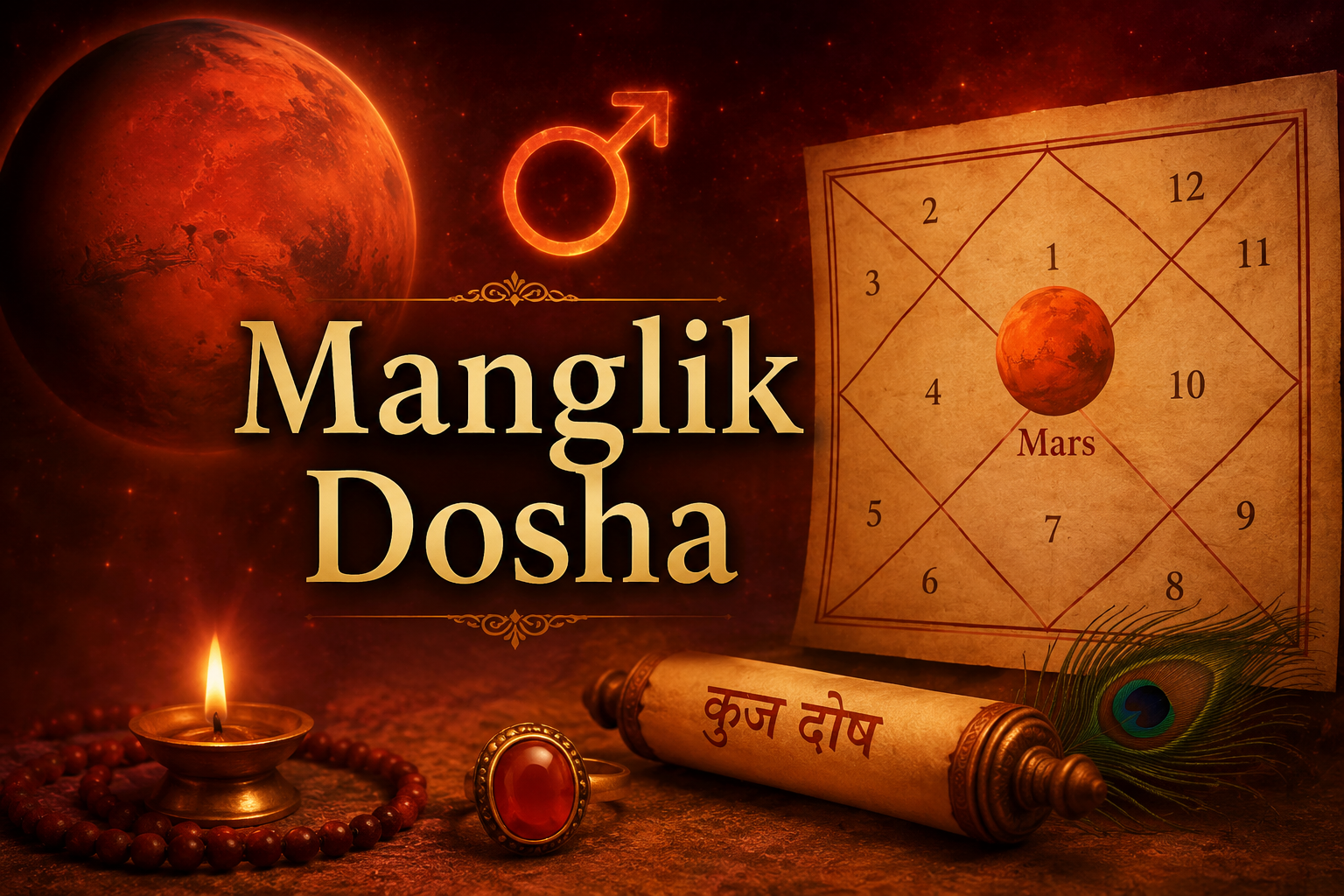
Manglik Dosha Explained: Causes, Effects and Why It Matters in Your Kundali
Table of contents
If you've ever been through a marriage conversation in an Indian household, you've probably heard the word "Manglik" said with more weight than most astrological terms get. Someone checks a birth chart, and suddenly a proposal either moves forward or stalls, all over where one planet happens to sit.
Manglik Dosha (also called Mangal Dosha or Kuja Dosha) is one of the most talked-about, and most misunderstood concepts in Vedic astrology. This article walks through what it actually is, how common it really is, when it matters, and when it doesn't.
What Is Manglik Dosha?
In technical terms, Manglik Dosha forms when Mars is placed in the 1st, 2nd, 4th, 7th, 8th, or 12th house counted from three different reference points: the Lagna (Ascendant), the Moon, and Venus. If Mars occupies one of these six houses from any of these three points, the chart is considered to carry some form of the dosha.
That's a fairly wide net. Estimates vary, but a meaningful share of birth charts, commonly cited around 40-50%, show Mars in at least one of these positions from at least one reference point. That statistic alone should reframe how this is usually presented. Manglik Dosha isn't a rare astrological red flag reserved for unlucky charts; it's a common placement that classical astrology asks you to examine carefully rather than panic over.
Having the Dosha vs. It Being "Strong"
This is the distinction that gets lost in most casual conversations about Manglik status, and it's the one that actually matters.
Technically present ≠ astrologically significant. Classical texts lay out several conditions that reduce or effectively cancel the dosha's impact:
- Mars in its own sign, Aries or Scorpio, is considered to soften its disruptive tendencies, since the planet is comfortable in its own territory.
- Mars exalted in Capricorn is treated similarly, a strong, well-placed Mars behaves differently than an afflicted one, even in a "triggering" house.
- A benefic aspect from Jupiter onto Mars or the house it occupies is one of the most commonly cited cancellation (Bhanga) factors in classical texts.
- Ascendant sign matters too, since Mars naturally rules Aries and Scorpio, Manglik Dosha formed from the Lagna is generally read as milder for people born under these two signs.
This is also why checking only one reference point gives an incomplete picture. A chart might show Mars triggering the dosha from the Moon but not from the Lagna or Venus, and the overall severity is read very differently depending on how many of the three points are affected and how strong Mars is in each case.
In short: two people can both be "Manglik" on paper and have meaningfully different actual chart dynamics. This is exactly the kind of nuance a full Kundali reading is meant to surface, not just a yes/no label.
The Real Concern Behind This Dosha
Traditionally, Manglik Dosha is associated with friction in marriage, delayed proposals, disagreements, or, in more severe classical readings, risk to the marital relationship itself. This is why it gets checked so carefully before matches are finalised, particularly in arranged-marriage contexts.
It's worth being direct here: Manglik Dosha alone rarely determines the outcome of a marriage. It's one data point among many in a full compatibility reading — alongside Guna Milan scores, Nadi Dosha, planetary dashas, and the overall strength of both charts. Treating it as a single deciding factor, in either direction, doesn't reflect how classical astrology actually intends it to be used.
Traditional remedies exist for cases where the dosha is assessed as genuinely significant, including:
- Worship of Hanuman, given his association with Mars's energy
- Kumbh Vivah, a symbolic ritual marriage performed before the real one in specific cases
- Wearing red coral under proper astrological guidance, never as a casual self-prescription
None of these is presented here as a guaranteed fix, they're customary practices within the tradition, applied case by case.
When to Get a Professional Reading Instead of Self-Diagnosing
A lot of Manglik anxiety comes from people checking just one factor, usually the Ascendant, off a generic online chart and stopping there. Before drawing any conclusion, especially one that affects a marriage decision, it's worth getting a proper reading if:
- You're comparing two charts for a marriage match, not just reading your own in isolation
- Your birth time is uncertain or was estimated (this can shift your Ascendant and change the whole picture)
- You've seen conflicting information from different apps or websites
- The stakes are high enough that a family decision is riding on the result
Self-checking is a fine starting point for curiosity. It's not a substitute for a full chart review when a real decision is on the table.
Manglik Dosha vs. Nadi Dosha: Not the Same Concern
Manglik Dosha often gets bundled together with other marriage-matching factors, but they check for different things. Manglik Dosha is about Mars's placement and its link to temperament and conflict potential. Nadi Dosha, by contrast, checks whether both partners share the same Nadi category in the 27-Nakshatra system, and traditionally relates to health and progeny compatibility rather than compatibility of temperament.
They're evaluated separately in a full matching report precisely because they point to different kinds of risk. A chart can show Manglik Dosha without any Nadi concern, or vice versa, which is another reason a single-factor check tends to mislead more than it clarifies.
How to Check Manglik Dosha in Your Own Chart
If you want to check this properly rather than relying on a rule of thumb, here's the actual process:
1. Generate a Kundali using your exact birth time, date, and place. Manglik status is highly sensitive to birth time accuracy, even a few minutes' error can shift your Ascendant into a different sign entirely.
2. Locate Mars's house position counted from your Lagna, your Moon, and your Venus, all three, not just one.
3. Check for cancellation factors: is Mars in its own sign, exalted, or aspected by Jupiter?
4. If you're evaluating a marriage match, cross-check both charts together** rather than reading either one in isolation.
Myth vs. Reality
Myth: Being Manglik means a difficult or doomed marriage.
Reality: Manglik Dosha is a factor to account for, not a verdict. Its actual weight depends heavily on Mars's strength and the presence of cancellation conditions.
Myth: If both partners are Manglik, there's nothing to worry about.
Reality: Two Manglik charts are traditionally considered to balance each other reasonably well, but "balance" isn't the same as "no difference in severity", the specifics of each chart still matter.
Myth: Every astrology app gives the same Manglik result.
Reality: Results can differ meaningfully based on which reference points (Lagna, Moon, Venus) are checked and how precisely birth time is calculated.
Why Check This on DoPuja
Manglik status is only as reliable as the chart it's calculated from. UmasDoPuja's Kundali generation uses the Swiss Ephemeris engine, built on publicly released NASA/JPL DE431 planetary data, with the Lahiri Ayanamsa correctly applied for authentic sidereal positions, not the tropical calculations that some simplified apps default to.
Because Manglik status depends on exact birth time and place, we ask for those specifics upfront rather than approximating from date alone, and the full report checks Mars's placement from all three reference points, Lagna, Moon and Venus, instead of stopping at one. If you want to go further than a self-read report, our Talk to Astrologer service connects you with a real astrologer who can walk through the full context of your chart, not just the Manglik flag in isolation.
Why Trust This
The rules described here, the six trigger houses, the three reference points, and the cancellation conditions come from classical Vedic astrology texts, most notably the Brihat Parashara Hora Shastra, the foundational work attributed to Rishi Parashara that underlies most Kundali interpretation used today.
It's also worth being transparent about where astrologers genuinely disagree: the exact list of cancellation conditions varies slightly between regional traditions and individual commentators, and how strictly Manglik matching should be applied is itself a subject of ongoing debate within the field. Where a rule is well-established across classical sources, we've presented it as such. Where practice varies, we've tried to say so rather than presenting one interpretation as universal fact.
Frequently Asked Questions
Is Manglik Dosha the same as Kuja Dosha?
Yes, Mangal Dosha, Manglik Dosha, and Kuja Dosha all refer to the same placement. The names come from different regional and linguistic traditions (Mangal and Kuja are both names for Mars).
Can Manglik Dosha go away with age?
Classical astrology holds that the dosha's relevance for marriage compatibility specifically reduces after a certain age (traditionally around 28), based on the idea that Mars's influence on marital matters lessens over time. This is a point of some disagreement among astrologers.
Does Manglik Dosha affect anything besides marriage?
Its classical association is specifically with marriage and relationships. Mars's general chart placement can indicate other things (career drive, physical energy, conflict tendencies), but "Manglik Dosha" as a named concept is specifically a marriage-compatibility factor.
If I'm Manglik, do I have to marry another Manglik person?
Not necessarily. It's one recommended approach when the dosha is assessed as significant, but cancellation factors, remedies, and the overall strength of both charts are all taken into account before that kind of recommendation is made.
How accurate does my birth time need to be for this check?
As accurate as possible. Because house positions shift with time, an error of even 15-20 minutes can occasionally change which houses Mars falls in relative to your Ascendant, which can change the entire result.
✦ Keep reading
Recommended articles

Struggling With Delayed Marriage? What Mangal Dosha Really Means
Struggling with delayed marriage because of Mangal Dosha? Learn what being Manglik really means, cancellation factors, traditional remedies, and when to seek a full Kundali reading.
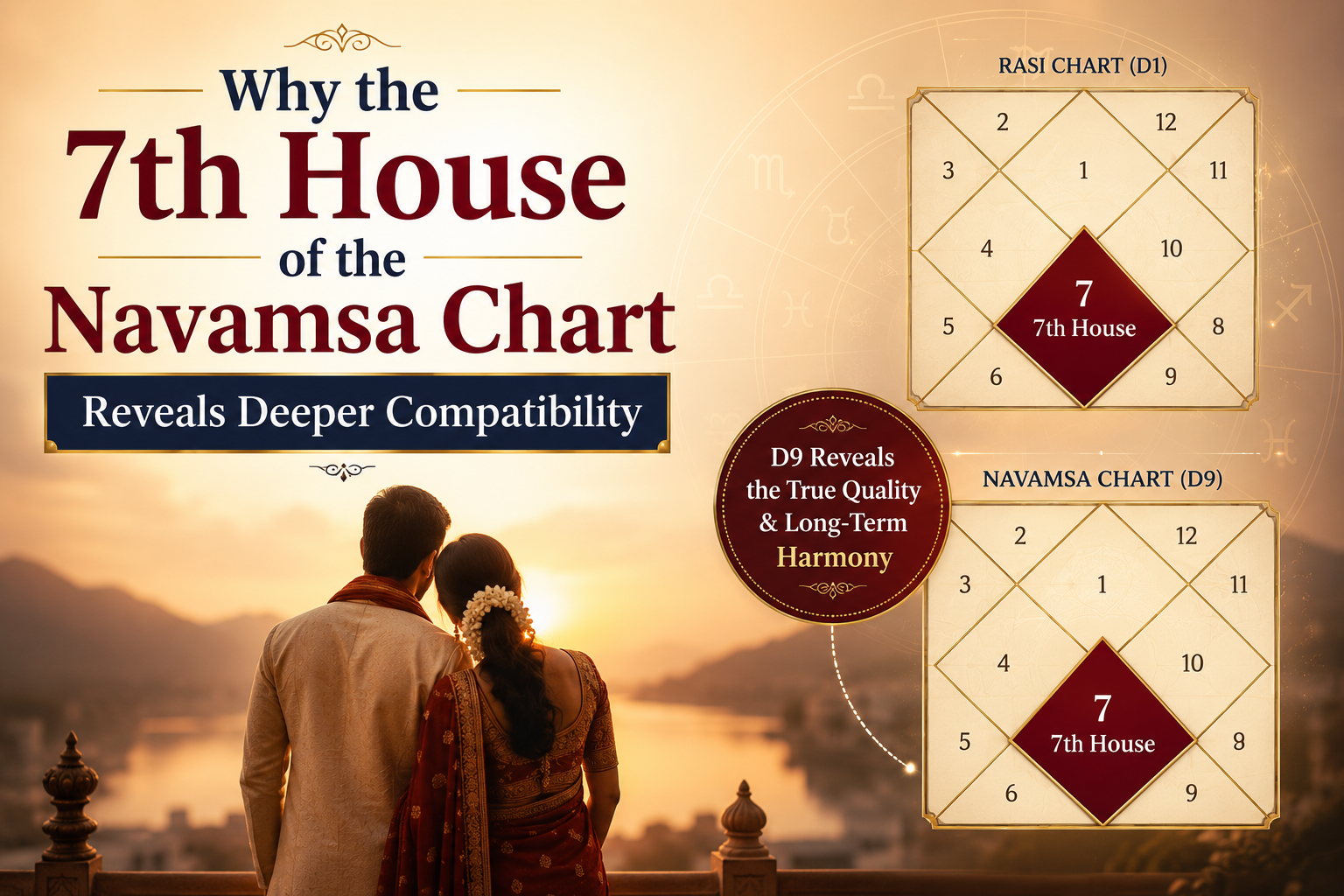
Why the 7th House of the Navamsa Chart Reveals Deeper Compatibility
Discover how the Navamsa 7th house, Venus placement, Vargottama, and D9 chart comparison reveal deeper marriage compatibility beyond Guna Milan.
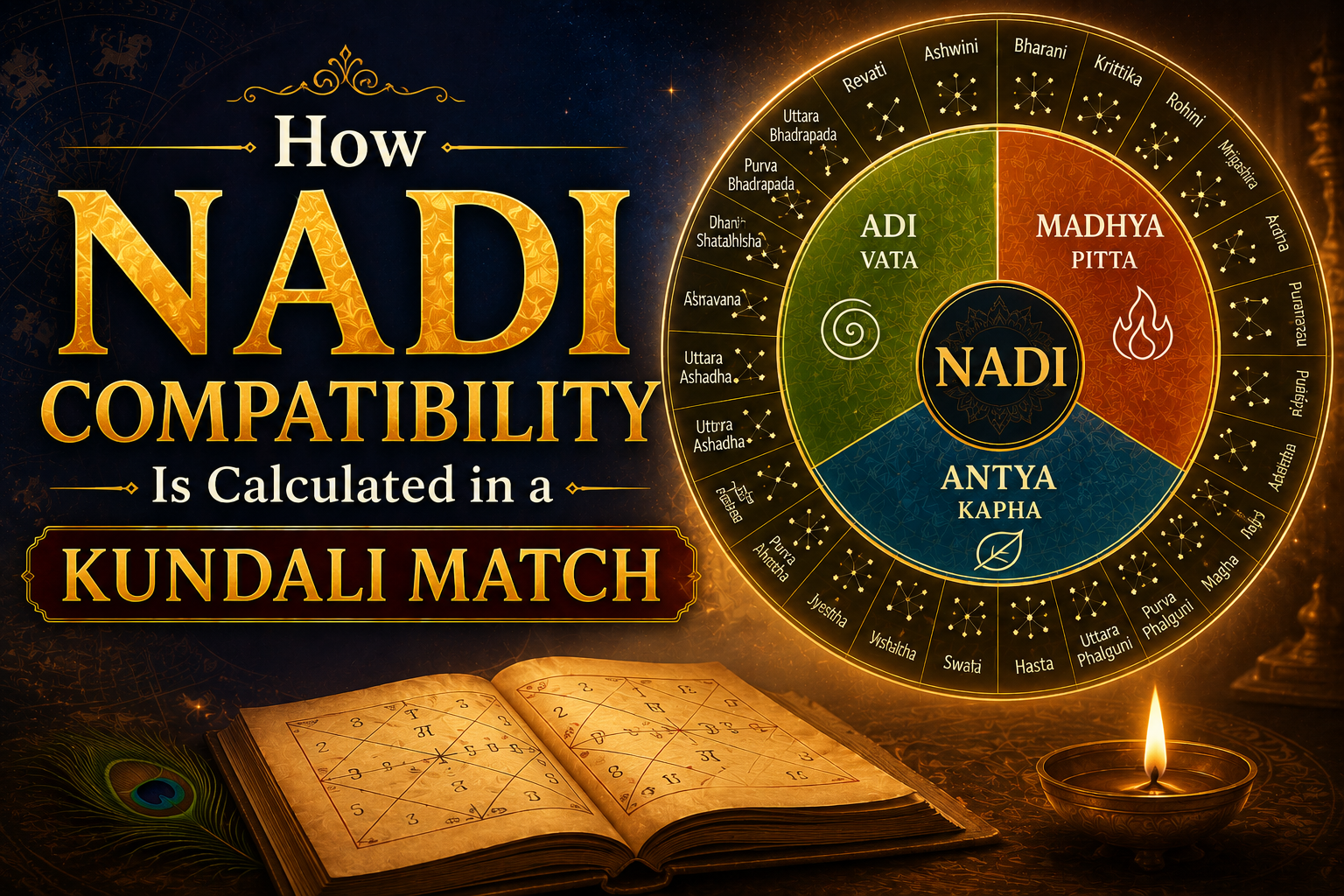
How Nadi Compatibility Is Calculated in a Kundali Match
Learn how Nadi compatibility is calculated in Kundali matching, from birth Nakshatra and Nadi groups to Nadi Dosha, Pada exceptions, and compatibility rules.
Comments
Be the first to comment.
Leave a comment