Mundan Muhurat 2026: Auspicious Dates for a Baby's First Haircut

Table of contents
Here's what actually determines the right timing for this ceremony, why certain placements get avoided specifically, and how regional practice shapes the ritual differently across India.
The Traditional Age Window
Mundan is traditionally performed in odd-numbered years of a child's life, most commonly the 1st, 3rd, 5th, or 7th year, with the 1st and 3rd years being the most widely chosen in practice. The reasoning tied to odd years specifically is rooted in the classical belief that these years are more spiritually favourable for purification rituals. Beyond the age itself, the exact date within that window is calculated through the same kind of Panchang analysis used for other major muhurats.
Why Certain Nakshatras, Tithis, and Chart Placements Are Avoided
This is worth explaining directly, since it's the part most quick date-lists skip. Classical muhurat texts, particularly the Muhurta Chintamani, set out fairly specific conditions for Chudakarana.
Certain Lagnas (ascendants) are discarded entirely at the time of the ceremony, specifically Aries, Leo, Scorpio, Capricorn, and Aquarius, along with the Lagna that falls 8th from the child's own birth Moon sign or Ascendant (called Ashtama Lagna). These are treated as unstable or malefic-associated placements for a ceremony centred on purification and new beginnings.
Weak placements of certain planets in angular houses are avoided. Classical texts associate a weak Moon, Sun, Mars, or Saturn positioned in a Kendra (angular house) during the ceremony with specific risks to health and general wellbeing for the child. This is the traditional reasoning behind why not every date with a "nice" Nakshatra automatically qualifies. The planetary strength at the exact time matters as much as which star is active.
Jupiter and Venus combustion (Guru and Shukra Asta) are avoided here too, the same principle discussed in our Marriage Muhurat coverage, since both planets are considered essential to a smoothly supported ceremony.
Favourable Nakshatras commonly cited include Ashwini, Mrigashira, Pushya, Hasta, Chitra, Swati, Punarvasu, Shravana, Dhanishta, and Revati.
Favourable Tithis include Dwitiya, Tritiya, Panchami, Saptami, Dashami, Ekadashi, and Trayodashi.
A few additional specific cautions worth knowing:
The eldest son or daughter's Mundan is traditionally avoided while the Sun is in Taurus.
Tonsure performed at night is considered highly inauspicious regardless of other factors.
If the mother is more than five months pregnant, Mundan for a child under five is generally postponed.
Regional Variations Worth Knowing
Mundan practice differs meaningfully across India, and it's worth understanding that this isn't a single uniform ritual. In North Indian tradition, the ceremony is frequently performed at pilgrimage sites. Haridwar, Varanasi, Tirupati, and Ujjain are commonly cited, with the shaved hair ritually offered to a sacred river.
In South Indian tradition, the equivalent ceremony is called Choula or Chaula, sharing the same core purpose but with distinct regional rituals. Many families also choose to perform the ceremony at a temple associated with their family deity (Kul Devata) rather than a major pilgrimage site.
For girls, practice varies by community. Some traditions perform a full head shave just as for boys, while others perform only a symbolic cutting of a lock of hair. The underlying muhurat guidelines remain the same regardless of these regional and gender-based variations.
The 2026 Calendar: A Genuine Point Worth Flagging Honestly
Here's something worth being transparent about rather than glossing over: sources genuinely disagree on whether Mundan follows the same Chaturmas restriction (roughly August through October) that applies strictly to marriage and Griha Pravesh timing.
Some 2026 Panchang guides explicitly state that Mundan pauses during this period, describing it in the same terms as other major ceremonies affected by Chaturmas.
Other detailed date calculations for 2026 show specific auspicious Mundan dates continuing through August, September, and October.
This suggests Mundan's rules may be somewhat less strictly tied to Chaturmas than marriage is, but given the genuine disagreement across sources, this is exactly the kind of detail worth confirming with a personalised calculation rather than assuming either way.
What's more consistently agreed across sources is that January through July 2026 offers a reasonable spread of auspicious dates, and November and December, after Chaturmas fully concludes regardless of the August-October question, are considered strong months again.
When to Get a Professional Reading Instead of Guessing
Given how many specific chart conditions factor into this particular muhurat, more than most other ceremonies discussed in this series, it's worth getting a personalised consultation rather than picking from a general list if:
You want to confirm whether your chosen date avoids the malefic Lagnas and the Ashtama Lagna condition specifically.
You're planning during August through October 2026 and want clarity on whether Chaturmas applies to Mundan in your family's tradition.
Your child is the eldest, and you want to confirm the Sun's position avoids Taurus on your chosen date.
Myth vs. Reality
Myth: Any date with a favourable Nakshatra works for Mundan.
Reality: Classical texts also check the Lagna, planetary strength in angular houses, and Jupiter/Venus combustion. A good Nakshatra alone doesn't guarantee a suitable muhurat.
Myth: Mundan is performed identically across all of India.
Reality: North Indian practice frequently centres on pilgrimage sites, while South Indian tradition (Choula/Chaula) follows a related but distinct ritual structure, and practices for girls vary by community.
Myth: Mundan is completely unavailable during Chaturmas, exactly like marriage.
Reality: Sources genuinely disagree on this point. Some 2026 Panchang calculations show available Mundan dates through August-October, while others exclude them entirely.
Why Check This on DoPuja
Because Mundan muhurat selection depends on checking the Lagna, planetary strength in angular houses, and specific combustion conditions together, not just a favourable Nakshatra alone, precise calculation matters significantly here.
UmasDoPuja's Muhurta tools use the Swiss Ephemeris engine with NASA/JPL DE431 planetary data and correctly applied Lahiri Ayanamsa, checking these chart-specific conditions rather than relying on a generic date list. For clarity on the Chaturmas question for your family's specific tradition, or a full walkthrough of your child's chart, Talk to Astrologer connects you with a real astrologer for that context.
Why Trust This
The Lagna exclusions, planetary strength conditions, and favourable Nakshatra and Tithi guidelines described here draw on the Muhurta Chintamani, a foundational classical text for Hindu electional astrology. Where 2026 sources genuinely disagree, specifically on whether Chaturmas restricts Mundan the same way it restricts marriage, we've presented that disagreement transparently rather than asserting false certainty.
Frequently Asked Questions
Why is the ceremony performed in odd-numbered years specifically?
Classical tradition holds that odd years (1st, 3rd, 5th, 7th) are more spiritually favourable for purification-focused rituals, though families most commonly choose the 1st or 3rd year in practice.
Can Mundan be performed for girls?
Yes, though practice varies by community. Some traditions perform a full head shave as with boys, while others perform a symbolic cutting of a lock of hair instead.
Why are certain Ascendants completely excluded from this ceremony?
Classical muhurat texts associate specific Lagnas, including Aries, Leo, Scorpio, Capricorn, and Aquarius, along with the Ashtama Lagna condition, with instability unsuited to a purification ritual, so these are avoided regardless of what else looks favourable.
Is Mundan available during August, September, and October 2026?
Sources disagree. Some 2026 Panchang calculations show available dates through this period, while others exclude it in line with Chaturmas restrictions. Confirm with a personalised calculation for your family's specific tradition.
What happens if we can't find a fitting muhurat within our child's odd-numbered year?
As with other Samskaras discussed in this series, most families work with an astrologer to find the closest suitable window rather than treating the odd-year guideline as an absolute deadline.
Recommended articles
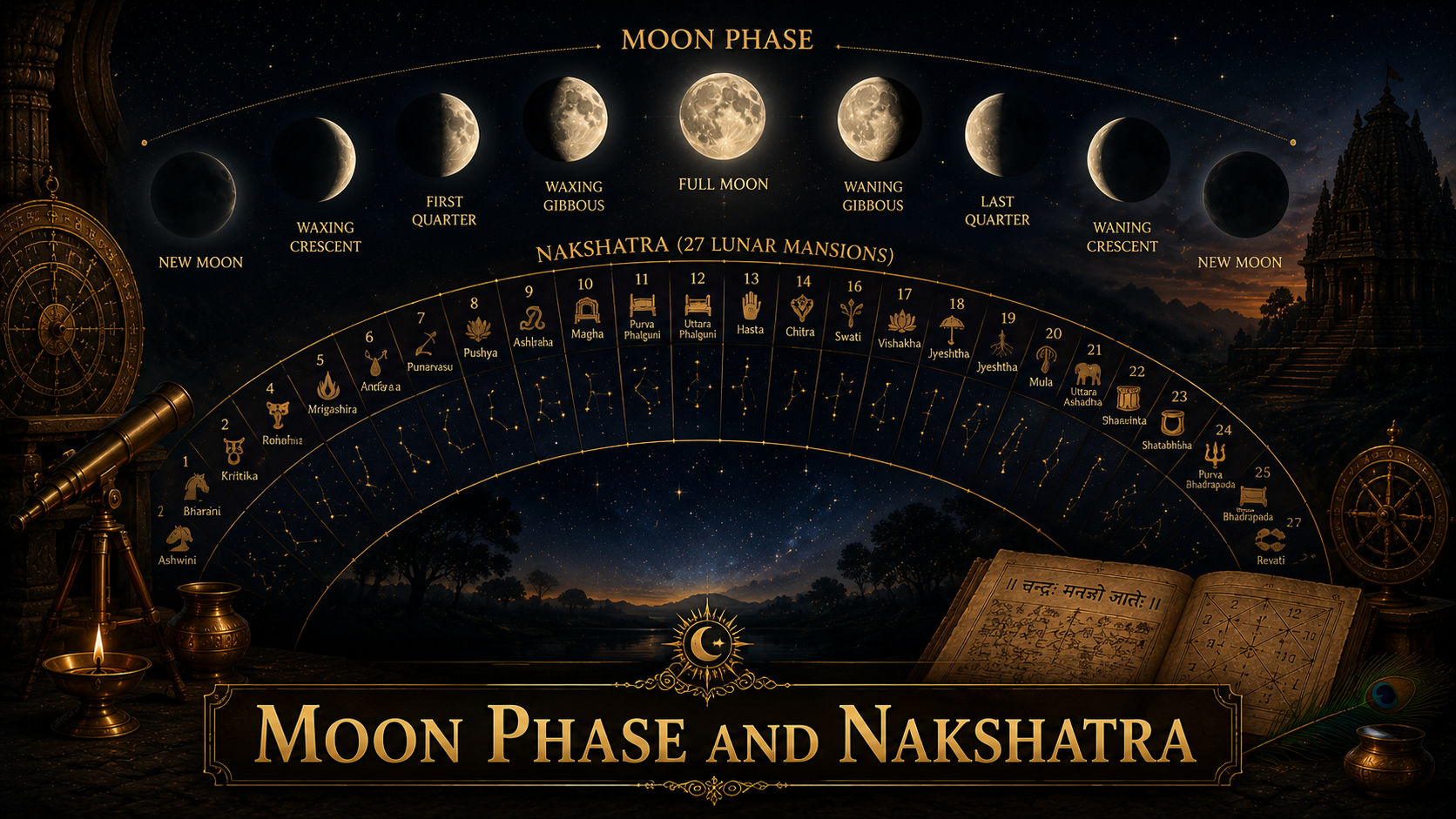
Moon Phase and Nakshatra: What Decides a Good Mundan Date
Learn how Shukla Paksha, Nakshatra, the child's birth Moon, and traditional year preferences help determine an auspicious Mundan date.

How Mars Placement Decides Manglik Compatibility Between Partners
Discover how Mars placement, house-sign combinations, cancellation rules, and Mars strength affect Manglik compatibility between partners in Vedic astrology.

Feeling Stuck for Years? You Might Be in Sade Sati
Feeling stuck in career, finances, or energy? Learn what Sade Sati means, its three phases, Dasha's role, traditional remedies, and when it ends.
Comments
Be the first to comment.