Moon Phase and Nakshatra: What Decides a Good Mundan Date
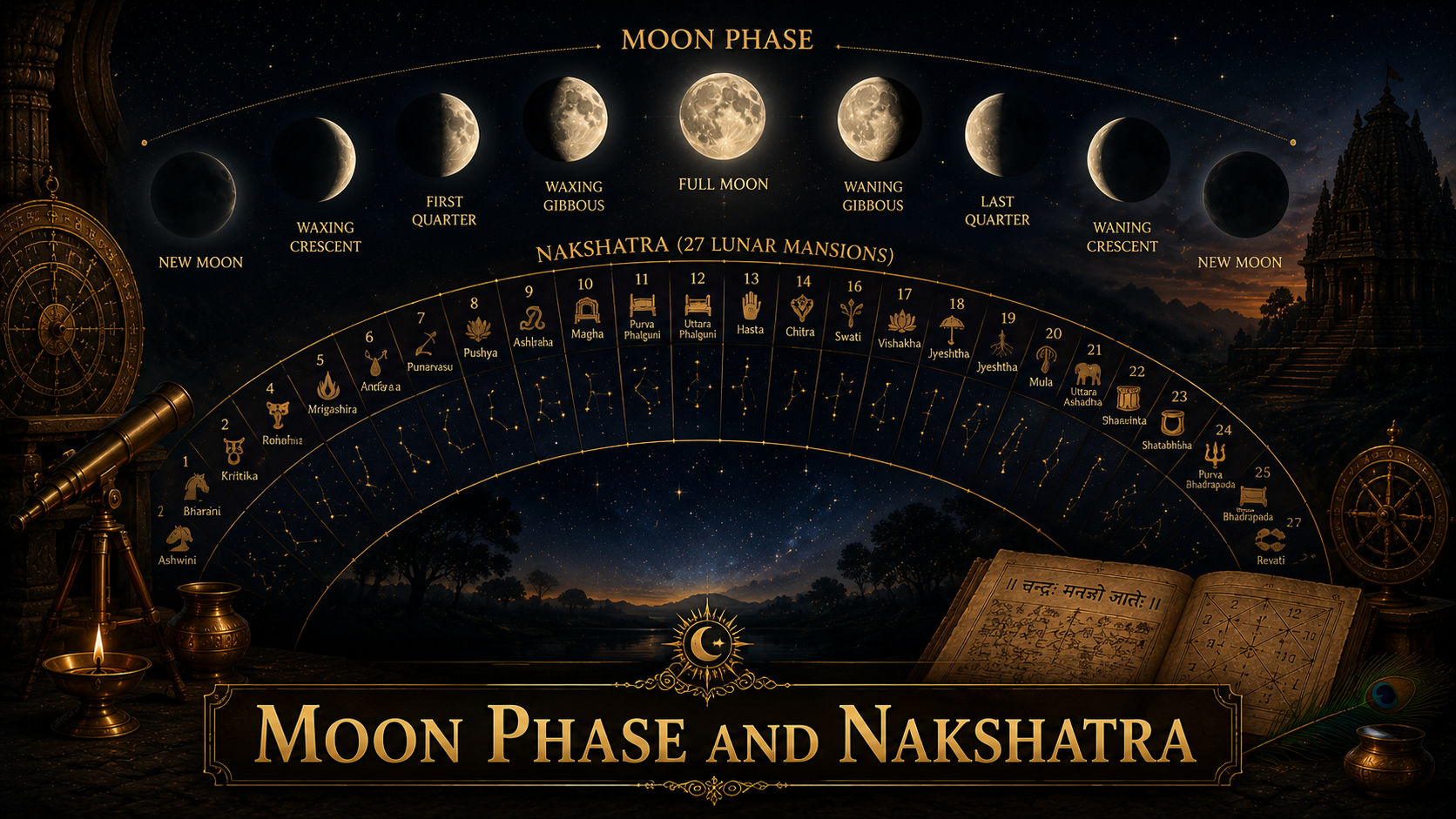
Table of contents
Mundan involves more than picking any date in a child's early years. Specific Panchang elements, and the child's own chart, both shape which date is actually considered right.
Why Is the Waxing Moon Phase Specifically Preferred?
Shukla Paksha, the waxing lunar fortnight running from new moon toward full moon, is strongly favoured for this ceremony. The reasoning ties directly to what the Moon's growing light is believed to represent, growth, expansion, and positive development, a symbolic fit for a ritual meant to mark the start of something new rather than the closing of something already established.
This is worth understanding as more than a generic preference. Since Mundan specifically involves removing birth hair to allow fresh growth, both physically and symbolically, timing it during the Moon's own growth phase is considered to reinforce the ceremony's underlying intention rather than work against it.
Which Nakshatras Are Specifically Favoured, and Why?
A consistent set of Nakshatras appears across classical guidance for this ceremony, and several carry a specific thematic connection to the ritual's purpose worth understanding rather than just listing.
Pushya, considered the single most nourishing Nakshatra, is particularly favoured, fitting for a ceremony concerned with a child's healthy growth and development.
Ashwini, associated with healing, aligns directly with the purificatory intention behind removing birth hair.
Hasta, associated with skill and dexterity, is considered supportive for the ceremony's physical execution and the child's future capabilities.
Shravana, associated with listening and learning, is considered favourable given the ceremony's connection to a child's intellectual development.
Other commonly cited favourable Nakshatras include Mrigashira, Chitra, Swati, Dhanishta, and Revati.
Why Does the Child's Own Chart Matter Beyond the General Calendar?
This is worth checking specifically, since it's a different layer from the general Panchang date selection. The transiting Moon should not sit in the 4th, 8th, or 12th house relative to the child's own birth Moon sign, positions generally considered unfavourable for a ceremony centred on the child's own wellbeing specifically.
There's also a genuine point of disagreement worth flagging honestly. Some sources hold that the ceremony shouldn't be performed during the child's own birth month or birth Nakshatra specifically, while other equally established sources consider the birth Nakshatra itself a favourable time for this exact ceremony. Given this genuine scholarly disagreement, it's worth confirming which view your family's tradition follows rather than assuming one is universally correct.
Why Are Odd-Numbered Years Traditionally Preferred?
As covered in more detail in our main Mundan article, the ceremony is traditionally performed in the 1st, 3rd, 5th, or 7th year, with the 1st and 3rd being most commonly chosen in practice. The underlying reasoning ties to the ceremony's purificatory purpose: birth hair is traditionally understood to carry residue from a previous life, and shaving it during these specific early-life windows is meant to mark a genuine fresh start at points classically considered spiritually significant for this kind of renewal.
It's worth noting directly that we found at least one source suggesting a different rule specifically for girls, even-numbered years rather than odd. We haven't been able to corroborate this claim across other sources, and it conflicts with the broader, more consistently documented odd-year guidance, so we're not including it here as established practice. If your family has encountered this specific claim elsewhere, it's worth confirming directly with a knowledgeable priest or astrologer rather than assuming either version is definitively correct.
When to Get a Professional Reading Instead of a Generic Date List
Given how many layers factor into this specific muhurat, general Panchang timing, Nakshatra selection, and the child's own chart, a full reading is worth it if:
You want to confirm the transiting Moon isn't currently in a difficult position relative to your child's own birth Moon.
You've encountered conflicting guidance on whether your child's birth Nakshatra should be avoided or is actually favourable.
You want a Nakshatra chosen with specific consideration for your child's own developmental themes, not just a generic favourable list.
Myth vs. Reality
Myth: Any date with a generically favourable Nakshatra works equally well.
Reality: Certain Nakshatras carry a specific thematic connection to this particular ceremony, Pushya for nourishment, Ashwini for healing, that make them especially fitting beyond general auspiciousness.
Myth: The general Panchang calendar is all that needs checking.
Reality: The child's own chart adds a further layer, particularly whether the transiting Moon sits unfavourably relative to their own birth Moon.
Myth: All sources agree on the same rules for this ceremony.
Reality: Genuine disagreement exists, including whether a child's own birth Nakshatra should be avoided or treated as favourable, worth confirming with your specific family tradition.
Why Check This on DoPuja
Because this muhurat depends on the general calendar together with the child's own specific chart, not either alone, accurate calculation matters considerably here.
UmasDoPuja's Panchang tool uses the Swiss Ephemeris engine with NASA/JPL DE431 planetary data and correctly applied Lahiri Ayanamsa, checking Moon phase and Nakshatra together for your specific location, alongside your child's own birth Moon position. For a personalised reading that accounts for your child's specific chart, Talk to Astrologer connects you with a real astrologer for that context.
Why Trust This
The waxing Moon preference and the thematic connection between specific Nakshatras and this ceremony's purpose are consistently documented across multiple classical and current sources. On the disagreement regarding a child's own birth Nakshatra, and the unverified claim about even-numbered years for girls, we've been transparent about where genuine disagreement or insufficient corroboration exists, rather than presenting either as settled fact.
Frequently Asked Questions
Why is the waxing Moon phase specifically preferred for this ceremony?
Because it symbolises growth and positive development, fitting for a ritual centred on marking a fresh start and encouraging healthy new hair growth.
Which Nakshatras carry a specific connection to this ceremony's purpose?
Pushya (nourishment), Ashwini (healing), Hasta (skill), and Shravana (learning) each align thematically with different aspects of the ceremony's intention.
Does my child's own birth chart matter beyond the general calendar?
Yes. The transiting Moon should ideally not sit in the 4th, 8th, or 12th house relative to your child's own birth Moon sign.
Should the ceremony avoid my child's own birth Nakshatra?
Sources genuinely disagree on this. Some consider it unfavourable, others consider it specifically favourable, worth confirming with your family's specific tradition.
Is it true girls should have Mundan in even years instead of odd?
We found this claim in one source but couldn't corroborate it elsewhere, and it conflicts with the more consistently documented odd-year guidance, so we're not treating it as established practice here.
Recommended articles
How Rahu Kaal Timing Changes With Sunrise Every Single Day
Learn why Rahu Kaal timing changes every day with sunrise, sunset, seasons, and location. Understand seasonal variations, latitude differences, and precise Panchang calculations.

The One Day Every Other Ceremony Avoids, Except This One: Mars and Bhoomi Pujan
Discover why Mars, Vastu, Panchang timing, and Sthira Nakshatras matter for Bhoomi Pujan, including the special significance of Tuesday and your personal chart.
Feeling Stuck for Years? You Might Be in Sade Sati
Feeling stuck in career, finances, or energy? Learn what Sade Sati means, its three phases, Dasha's role, traditional remedies, and when it ends.
Comments
Be the first to comment.