Kundali in Telugu: How to Read Your Janam Kundali
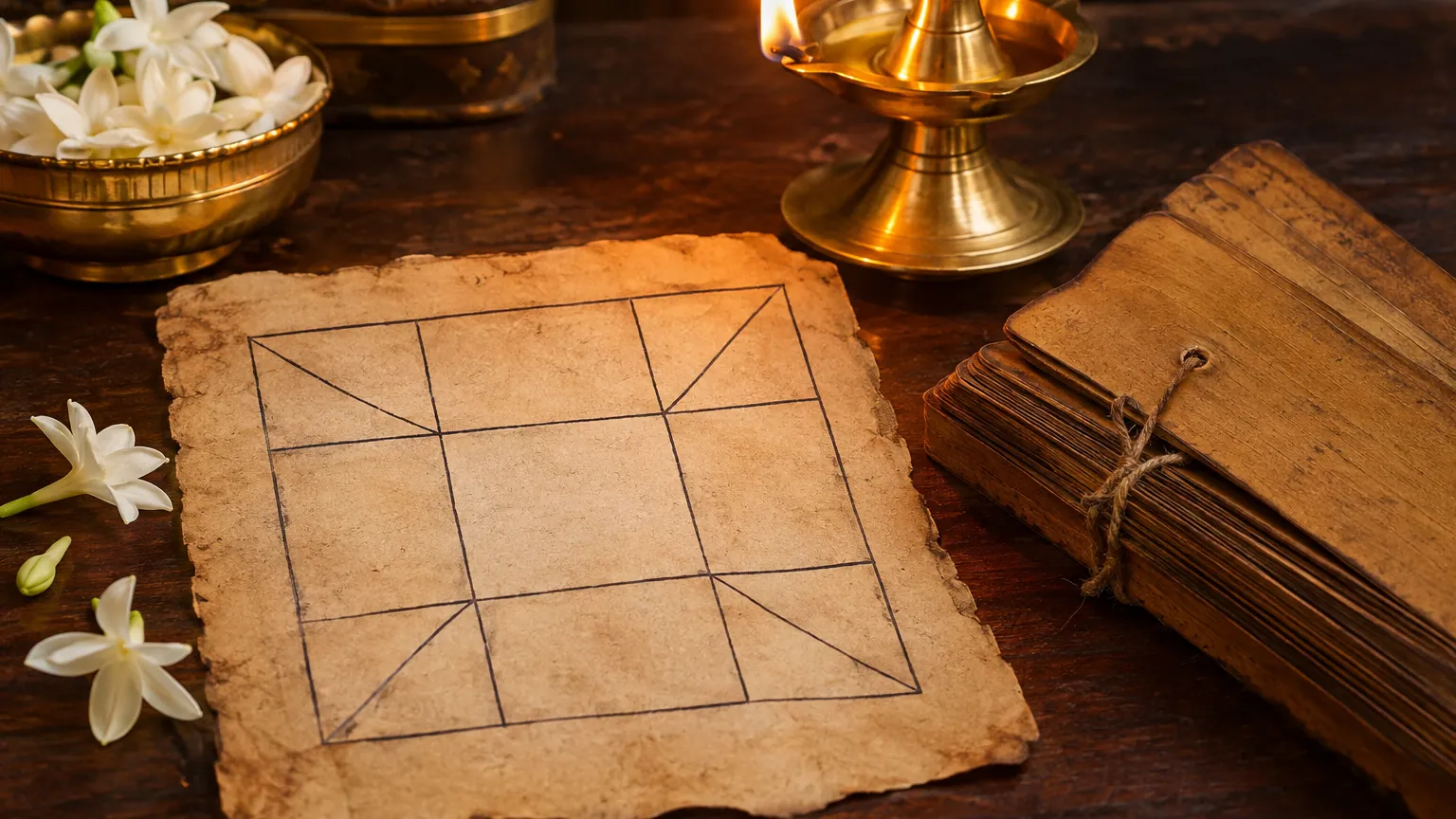
Table of contents
Kundali in Telugu means a birth chart explained in familiar Telugu terms, so you can understand your rashi, nakshatra, houses and graha placements with more confidence. A janam kundali is a map of the sky at the time and place of birth; it is traditionally used as one input for reflection, matching and choosing an auspicious time.
You do not need to memorise every astrological rule to begin. Start with accurate birth details, learn the chart’s basic parts, and ask focused questions. For a personalised chart, you can begin with DoPuja’s kundali service.
What is a janam kundali?
A janam kundali, also called a birth chart or jathakam, records the zodiac signs and planets as calculated for a person’s date, time and place of birth. Telugu-speaking families may use terms such as rasi, lagna, nakshatram, grahalu and bhavalu while discussing the same chart.
The chart is not a single prediction. It is a structured picture with several layers. An astrologer may consider the ascendant, Moon sign, planetary strengths, aspects, dashas and transits before offering an interpretation. That is why two people with the same Sun sign can have very different charts.
Details you need before creating a kundali
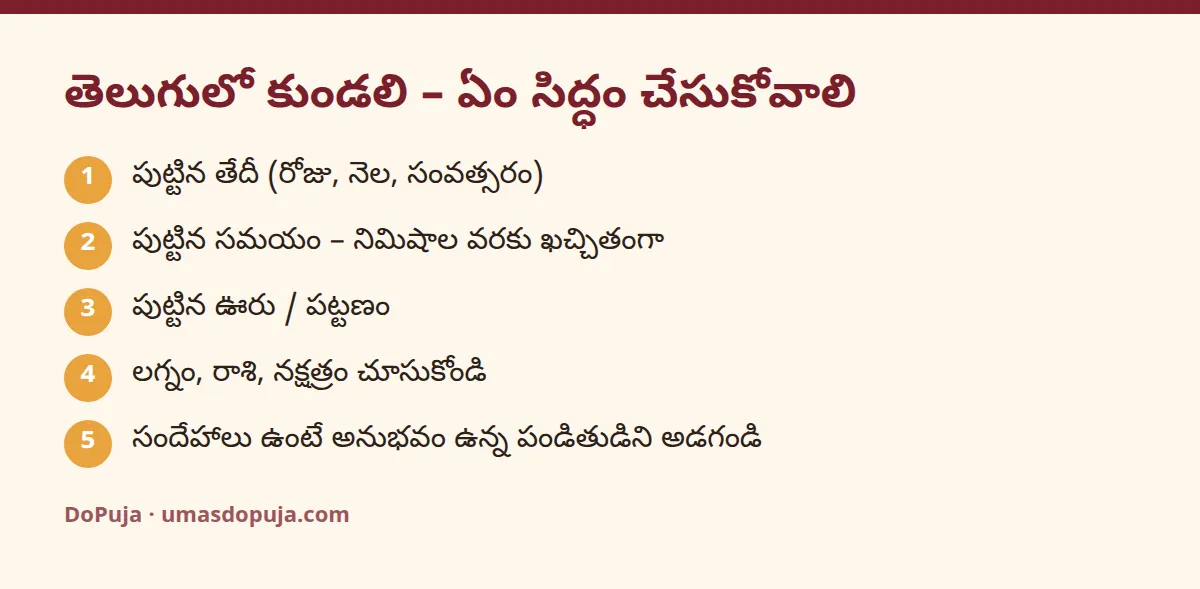
- Date of birth: use the correct calendar date.
- Time of birth: note the closest available time from family records or a birth certificate.
- Place of birth: the town or city matters because location affects the rising sign calculation.
- Questions you want answered: keep them specific, such as education, career direction, marriage matching or a suitable muhurat.
If the birth time is uncertain, say so clearly. A small difference can change the lagna and house placements. It is better to treat any reading as limited than to assume a precise result from incomplete data.

The main parts of a kundali in Telugu
1. Lagna or ascendant
Lagna is the zodiac sign rising on the eastern horizon at birth. It sets the first house and gives the chart its basic house structure. In Telugu, you may hear it called lagnam. It is important because the same planet can produce different results when it occupies a different house for another lagna.
2. Rasi and Chandra rasi
Rasi refers to a zodiac sign. In everyday conversation, many people mean the Moon sign when they say their rasi. The Moon sign is often used in panchang-based customs, naming references and traditional matching discussions. Check whether a reader is referring to the Moon sign or the ascendant sign; they are not always the same.
3. Nakshatram
The Moon’s nakshatra is its lunar mansion at birth. There are 27 nakshatras, each divided into four padas. Nakshatra is commonly considered for naming syllables, marriage compatibility and dasha calculations. It should be read alongside the complete chart, not in isolation.
4. Bhavalu or 12 houses
The twelve houses show areas of life. The first house relates to identity and vitality; the fourth is associated with home and inner comfort; the seventh is often considered for partnerships; and the tenth is studied for work and public responsibilities. A house does not provide a simple yes-or-no prediction. Its lord, occupants and planetary aspects all matter.
5. Grahalu or planets
Traditional Vedic astrology studies Surya, Chandra, Kuja, Budha, Guru, Shukra, Shani, Rahu and Ketu. Their sign, house, dignity and relationship with other planets are considered together. Avoid drawing conclusions from one placement alone, especially about health, money or relationships.
A practical way to read your chart
- Confirm the birth data. Before interpreting, make sure the date, time and location are correct.
- Identify the lagna. Find the first house and its sign, then note the ruling planet.
- Locate the Moon. Record the Chandra rasi and nakshatra, including the pada if available.
- Review key houses. Look at the 1st, 4th, 7th, 9th and 10th houses in context with their lords.
- Note the current dasha. Dashas are traditional timing periods and should be considered with transits rather than as a guarantee.
- Ask one clear question at a time. A focused consultation is easier to understand than a long list of unrelated worries.
How Telugu families commonly use a kundali
Many families consult a kundali for guna milan before marriage, for a child’s naming reference, or when selecting a muhurat for a housewarming, business start or ceremony. The chart can support a traditional decision-making process, but it should not replace practical planning, professional medical advice, financial advice or respectful communication between people.
For a ceremony at home, combine the chosen time with simple preparation. Our how to do puja guide explains a respectful home-puja flow, while the book a pandit page can help when you want a qualified priest for a specific ritual.
Questions to ask in a kundali consultation
- Which parts of the chart are being considered for my question?
- Is the interpretation based on lagna, Moon sign, dasha, transit or several factors?
- What is certain from the birth data, and what depends on an estimated birth time?
- What practical steps should I take alongside any traditional guidance?
- Are there simple, non-fear-based ways to observe a family tradition?
These questions help you receive a clear explanation instead of a vague statement. If you are new to birth charts, you may also find our janam kundali guide useful before booking a detailed discussion.
Kundali in Telugu: a simple checklist
| Check | Why it matters |
|---|---|
| Birth time | Helps calculate lagna and house positions accurately. |
| Moon sign and nakshatra | Useful for traditional naming, matching and timing references. |
| Whole-chart context | Prevents conclusions from one planet or one house alone. |
| Clear question | Makes the discussion practical and easier to follow. |
FAQ
Can I get a kundali in Telugu if I was born outside Andhra Pradesh or Telangana?
Yes. The language of explanation and the place of birth are separate. The chart calculation uses the actual birthplace, while the results can be explained in Telugu.
Is rasi the same as lagna?
No. Rasi often refers to the Moon sign, while lagna is the rising sign at birth. Both are important, but they describe different parts of the chart.
What if I do not know my exact birth time?
Use the best available estimate and tell the reader it is uncertain. Interpretations that depend strongly on houses or lagna may need extra caution.
Can a kundali decide every life decision?
No. It is traditionally used for reflection and timing, not as a replacement for your judgment, responsibility or professional advice.
Where can I begin with a personalised chart?
Visit the DoPuja kundali page with your birth details and the main question you want to discuss.
Recommended articles

Why Does Nothing Seem to Work Out? Understanding Kaal Sarp Dosha
Wondering why repeated setbacks keep happening? Understand Kaal Sarp Dosha, its effects, Rahu-Ketu periods, traditional remedies, and what your Kundali reveals.
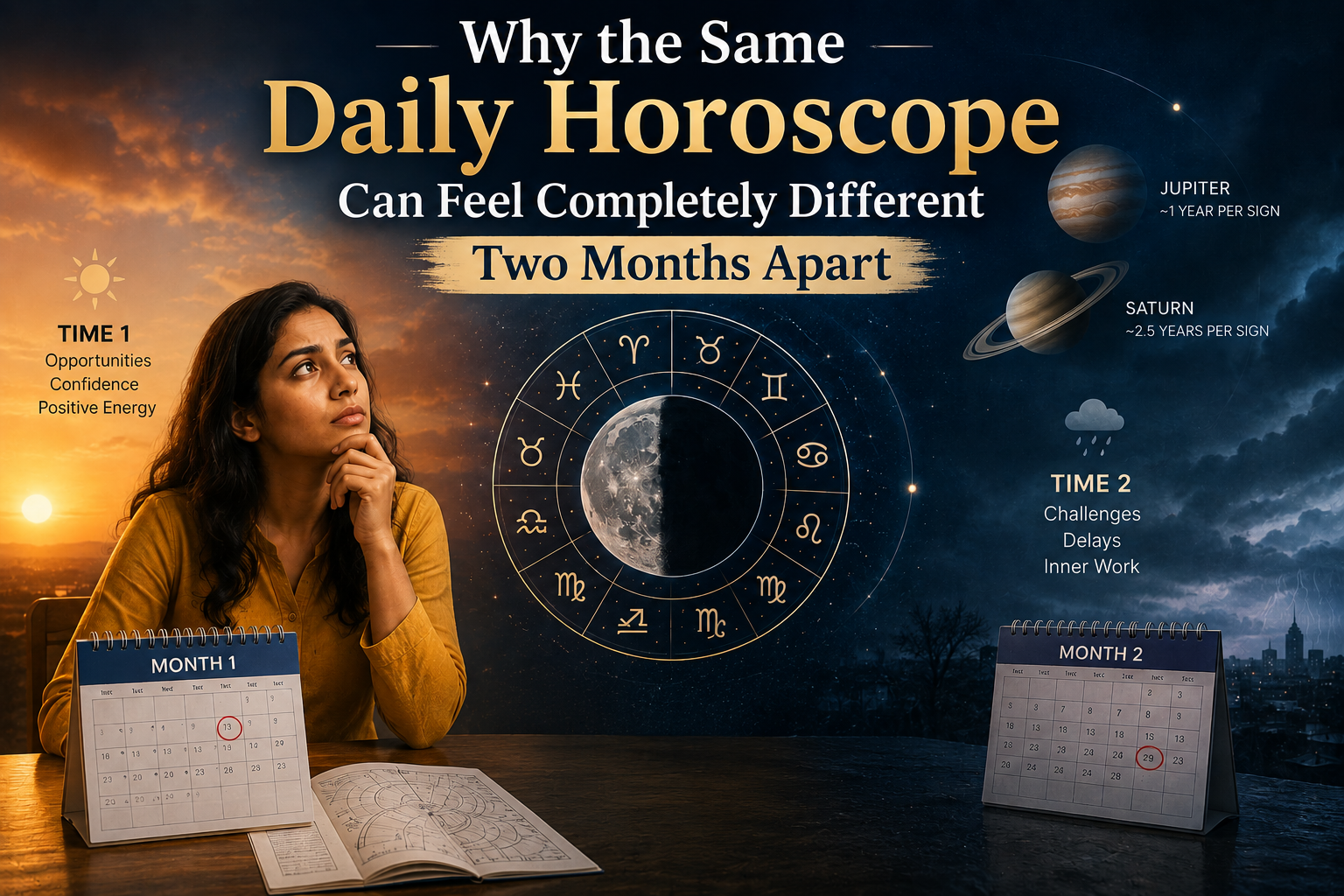
Why the Same Daily Horoscope Can Feel Completely Different Two Months Apart
Discover why the same daily Rashifal can feel different at different times. Learn how Moon transits, Jupiter, Saturn, Gochar Samyukti and Dasha shape daily predictions.
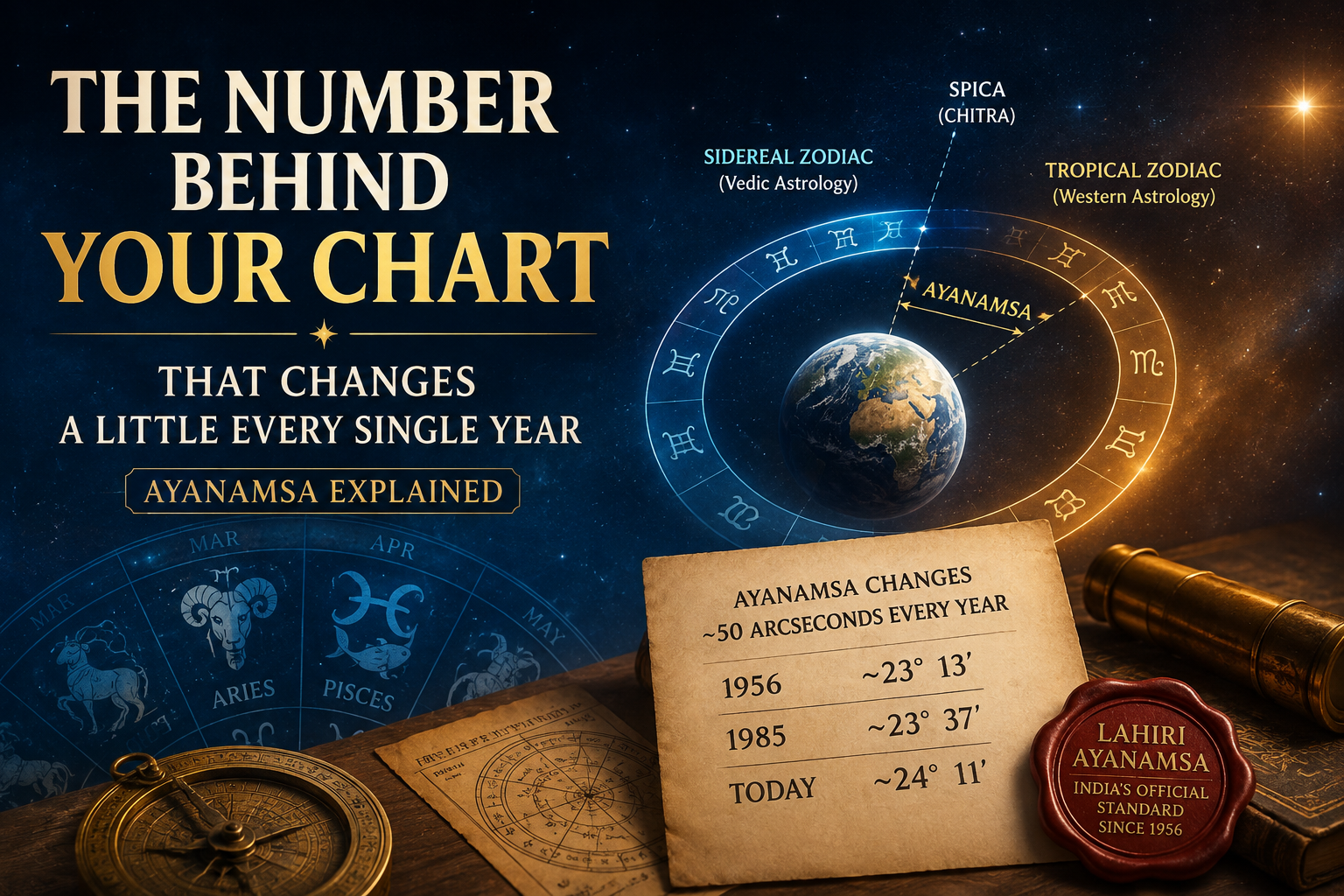
The Number Behind Your Chart That Changes a Little Every Single Year
Discover why Ayanamsa changes every year, how Lahiri Ayanamsa became the Vedic astrology standard, and why its precise value matters for accurate Kundali calculations.
Comments
Be the first to comment.