Why Certain Nakshatras Suit Travel While Others Suit Stability

Table of contents
Most explanations of Nakshatra classification focus on major rituals, weddings, housewarmings, naming ceremonies. The same underlying logic applies just as usefully to the smaller decisions that make up most of an actual week.
We've covered the full sevenfold classification, Sthira, Chara, Ugra, Kshipra, Mridu, Tikshna, and Misra, along with the complete Nakshatra lists for each, in our dedicated Daily Nakshatra article. This piece focuses specifically on applying that same classification to everyday planning.
When Does the Movable (Chara) Group Actually Help?
Punarvasu, Swati, Shravana, Dhanishta, and Shatabhisha carry fluid, adaptable energy, and this shows up well beyond travel specifically. A Chara day suits booking a trip, but it also suits starting a new commute routine, beginning a job search, or any decision that benefits from staying flexible and open to change rather than locking into something fixed. If you're the kind of person who overthinks small logistics, a Chara day is a reasonable one to just book the flight or send the application.
When Does the Fixed (Sthira) Group Actually Help?
Rohini, Uttara Phalguni, Uttara Ashadha, and Uttara Bhadrapada carry grounded, lasting energy, and this extends naturally to everyday commitments meant to stick. Signing a lease, opening a long-term savings account, starting a diet or exercise routine you actually want to maintain, or making a significant purchase you don't want to second-guess a month later, all fit this group's underlying character. The common thread is intention to last, not the size of the decision.
When Does the Fierce (Ugra) Group Actually Help?
Bharani, Magha, Purva Phalguni, Purva Ashadha, and Purva Bhadrapada carry intense, confrontational energy, and this maps directly onto everyday situations requiring directness rather than diplomacy. A difficult conversation with a colleague, a salary negotiation, filing a formal complaint, or a competitive presentation all suit this group's underlying character better than a gentler one would. This is exactly why Ugra days are specifically considered less suited to peace-making or diplomatic conversations, the same intensity that helps you push through a hard negotiation works against you in a conversation that needs softness instead.
What About the Other Groups in Daily Life?
Kshipra (Ashwini, Pushya, Hasta) suits quick, transactional tasks, a fast shopping errand, sending an urgent email, a same-day medical appointment.
Mridu (Mrigashira, Chitra, Anuradha, Revati) suits gentle, relational moments, a first date, reconnecting with an old friend, a creative brainstorming session that benefits from an unhurried atmosphere.
Tikshna (Ardra, Ashlesha, Jyeshtha, Mula) suits cutting things out, decluttering, ending a subscription you don't use, or a focused work block where you genuinely need to eliminate distraction rather than accommodate it.
Misra (Krittika, Vishakha) suits ordinary routine, the kind of day where nothing particularly needs to launch or close, just steady, average productivity.
Why Does This Matter for Everyday Planning, Not Just Rituals?
Most people only encounter Nakshatra classification when planning a wedding or a housewarming, treating it as ceremonial rather than practical. The underlying logic doesn't actually change scale, it's the same reasoning applied to a smaller decision. A day well suited to Ugra's intensity is genuinely a better day for a hard conversation you've been avoiding, regardless of whether that conversation happens to be part of a formal ceremony or just an ordinary Tuesday.
This is worth treating as a light planning tool rather than a rigid rule. If a Kshipra day happens to be the only day you can fit in an important, unhurried conversation, that conversation should still happen, the classification is a helpful lens, not a constraint that overrides ordinary scheduling reality.
When to Get a Professional Reading Instead of Guessing From a General List
Given how much daily planning benefits from knowing the current Nakshatra specifically, a full reading is worth it if:
You want to understand how a specific Nakshatra's classification interacts with your own personal chart, not just the general day
You're timing something with real weight, a resignation, a major negotiation, a significant purchase, and want more than a general classification to go on
You want to build a genuinely personalised planning routine around this classification over time
Myth vs. Reality
Myth: Nakshatra classification is only relevant for major religious ceremonies.
Reality: The same underlying logic applies just as usefully to ordinary daily decisions, a difficult conversation, a big purchase, a quick errand.
Myth: A "fierce" or "sharp" day should be avoided entirely.
Reality: These days suit specific everyday tasks well, difficult conversations, decluttering, cutting ties, just not gentle or diplomatic ones.
Myth: This classification is a rigid rule that should override practical scheduling.
Reality: It's best used as a light planning lens. If an important conversation only fits on a day that isn't classically ideal for it, the conversation should still happen.
Why Check This on DoPuja
Because knowing today's specific Nakshatra, not just a general list, is what makes this classification actually useful for planning, accurate calculation matters here.
UmasDoPuja's Panchang tool uses the Swiss Ephemeris engine with NASA/JPL DE431 planetary data and correctly applied Lahiri Ayanamsa to calculate the precise Nakshatra active for your specific location, alongside your own Birth Nakshatra for a personal Tara Bala reading. For guidance on applying this to a specific significant decision, Talk to Astrologer connects you with a real astrologer for that context.
Why Trust This
The sevenfold classification and its Nakshatra groupings are documented across classical Muhurta texts, covered in full in our dedicated Daily Nakshatra article. The everyday application described here extends that same established classification to ordinary planning, using the same underlying logic rather than introducing a separate system.
Frequently Asked Questions
Can this classification really help with something as small as a daily errand?
Yes, the same logic that governs ritual timing applies at any scale, a Kshipra day suits a quick errand for the same underlying reason it suits a fast transaction.
Should I avoid difficult conversations on Ugra days entirely?
Not necessarily, Ugra days are actually well suited to direct, confrontational conversations. They're specifically less suited to gentle, diplomatic ones.
What if an important task only fits on a day that isn't classically ideal for it?
Go ahead with it. This classification works best as a helpful lens for choosing between flexible options, not a rule that should override real scheduling constraints.
Is the fixed (Sthira) group only useful for big life decisions?
No, it applies to any commitment meant to last, starting a routine you want to stick with fits just as well as signing a lease.
Where can I find the complete list of Nakshatras in each group?
Our dedicated Daily Nakshatra article covers the full sevenfold classification and every Nakshatra within each group in complete detail.
Recommended articles

Why the Same Daily Horoscope Can Feel Completely Different Two Months Apart
Discover why the same daily Rashifal can feel different at different times. Learn how Moon transits, Jupiter, Saturn, Gochar Samyukti and Dasha shape daily predictions.
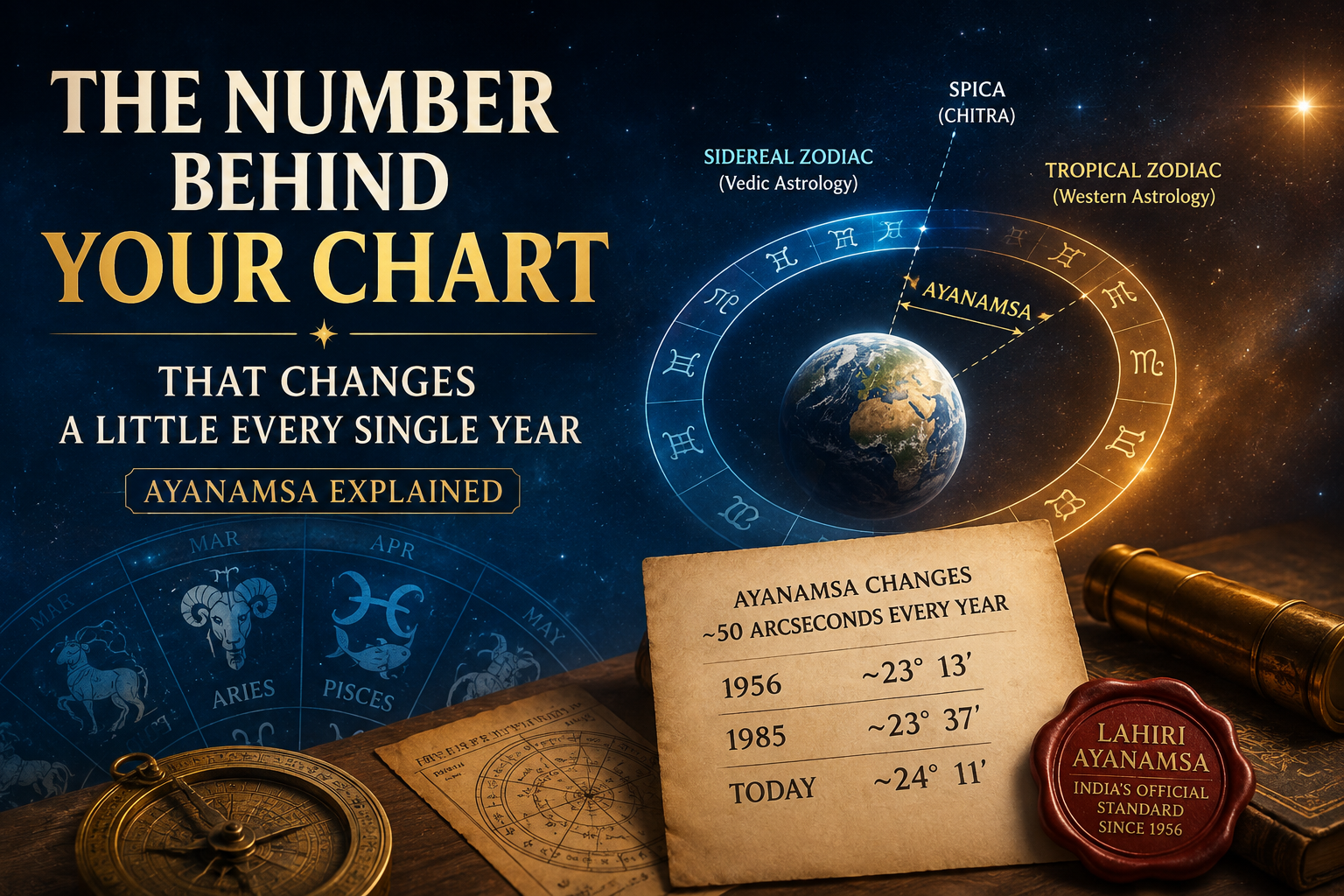
The Number Behind Your Chart That Changes a Little Every Single Year
Discover why Ayanamsa changes every year, how Lahiri Ayanamsa became the Vedic astrology standard, and why its precise value matters for accurate Kundali calculations.

Why Your Horoscope Might Be Meant for a Million Other People Too
Discover why daily horoscopes are shared by millions, while a personalised Kundali reading uses your exact birth details, houses, Nakshatra, Dasha and unique chart combinations.
Comments
Be the first to comment.