Moon Sign and Nakshatra: The Core of Ashtakoot Compatibility
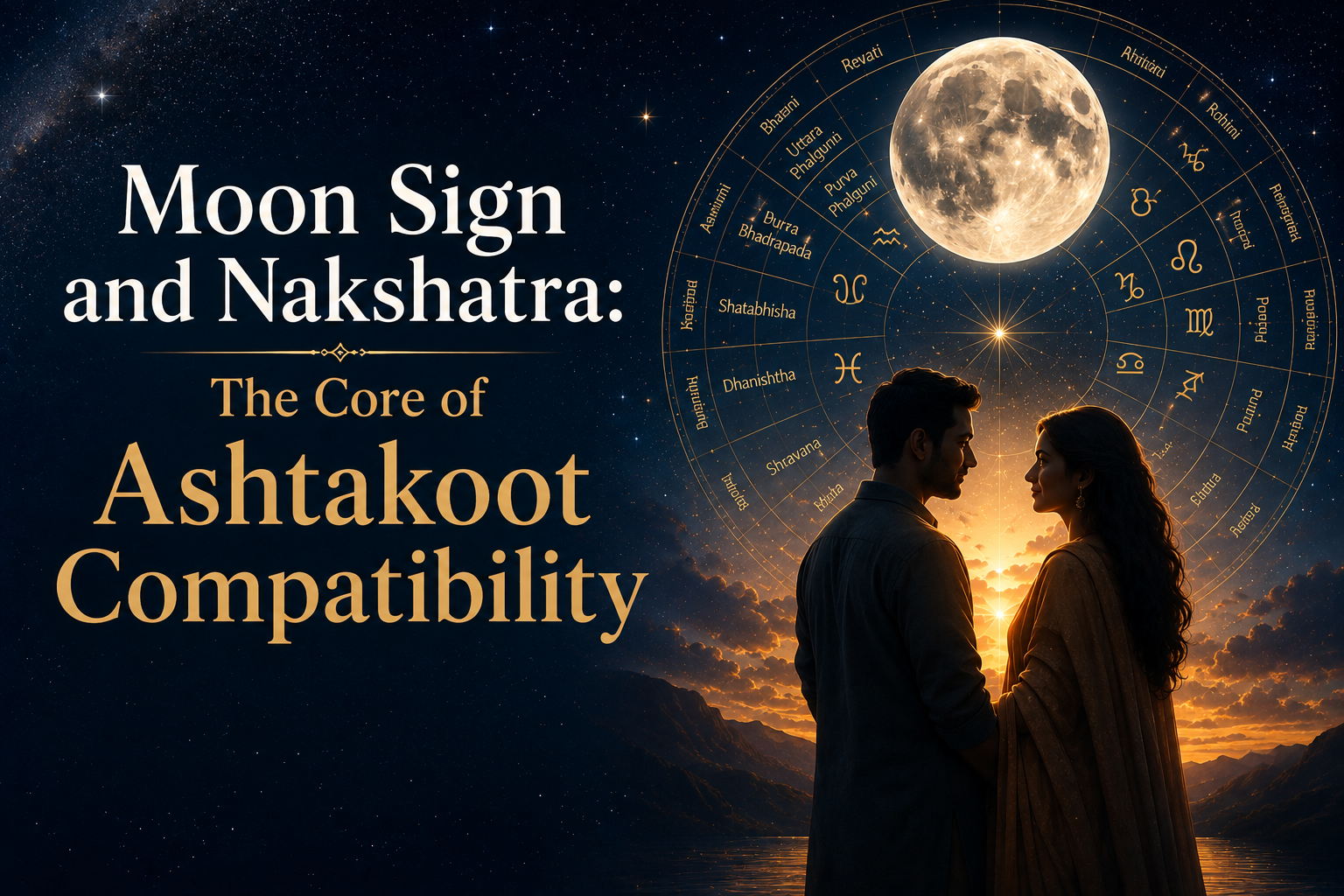
Table of contents
Most people know Ashtakoot Guna Milan produces a score out of 36. Fewer understand just how much of that entire system actually comes down to one single piece of birth data: the Moon's exact position.
Why Does the Moon Drive Almost the Entire System?
This is worth stating plainly, since it's easy to miss: nearly all eight Kootas are calculated from the Moon's Rashi, sign, and Nakshatra, lunar mansion, at birth, not the wider birth chart or any other planet. Varna, Vashya, Tara, Yoni, Graha Maitri, Gana, and Bhakoot are all derived directly from the Moon's position. Even Nadi, the highest-weighted Koota, is determined by which of three Nadi groups a person's birth Nakshatra falls into, still fundamentally a Moon-based classification.
This is exactly why an inaccurate birth time causes so much trouble for Kundali matching specifically. Since virtually the entire scoring system traces back to a single data point, an error in the Moon's calculated position doesn't just affect one Koota; it can shift several simultaneously.
How Does Tara Koota Actually Work?
Tara Koota, worth 3 points, follows a genuine numerical calculation rather than a general impression of compatibility. Each partner's birth Nakshatra is assigned a number from 1 to 27. The Nakshatra numbers are compared, the difference is divided by 9, and the remainder determines the outcome. An even remainder is generally read as auspicious, while certain specific remainders correspond to named unfavourable categories, including ones classically called Vipat and Vadha Tara.
It's worth knowing that Tara's real weight in serious matching often exceeds what its modest 3-point score suggests, since it speaks directly to a concern classical astrologers take seriously: relationship longevity. A strong overall score with a genuinely unfavourable Tara result is often treated with more caution than the raw number alone would indicate.
What Exactly Does Gana Koota Classify?
Gana Koota, worth 6 points, sorts every one of the 27 Nakshatras into one of three temperament categories, nine Nakshatras in each.
Deva Gana, generally associated with a gentle, refined temperament, includes Ashwini, Mrigashira, Punarvasu, Pushya, Hasta, Swati, Anuradha, Shravana, and Revati.
Manushya Gana, associated with a more moderate, balanced human temperament, includes Bharani, Rohini, Ardra, Purva Phalguni, Uttara Phalguni, Purva Ashadha, Uttara Ashadha, Purva Bhadrapada, and Uttara Bhadrapada.
Rakshasa Gana, associated with a more intense, assertive temperament, includes Krittika, Ashlesha, Magha, Chitra, Vishakha, Jyeshtha, Moola, Dhanishtha, and Shatabhisha.
Matching pairs within the same Gana score the full 6 points. A Deva-Rakshasa pairing, the most temperamentally distant combination, scores zero. Genuine cancellation conditions exist here too, if both partners' Nakshatras share the same ruling planet, or their Moon signs share the same sign lord, the mismatch is generally considered offset regardless of the Gana difference itself.
Why Can Bhakoot Koota Override an Otherwise Strong Score?
Bhakoot Koota, worth 7 points, the second-highest weighting in the entire system, is based on the relative positional relationship between the two partners' Moon signs. Specific relationships, most notably a 6th-8th or 2nd-12th positional relationship between the two Moon signs, are flagged as Bhakoot Dosha, traditionally associated with strain on financial stability and family harmony.
This is exactly why Bhakoot deserves attention beyond simply totalling the 36 points. Nadi and Bhakoot together account for 15 of the 36 total, and astrologers generally treat afflictions in these two specific Kootas as more consequential than a similar deficit spread across lower-weighted ones like Varna or Vashya. A couple with a technically respectable overall score can still carry a genuine concern if that score conceals an unaddressed Bhakoot Dosha specifically.
When to Get a Professional Reading Instead of Reading the Raw Score
Given how much depends on precise Moon and Nakshatra calculation, and how differently individual Kootas should be weighted, a full reading is worth it if:
Your overall score looks reasonable, but you want to confirm whether Bhakoot or Nadi specifically show affliction
Your Tara Koota result falls into a named unfavourable category, and you want to understand what that actually means for the match
You want to check whether a Gana mismatch is genuinely offset by a shared Nakshatra or sign lord
Myth vs. Reality
Myth: Each of the eight Kootas matters equally, so a high total score is always reassuring.
Reality: Nadi and Bhakoot carry 15 of the 36 points between them and are generally treated as more consequential than a similar deficit in lower-weighted Kootas.
Myth: Tara Koota's small 3-point weight means it barely matters.
Reality: Its qualitative significance, tied directly to relationship longevity, often exceeds what its modest point value suggests.
Myth: A Rakshasa Gana person is simply a difficult match for anyone outside their own Gana.
Reality: Genuine cancellation conditions exist, including a shared Nakshatra lord or shared Moon sign lord, which can offset a Gana mismatch entirely.
Why Check This on DoPuja
Because almost the entire Ashtakoot system depends on the Moon's precise position, calculated from accurate birth time and location, not an approximation, accurate calculation matters enormously here.
UmasDoPuja's Kundali Matching uses the Swiss Ephemeris engine with NASA/JPL DE431 planetary data and correctly applied Lahiri Ayanamsa, fixing the Moon's exact Rashi and Nakshatra precisely for both partners. Our reports also check Bhakoot and Nadi cancellation conditions specifically, rather than stopping at the headline number. For a full, personalised walkthrough of your specific match, Talk to Astrologer connects you with a real astrologer for that context.
Why Trust This
The Moon-centric structure of the Ashtakoot system, the Tara Koota calculation method, and the verified Gana Nakshatra classification described here are consistently documented across multiple independent classical and current Vedic astrology sources. The Bhakoot and Nadi weighting emphasis reflects the same 15-of-36-point structural fact covered in our main Ashtakoot article.
Frequently Asked Questions
Why does an inaccurate birth time affect Kundali matching so much?
Because nearly all eight Kootas trace back to the Moon's precise position, an error can shift several Kootas simultaneously rather than just one.
How is Tara Koota actually calculated?
Each partner's Nakshatra is assigned a number, the difference between them is divided by 9, and the remainder determines whether the result is read as auspicious or falls into a named unfavourable category.
Which Nakshatras belong to which Gana?
Deva Gana includes Ashwini, Mrigashira, Punarvasu, Pushya, Hasta, Swati, Anuradha, Shravana, and Revati. Manushya and Rakshasa Gana each include nine further Nakshatras, covered in the article above.
Can a Gana mismatch actually be cancelled?
Yes. If both partners' Nakshatras share the same ruling planet, or their Moon signs share the same sign lord, the mismatch is generally considered offset.
Why does Bhakoot matter more than its point count suggests?
Because it's one of the two highest-weighted Kootas, and specific Moon-sign relationships it flags are treated as significant concerns regardless of how strong the overall score otherwise looks.
Recommended articles
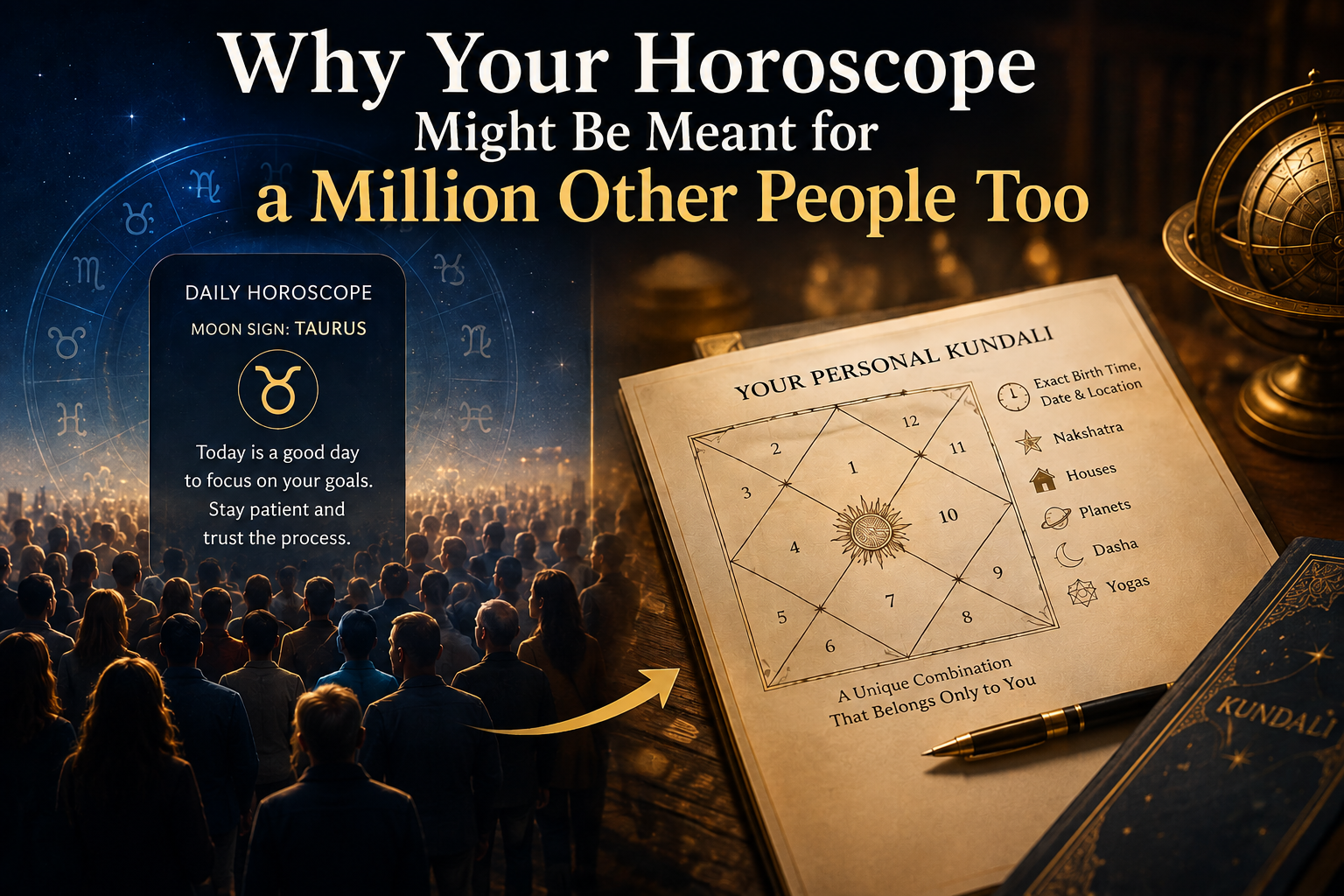
Why Your Horoscope Might Be Meant for a Million Other People Too
Discover why daily horoscopes are shared by millions, while a personalised Kundali reading uses your exact birth details, houses, Nakshatra, Dasha and unique chart combinations.
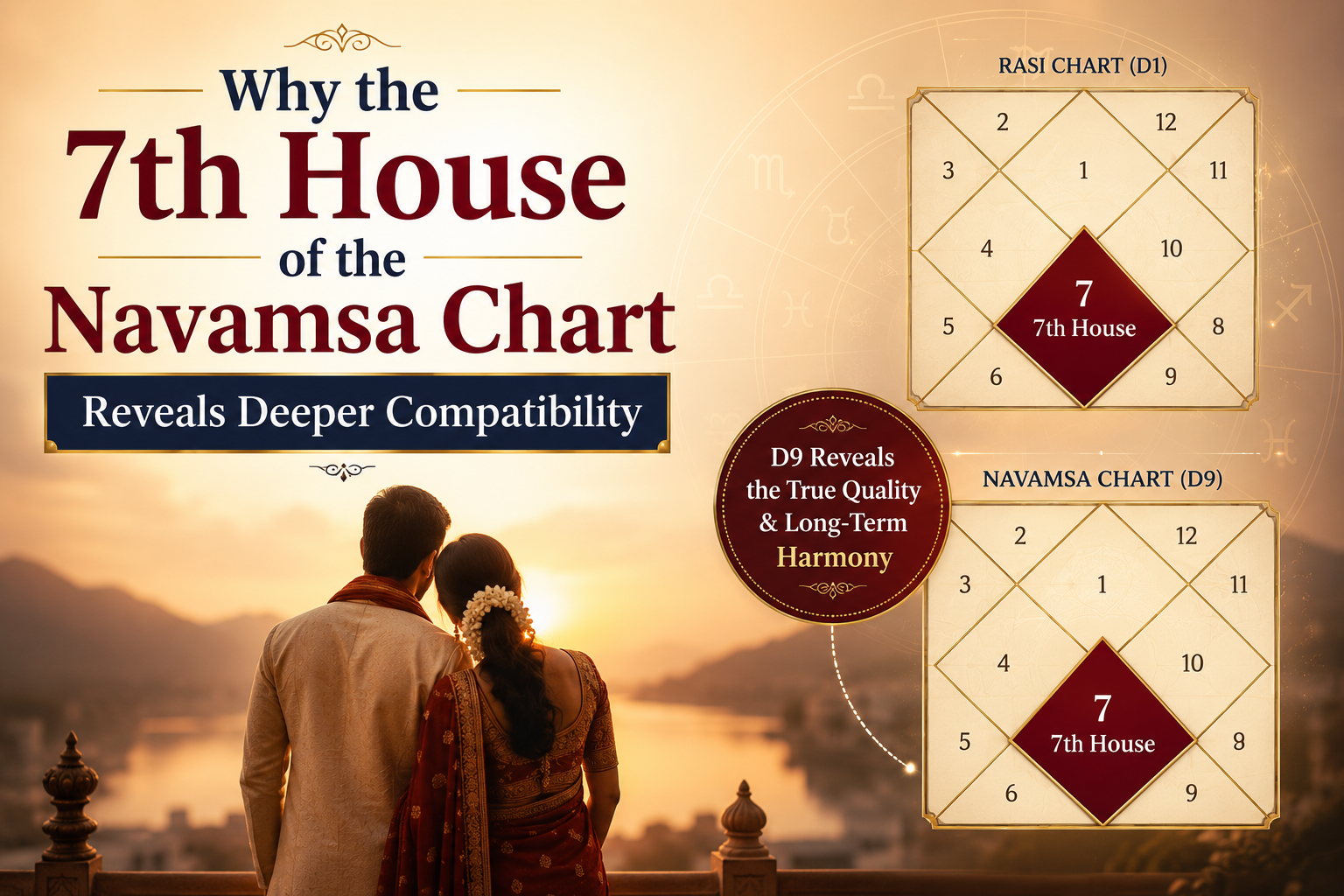
Why the 7th House of the Navamsa Chart Reveals Deeper Compatibility
Discover how the Navamsa 7th house, Venus placement, Vargottama, and D9 chart comparison reveal deeper marriage compatibility beyond Guna Milan.
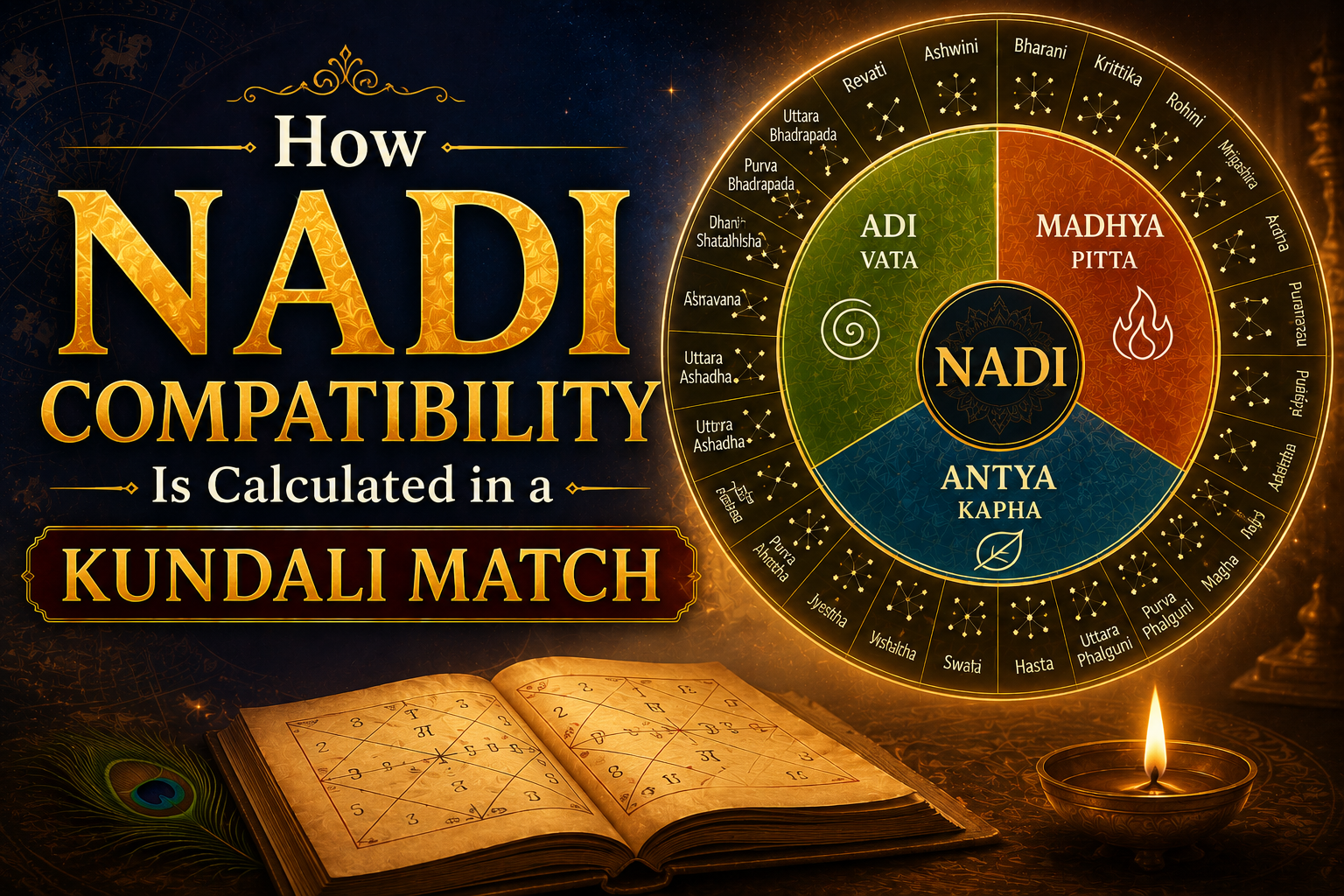
How Nadi Compatibility Is Calculated in a Kundali Match
Learn how Nadi compatibility is calculated in Kundali matching, from birth Nakshatra and Nadi groups to Nadi Dosha, Pada exceptions, and compatibility rules.
Comments
Be the first to comment.