What Really Happens During a Homam at Home? 8 Types and Their Spiritual Benefits

Table of contents
What Really Happens When You Perform a Homam at Home? Discover Its Spiritual Significance for Peace, Health and Prosperity
Have you ever wondered why many Hindu families perform a Homam at home during important occasions or when seeking divine blessings? From Griha Pravesh ceremonies to special family prayers, Homam holds a significant place in Hindu traditions.
A Homam is not just a religious ritual involving fire. It is a sacred Vedic practice performed with mantras, offerings and prayers to seek divine blessings, peace and positive well-being.
But what is the actual significance of performing a Homam at home? Why are different Homams performed for health, prosperity, family harmony and removing obstacles? Let's explore the spiritual meaning, traditional benefits and different types of Homams.
What Is Homam and Why Is It Performed?
Homam, also known as Havan or Yajna, is a traditional Hindu fire ritual performed by offering sacred materials such as ghee, herbs, grains and samidhas into a consecrated fire while chanting Vedic mantras.
In Hindu tradition, Agni (the fire deity) is considered a divine medium through which offerings and prayers are presented to the deities.
A Homam is traditionally performed to:
Seek divine blessings and protection.
Pray for peace and harmony within the family.
Express gratitude to the divine.
Mark important life events and new beginnings.
Pray for health, prosperity and well-being.
Perform traditional remedies for specific astrological or spiritual concerns.
The procedure and mantras vary depending on the type of Homam and the purpose for which it is performed.
What Are the Traditional Benefits of Performing Homam at Home?
In Hindu tradition, Homam is associated with several spiritual and symbolic benefits.
1. Promotes Spiritual Peace
The chanting of sacred mantras, devotional prayers and the disciplined performance of rituals create a peaceful and prayerful atmosphere. Families perform Homam to seek divine blessings and spiritual positivity in their homes.
2. Encourages Family Harmony
Many families perform special Homams during important occasions, seeking blessings for understanding, happiness and harmony among family members.
3. Prayers for Health and Longevity
Homams such as Ayushya Homam and Maha Mrityunjaya Homam are traditionally performed to pray for good health, long life and protection.
These rituals are expressions of faith and should not be considered substitutes for medical care or treatment.
4. Prayers for Wealth and Prosperity
Lakshmi Homam is traditionally performed to seek Goddess Lakshmi's blessings for wealth, abundance, financial stability and prosperity.
5. Seeking Blessings for New Beginnings
Families often perform Ganapathi Homam before starting a new business, entering a new home or beginning an important activity. Lord Ganesha is traditionally worshipped as the remover of obstacles.
8 Important Types of Homams and Their Significance
Different Homams are performed for different spiritual purposes. Here are eight commonly performed Homams in Hindu tradition.
1. Ganapathi Homam
Ganapathi Homam is performed to seek the blessings of Lord Ganesha, who is traditionally worshipped before beginning important activities.
Traditional significance:
Praying for the removal of obstacles.
Seeking success in new beginnings.
Invoking wisdom and clarity.
Seeking blessings for family and professional progress.
It is commonly performed before housewarming ceremonies, business openings and other auspicious occasions.
2. Lakshmi Homam
Lakshmi Homam is dedicated to Goddess Lakshmi, the Hindu goddess of wealth, prosperity and abundance.
Traditional significance:
Praying for financial well-being.
Seeking blessings for prosperity.
Invoking abundance and stability.
Expressing gratitude for wealth and opportunities.
Many families perform Lakshmi Homam during Diwali and other auspicious occasions.
3. Navagraha Homam
Navagraha Homam is performed to worship the nine planetary deities in Hindu astrology.
Traditional significance:
Seeking blessings from the Navagrahas.
Praying for balance and harmony in life.
Performing traditional astrological remedies.
Seeking guidance and protection during challenging periods.
The ritual is often performed based on family traditions or astrological guidance.
4. Ayushya Homam
Ayushya Homam is traditionally performed to pray for good health, longevity and well-being.
It is commonly conducted on birthdays, especially during a child's early years, and on other important milestones.
Traditional significance:
Prayers for long life.
Seeking blessings for health and well-being.
Expressing gratitude for life.
Invoking divine protection.
5. Maha Mrityunjaya Homam
Maha Mrityunjaya Homam is dedicated to Lord Shiva and involves the chanting of the sacred Maha Mrityunjaya Mantra.
Traditional significance:
Praying for health and longevity.
Seeking strength during difficult times.
Invoking spiritual courage and peace.
Seeking Lord Shiva's blessings and protection.
It is traditionally performed by devotees during challenging periods or for the well-being of family members.
6. Dhanvantari Homam
Dhanvantari Homam is dedicated to Lord Dhanvantari, who is traditionally worshipped as the divine physician.
Traditional significance:
Prayers for good health.
Seeking blessings for physical and mental well-being.
Expressing gratitude for healing and wellness.
Invoking divine protection.
This Homam is a spiritual practice and does not replace professional medical advice or treatment.
7. Sudarshana Homam
Sudarshana Homam is dedicated to Lord Sudarshana, the divine discus of Lord Vishnu.
Traditional significance:
Prayers for protection.
Seeking divine blessings.
Invoking courage and spiritual strength.
Praying for relief from difficulties.
It is traditionally performed by devotees seeking divine protection and peace.
8. Vastu Shanti Homam
Vastu Shanti Homam is performed to seek blessings for harmony and well-being in a home or property.
It is commonly conducted during Griha Pravesh and after the construction or purchase of a new house.
Traditional significance:
Praying for peace in the new home.
Seeking blessings for family well-being.
Marking an auspicious beginning.
Following traditional Vastu-related rituals.
When Should You Perform a Homam at Home?
A Homam can be performed on different occasions depending on the family's traditions, religious beliefs and the purpose of the ritual.
Some commonly chosen occasions include:
Griha Pravesh or housewarming ceremonies.
Birthdays and special family occasions.
Starting a new business or venture.
Festivals such as Diwali and Ganesh Chaturthi.
Special prayers for health and well-being.
Navagraha-related traditional rituals.
Important milestones in family life.
Days recommended by a family priest or astrologer.
An experienced purohit can guide you in selecting an appropriate Homam, date, time and procedure.
What Materials Are Required for a Homam?
The required materials depend on the type of Homam being performed. However, some commonly used items include:
Homam kund or Havan kund.
Samidhas (sacred wooden sticks).
Ghee.
Rice and other grains.
Turmeric and kumkum.
Flowers and garlands.
Fruits and coconuts.
Betel leaves and betel nuts.
Camphor and incense sticks.
Kalash and other puja vessels.
Homam-specific herbs and offerings.
The purohit generally provides guidance about the exact materials required for the selected ritual.
Why Should You Choose an Experienced Purohit for Homam?
A Homam involves specific mantras, offerings and traditional procedures. Performing the ritual according to the appropriate Vedic method is important for families who wish to follow the traditional practice.
An experienced purohit can help with:
Selecting the appropriate Homam.
Explaining the ritual procedure.
Guiding the family about puja materials.
Performing the required mantras and offerings.
Conducting the ritual according to family traditions.
Helping arrange the puja at a suitable time.
Choosing a knowledgeable and experienced pandit makes it easier for families to organise the ceremony with proper guidance.
Book a Purohit for Homam at Home with DoPuja
Planning a Homam at home but unsure where to find a suitable purohit?
With Do Puja, you can explore pandit booking services for different Hindu pujas and Homams. Whether you are planning a Ganapathi Homam, Lakshmi Homam, Navagraha Homam, Ayushya Homam, Vastu Shanti or another traditional ritual, DoPuja helps you connect with experienced pandits for your puja requirements.
You can use Do Puja to arrange:
Homam and Havan services at home.
Griha Pravesh and Vastu Shanti pujas.
Festival and special occasion pujas.
Traditional Hindu religious ceremonies.
Online and digital puja services.
Make your religious ceremonies easier to organise with DoPuja. Find a pandit and book your puja conveniently.
Frequently Asked Questions About Homam
1. What is the main purpose of performing Homam?
Homam is a traditional Hindu fire ritual performed to offer prayers, chant sacred mantras and seek divine blessings. Families traditionally perform it for peace, prosperity, health and spiritual well-being.
2. Can we perform Homam at home?
Yes. Many Homams can be performed at home with the appropriate arrangements, puja materials and guidance from an experienced purohit.
3. Which Homam is performed for prosperity?
Lakshmi Homam is traditionally performed to seek Goddess Lakshmi's blessings for wealth, abundance and prosperity.
4. Which Homam is performed for good health?
Ayushya Homam, Maha Mrityunjaya Homam and Dhanvantari Homam are traditionally associated with prayers for health, longevity and well-being.
5. Which Homam is suitable for a new house?
Vastu Shanti Homam is commonly performed during Griha Pravesh to seek blessings for peace and harmony in a new home.
6. Is a purohit necessary for performing Homam?
Families following traditional Vedic procedures generally prefer an experienced purohit to guide and perform the Homam with the appropriate mantras and rituals.
7. How can I book a pandit for Homam at home?
You can use the Do Puja app to explore pandit booking services for different Homams and Hindu pujas at home.
Conclusion
Homam has been an important part of Hindu spiritual traditions for generations. Whether it is Ganapathi Homam for new beginnings, Lakshmi Homam for prosperity, Ayushya Homam for prayers for longevity or Vastu Shanti Homam for a new home, each ritual has its own traditional significance.
Beyond the offerings made into the sacred fire, Homam brings families together through prayer, devotion and gratitude.
If you are planning a Homam or any special puja at home, choose the right ritual and arrange an experienced purohit to guide you through the traditional procedure.
Book your preferred puja service with Do Puja and make your religious ceremonies easier to organise.
Recommended articles
 DoPuja services
Why Do We Break Coconuts Before God? Hidden Spiritual Meaning
Why is a coconut broken before God in Hindu temples? Discover the spiritual significance of Shriphala, the meaning of its three eyes, its connection with Lord Shiva, and how coconut breaking symbolizes surrendering ego and embracing purity. Explore Hindu puja traditions and discover how DoPuja makes booking experienced pandits for home, temple, and online puja services easier.
 DoPuja services
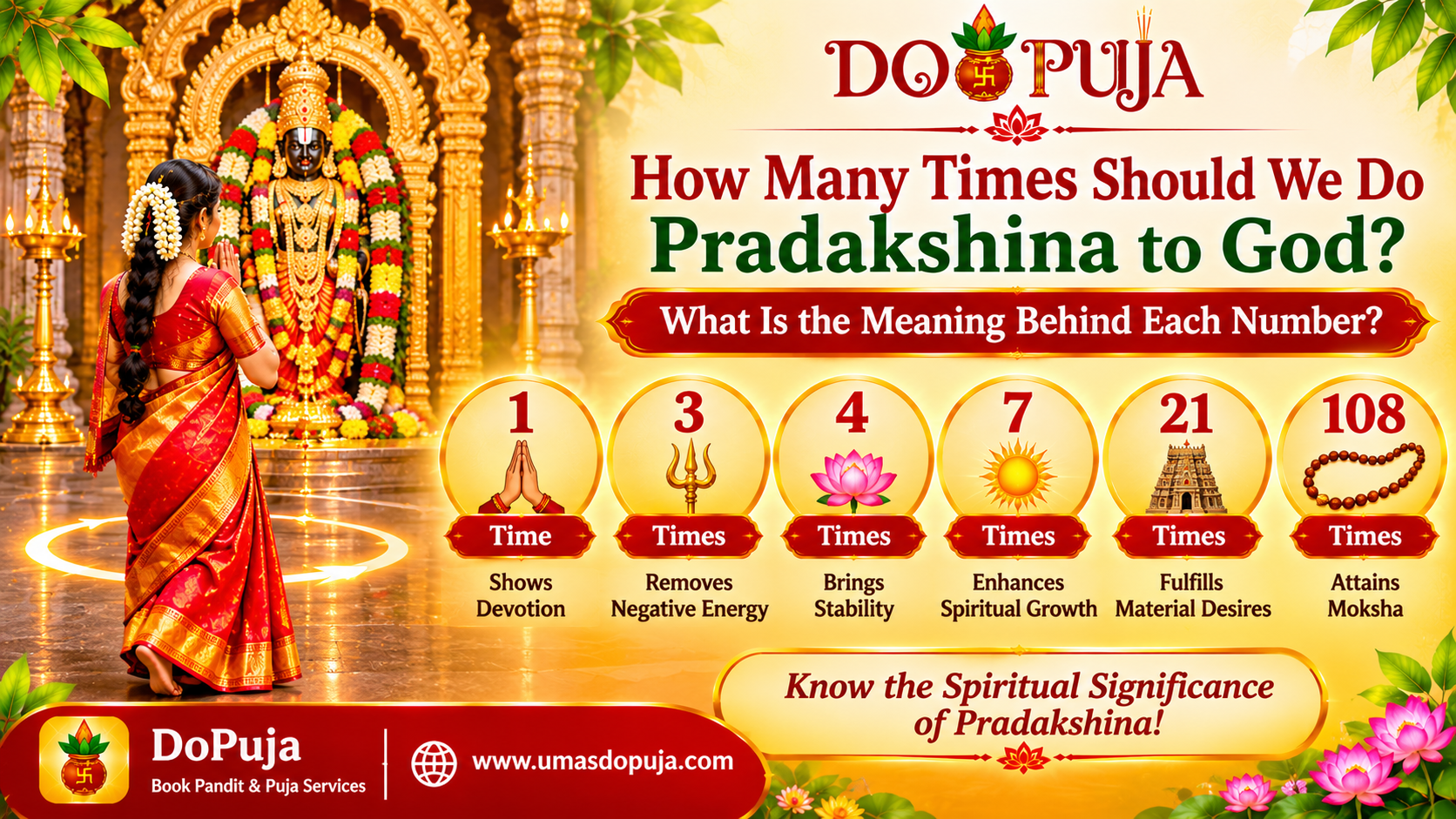
How Many Times Should You Do Pradakshina? Meaning of 1,3, 7 & 108
Why do devotees perform 1, 3, 7 or 108 Pradakshinas around God? Discover the spiritual significance behind different Pradakshina numbers, Hindu temple traditions, the correct way to perform circumambulation and special rituals associated with Lord Shiva, Ganesha and other deities. Explore Hindu traditions and puja services with Do Puja.
 DoPuja services
Are the Planets in Your Horoscope Connected to Life's Challenges? Discover the Importance of Navagraha Puja!
Discover how the nine planets are believed to influence different aspects of life according to Vedic astrology. Learn why Navagraha Puja is performed, the importance of Navagraha Shanti Puja, its traditional benefits, required puja samagri and step-by-step rituals. Also explore how to perform Navagraha Puja at home and find pandit booking options through Do Puja.
Comments
Be the first to comment.